eNews
Empowering women with internet can change India’s future, believes Google

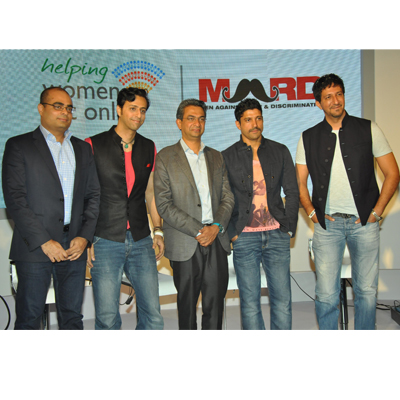
MUMBAI: Google India today announced the launch of a new social campaign called #ReachForTheSky, in association with Farhan Akhtar’s MARD initiative to increase internet literacy among women in India.
The joint campaign will also look to build support from existing Internet users and encourage more women to learn and use the internet to excel in their lives.
Speaking about the campaign and the importance of getting women online, Google India VP and managing director Rajan Anandan said, “There are 616 million women in India and close to half are below the age of 25. Empowering the young women population with information and internet could transform India’s future.”
In November 2013, Google India had launched its first digital literacy initiative campaign in India called ‘Helping Women Get Online’ (HWGO) in collaboration with Intel, HUL and Axis Bank.
Along with boosting the overall internet adoption, the initiative aims to bridge the huge gender disparity prevalent India. “The first phase has been very successful. For the first time last year, the number of women using the internet has grown 35 per cent as against 31 per cent by men,” Anandan added.
Anandan also revealed that this initiative is not a part of the company’s CSR and said, “Google’s mission is to get more people online and as the number of women using Internet increases, it would be a good thing for the country as well as the company.”
Talking about the association and the launch of the campaign, Farhan Akhtar, said, “MARD is a progressive movement for a more gender equal world. There is lack of encouragement for women to use internet or technology and we need to come together to address this issue. Technology is not just the domain of men. I am excited to join this initiative, to gather support and encourage men to support and help young girls and women to learn and use the internet to improve lives.”
Sharing more details about the campaign, Google India marketing head Sandeep Menon said, “Our mission is to help bring 50 million women online in India. In the last nine months we have undertaken a number of initiatives reaching over one million women across five states in India, covering 30 cities and 55 small towns.”
The company has also been working closely with educational institutions for the campaign to reach the remotest parts of the country by imparting basic internet and computer training to students and teachers. The company has also have introduced HWGO Internet Cart, a mobile way of reaching out to women in villages to give them the internet experience and are planning to roll it across more states of the country.
Talking about association with Akhtar, Menon reckoned, “Since the launch of HWGO, we have worked with a number of partners, HUL, Samsung, Aircel. One of the partners was MARD, and we soon realised our aims were very well aligned. It was a natural fit.”
Menon also added that they would also launch two media campaigns. “Farhan will help us enroll multiple stars. There will be a number of familiar faces joining the cause as that is a powerful medium. Also, for people looking for facts and statistics, we will have a campaign that will provide statistical data to shake up people and inspire them to join the campaign.”
To rope in more existing internet users to join the campaign to help get more women online, the company will be only opting for digital marketing.
“We will be taking the digital route completely for this, not going to take the campaign on mainline media at this point of time. We will be propagating the campaign on different mediums and sites including Youtube, economictimes.com. The campaign will be launched across social media,” revealed Menon.
MARD also plans for global outreach and will continue to address gender equality issues across the world and in India, MARD Canvas Talent CEO and Artist Innovations & Repertoire director Anurag Rao said, “MARD will work with content makers around the world in a pledge to engage hearts and minds through art and music, for a more gender equal world #ReachForTheSky is just the start.”
The campaign was also launched with a musical work ‘Chulein Aasmaan’, composed by Salim-Sulaiman and performed by Akhtar and Shraddha Pandit. Written by the two of them, the song, that was released on Youtube today, highlights the importance of equal opportunity, possibilities and the impact it can have on women.