News Broadcasting
ECB launches broadband TV channel


MUMBAI: The Indian cricket board may be making noises about launching its own television channel but it is its British counterpart that has gone ahead and “walked the talk”. The England and Wales Cricket Board today launched its official broadband TV service, ECBtv, coinciding with the start of the first npower Test against Sri Lanka at Lord’s.
The ECB has signed a three-year deal with digital rights company, Premium TV, to produce the broadband channel – as an addition to ecb.co.uk, according to the board website.
In addition to exclusive interviews, the ECBtv console will stream live video coverage of all home npower Test matches and NatWest one-day internationals to identified territories in Europe, South and Central America, Japan and Africa, which are not covered by current ECB television deals.

ECBtv users can also access live audio commentary on all England’s home internationals, with BBC Radio’s Test Match Special being relayed through the channel.
The ECBtv console is a key development for the ECB, which sees broadband as a crucial platform for cricket in England and Wales to build on the popularity enjoyed by the sport during the npower Ashes series in 2005.
The ECB will also be encouraging England players to create their own content for the website.
Also embedded in the ECBtv channel will be a searchable video archive (SVA) that allows fans to view extended highlights of England’s classic moments on home soil, such as great matches, innings and wickets from as far back as 1970 – meaning classic moments such as Botham’s Ashes in 1981 can also be included.
Another feature of ECBtv will be the ‘Active Zone’, where fans will be able watch tutorials on all key aspects of the game from England players past and present, and see video clips of key grassroots initiatives such as NatWest CricketForce 2006.
It will also house ecb.co.uk’s own multimedia archive of video and audio clips, bringing continuing coverage of all aspects of the game outside of the international arena.
Premium TV will work alongside the ECB’s broadcast partners to ensure that the online broadcasts are geo-blocked in areas where any conflict with TV broadcast deals exists.
Oliver Slipper, CEO of Premium TV, said: “The ECB signing is yet another example of how PTV can help sports organisations exploit their digital rights by creating a unique service for a very popular platform.
“It also demonstrates how digital rights deals complement rather than compromise TV deals.”






News Broadcasting
News18 India launches Command Centre war explainer with Arya
New show shifts from debates to decoding global conflicts and impacts
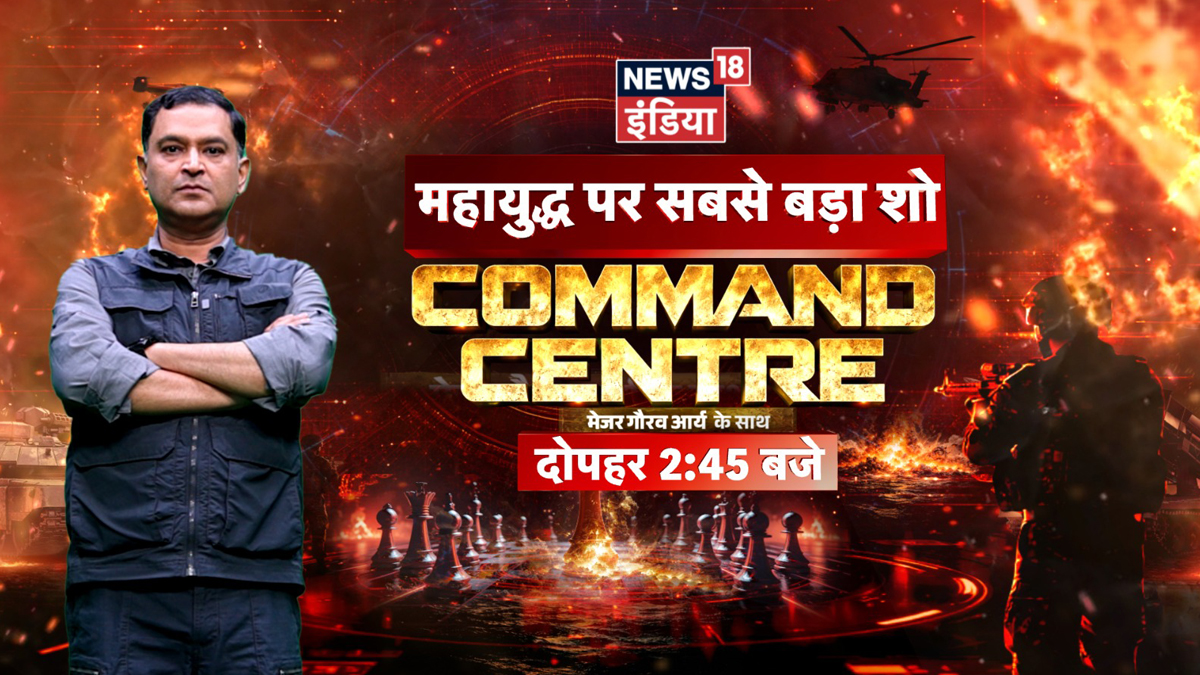
MUMBAI: News18 India has rolled out a new war-focused programme, Command Centre, featuring Gaurav Arya, as it looks to offer viewers a sharper, more grounded take on global conflicts amid rising tensions in West Asia.
Positioned as an “insider war room”, the show moves away from conventional panel debates and instead focuses on explaining military developments, decoding strategy and connecting global events to their everyday impact, from fuel prices to economic shifts.
The format leans heavily on visuals and data. The studio has been designed like a command hub, complete with large LED war maps, real-time graphics and an alert system to track developments as they unfold.
At the centre of it all is Arya, who brings his military background to simplify complex war strategies for viewers. His signature line, “Seedhi baat samjhiye”, anchors the show’s promise of clarity over noise.
News18 India managing editor Jyoti Kamal said, “Command Centre, featuring Major Gaurav Arya is designed to deliver accurate insights and a clear perspective on how evolving conflicts impact everyday life, from household budgets to national security. With expert voices analysing every development in real time, the show goes beyond headlines to decode what’s happening now, what it means, and what could come next.”
Echoing the intent, Gaurav Arya added, “In times of war, confusion is the biggest threat. With News18 India’s Command Centre, we are bringing viewers inside the war room, decoding strategies, tracking every escalation, and explaining, in the simplest terms, what it means for India and for every household. Seedhi baat samjhiye, this is where you understand not just what is happening, but what happens next.”
The weekday show will air in the afternoon slot and will also feature Gaurav Shukla, adding to its editorial depth.
With its mix of analysis, visuals and a clear focus on impact, the show reflects a broader shift in news consumption. Viewers are no longer just watching events unfold, they are looking to understand what those events mean for them.






