News Broadcasting
Dream11 halts operations in Karnataka after FIR against founders


Mumbai: Online sports platform Dream11 has suspended Karnataka operations of its gaming app Dream11 after its directors were booked under the amended Karnataka Police Act, which seeks to ban online gaming.
Following the filing of a first information report (FIR) against its founders in Bengaluru under the state’s newly legislated Karnataka Police (Amendment) Act 2021, the homegrown sports tech company said in a statement on Sunday, “Following the recent media coverage, our Karnataka users have expressed deep concerns and anxiety for their safety and security. In order to allay our users’ concerns, we have decided to suspend operations in Karnataka.”
The Karnataka Police Act recently amended its gaming law to prohibit online gambling, betting, and wagering. On Saturday, the Bengaluru Police filed an FIR against Dream11 founders Harsh Jain and Bhavit Sheth subsequent to a complaint that the Mumbai-based firm had continued to offer gaming services on its platform a week after the state government notified the new rules disallowing what it termed as “games of chance.”

Dream11 said that the complaint was “motivated” and it is examining legal remedies.
With this, the online gaming platform has joined the likes of Mobile Premier League (MPL), Paytm First Games, Games24X7, and others, which have deactivated their platform for users in Karnataka.
Dream11, however, continues to maintain that it is compliant with all the laws. “We have been advised by the Federation of Indian Fantasy Sports (FIFS), who have shared an opinion from a former Supreme Court Judge, stating that the Karnataka Police (Amendment) Act 2021 does not apply to its member Fantasy Sports Operators. This is because the FIFS format of fantasy sports has been upheld by the honourble courts of India as not amounting to gambling, betting, or wagering,” said the company in a statement.
Karnataka’s new law, which came into effect on 5 October, bans online games that are “games of chance” in nature. It makes operation, abetting, or sheltering of online games involving the exchange of money, betting, and wagering “cognisable and non-bailable offence.”
The move comes at a time when the Indian Premier League (IPL) is underway and the T20 Cricket World Cup is slated to start later this month. These sporting events are crucial for the gaming platforms to drive engagement and acquire new users in what’s a competitive industry.
The Dream11 platform allows users to play fantasy cricket, hockey, football, kabaddi, and basketball on its app. The firm became the first Indian gaming company to enter the unicorn club in April 2019 after an investment took its valuation at over $ one billion.







News Broadcasting
CNN-News18 to host Fury in the Gulf conclave on West Asia crisis
Three-hour summit to unpack geopolitical fallout and impact on India
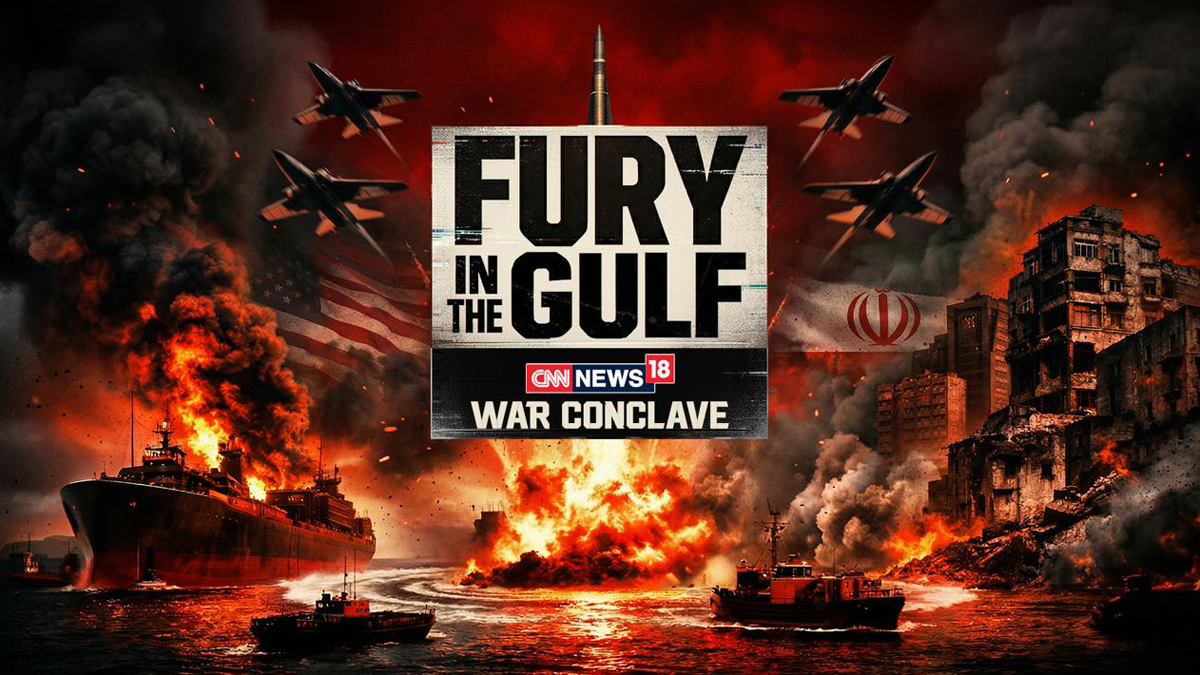
MUMBAI: CNN-News18 is set to host a special three-hour broadcast, Fury in the Gulf – War Conclave, on April 7, aiming to decode the escalating West Asia crisis and its far-reaching implications for India.
Scheduled from 4:00 PM to 7:00 PM, the conclave comes at a time when tensions between Iran and the United States are reshaping global geopolitics and triggering economic uncertainty. With India’s deep energy ties, trade links and large diaspora in the Gulf, the developments carry significant domestic relevance.
Built around the theme ‘Conflict, Consequences, and The Future,’ the programme will feature six curated sessions combining one-on-one interviews and panel discussions. The focus is to cut through the clutter and offer viewers a clearer understanding of the fast-evolving situation.
Key sessions include ‘Diplomacy in Times of War’ featuring Shashi Tharoor, and ‘World After the Iran Conflict’ with voices such as Ram Madhav, Reuven Azar, representatives from the European Union and the Iranian Deputy Envoy. Another session titled ‘Another Dunkirk?’ will bring together K. J. S. Dhillon and Jitin Prasada among others.
CNN-News18 editorial affairs director Rahul Shivshankar said, “In times of war, clarity becomes the most powerful tool. Fury in the Gulf – War Conclave brings together credible voices to address the questions and confusion that arise amid an overwhelming influx of information.”
He added that the initiative is aimed at delivering “facts, perspective, and insight” at a time when misinformation can easily cloud public understanding.
Echoing the sentiment, CNN-News18 CEO– English and business news Smriti Mehra said the conflict marks a defining global moment, with consequences that extend well beyond the region. She noted that the conclave seeks to present the crisis with “depth, nuance and responsibility” so audiences can better grasp its real-world impact.
As geopolitical tensions continue to dominate headlines, the conclave positions itself as an attempt to bring order to the noise, offering viewers a structured, insight-led look at a complex and rapidly shifting global situation.






