News Headline
Draft broadcast code pushes for self-regulation


NEW DELHI: A draft of the broadcasting code being proposed by the government, in consultation with the industry, attempts to give a big push to self-regulation and certification by broadcasters.
What’s the basic rationale in the draft for content regulation? It is for an industry-wide “self-regulation mechanism, which is dynamic and progressive” and is based on standards, principles, norms and processes evolved and implemented by the content regulator through “active compliance” of the member licensee /advertisers.
However, the draft codes now being examined by various constituents of the industry also makes it clear that all types of programming, including films, cannot be shown during any part of the day as there is a need to protect children from unrestricted viewing. Especially if the access cannot be controlled like in a DTH service.

“The licensee’s responsibility for sensitive scheduling of programmes may reduce a risk of offence to the minimum,” the draft code says.
Further, it adds that at certain times, parents will want to be
confident that their children can watch television “unsupervised without the risk of being exposed to unsuitable material.” At other times, they can accept more challenging material and can reasonably be “expected to take greater control over their children’s viewing,”
The draft, which has been prepared by the Federation of Indian Chambers of Commerce and Industry (Ficci) on the request of a 30-member government-sponsored panel set up to structure content-related regulation, categorically states: “The TV programmes should take care of the broadcast
between 4 pm and 7 pm adhering to the all the programming guidelines.”
However, some exceptions have been proposed in time bands. For example, programmes that belong to a mature/adult genre, could be allowed to be aired on television from 7 pm to 4 pm (presuming children viewership is not
high during this time) with disclaimer after editing scenes containing sex and nudity.
Programmes that belong to the adult genre, the draft code proposes, could be allowed to be aired on television from 10 pm to 6 am, with a disclaimer.
“Such (adult) programmes would be edited to fit the genre of adult movies for India (like snipping explicit sex scenes and nudity, full frontal and back nudity, scenes showing genitalia of animal or human or overt sexual situations),” the draft code suggests.
Interestingly, it says that where the TV viewing is subject to access control (like DTH) or are available only on demand, programming suited for adults could be “allowed through the day.”
In what might affect sting operations by TV channels, the draft proposes consent of the party recorded before airing anything.
“If it becomes clear that a call that has been recorded will be
broadcast —but this was not explained to the other party at the time of the call — then the licensee must obtain consent before broadcast from the other party, unless it is warranted not to do so,” the draft says a bit ambiguously.
It has been suggested that ads relating to some products or services like betting tips, betting and gaming, all tobacco products, private investigation and escort agencies, occult and magical remedies/medicines are “unacceptable.”
Pointing out that the time available to prepare the draft was short, Ficci has clarified that it has been built upon the Ofcom regulations (of the UK) in context of the Indian laws and prevalent ground realities, while borrowing some improvements from TELA regulations and Indian precedents in other sectors.







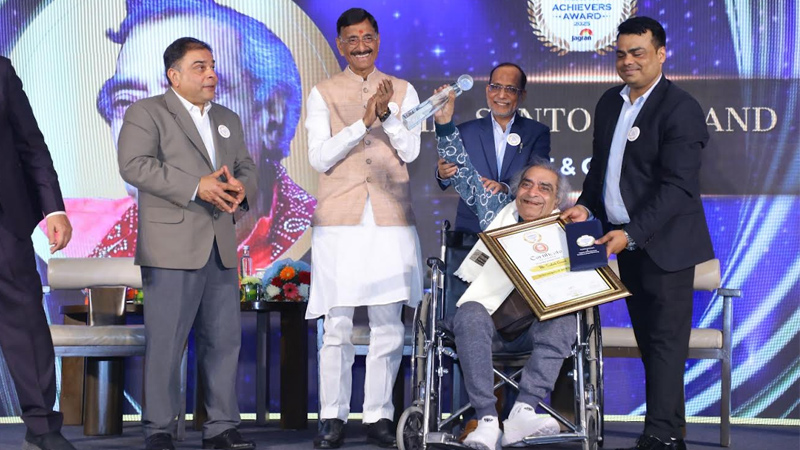
NEW DELHI: Hamdard Laboratories gathered a cross-section of India’s achievers in New Delhi on Friday, handing out the Hakeem Abdul Hameed Excellence Awards to figures who have left their mark across healthcare, education, sport, public service and the arts.
The ceremony, attended by minister of state for defence Sanjay Seth and senior officials from the ministry of Ayush, celebrated individuals whose work blends professional success with a sense of public purpose. It was as much a roll call of achievement as it was a reminder that influence is not measured only in profits or podiums, but in people reached and lives improved.
Among the headline awardees was Alakh Pandey, founder and chief executive of PhysicsWallah, recognised for turning affordable digital learning into a mass movement. On the sporting front, Arjuna Awardee and kabaddi player Sakshi Puniya was honoured for her contribution to the game and for pushing women’s participation onto bigger stages.
The cultural spotlight fell on veteran lyricist and poet Santosh Anand, whose songs have echoed across generations of Hindi cinema. At 97, Anand accepted the honour with characteristic humility, reflecting on a life shaped by perseverance and hope.
Healthcare honours spanned both modern and traditional systems. Manoj N. Nesari was recognised for strengthening Ayurveda’s place in national and global health frameworks. Padma shri Mohammed Abdul Waheed was honoured for his research-backed work in Unani medicine, while padma shri Mohsin Wali received recognition for his long-standing contribution to patient-centred care.
Education and social development also featured prominently. Padma shri Zahir Ishaq Kazi was honoured for decades of work in education, while former Meghalaya superintendent of Police T. C. Chacko was recognised for public service. Goonj founder Anshu Gupta received an award for his dignity-centred rural development initiatives, and the Hunar Shakti Foundation was honoured for empowering women and young girls through skill development.
The Lifetime Achievement Award went to former IAS officer Shailaja Chandra for her long career in public healthcare and governance, particularly in the traditional systems under Ayush.
Speaking at the event, Hamdard chairman Abdul Majeed said the awards were a tribute to those who combine excellence with empathy. “These awardees reflect Hakeem Sahib’s belief that healthcare, education and public service must ultimately serve humanity,” he said.
Minister Seth struck a forward-looking note, saying India’s young population gives the country a unique opportunity to become a global destination for learning, health and wellness by 2047.
The ceremony also featured the trailer launch of Unani Ki Kahaani, an upcoming documentary starring actor Jim Sarbh, set to premiere on Discovery on 11 February.
Instituted in memory of Unani scholar and educationist Hakeem Abdul Hameed, the awards have grown into a national platform that celebrates those building a more inclusive and resilient India. For one evening at least, the spotlight was not just on success, but on service with substance.







