I&B Ministry
Do not mix news with views and avoid speculation: Naidu
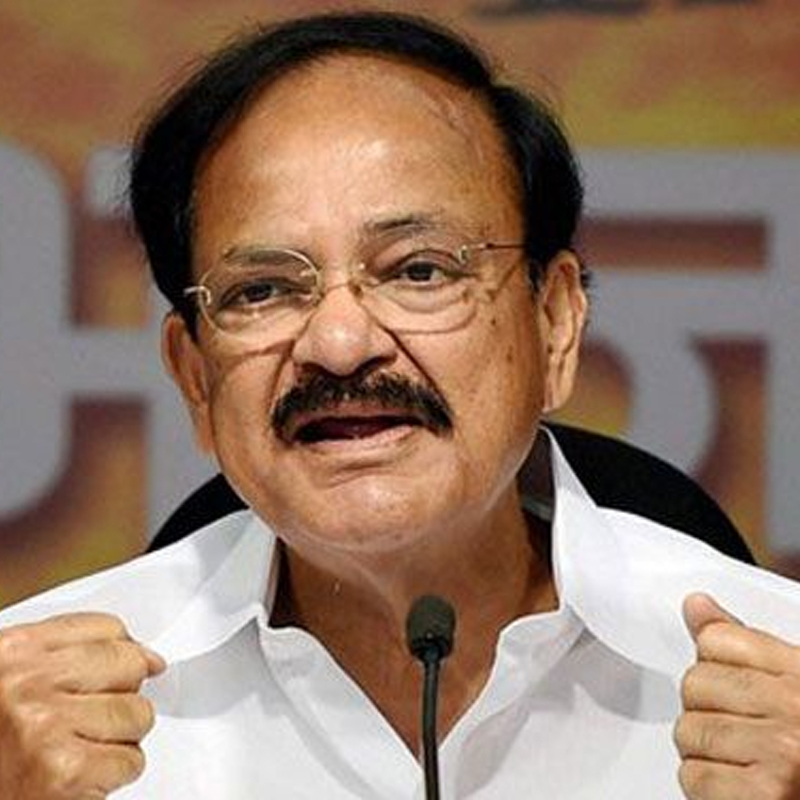
NEW DELHI: Information & Broadcasting Minister M Venkaiah Naidu today handed out some sanskari (rooted in culture) advise to officials of All India Radio and Doordarshan while reminding them of a pubcaster’s responsibilities in dishing out information devoid of sensationalism.
Stressing on the need for upholding credibility in dissemination of information by public broadcasters, the Minister said, “Public service broadcasters have a great responsibility on their shoulders to ensure credibility in the era of competition.”
Naidu was speaking at a review meeting during a visit to the All India Radio (AIR) and Doordarshan (DD) centres in Hyderabad on Monday.
Naidu infused confidence in the officials of different media units of Ministry of Information and Broadcasting (MIB) while interacting with them to understand their problems.
He said the information empowerment of the people is quintessential in the age of information revolution, and information is “great ammunition in the hands of the people in fighting corruption, poverty and inequalities from the society for the overall development of India”.
The Minister added that the public discourse should be guided by development rather than disruptive tactics and politics.
Public broadcasters must excel in factual information while communicating to the mass audience. He advised those in the public broadcaster Prasar Bharati, parent of DD and AIR, not to jump to conclusions but confirm the news before putting it on air.
“A public broadcaster, while disseminating information must abstain from obscenity, vulgarity and violence”, he said, adding that people in the media while producing programmes, plays, cultural programmes, must keep in mind India’s great heritage, culture, traditions and customs in mind.
He advised people in media to maintain high standards in informing the masses, keeping in mind the philosophy and guidelines established by the founding fathers in various spheres of public life. “Let us not mix news with views and create a bad practice,” Naidu exhorted Prasar Bharati officials.
He advocated that media should work together in bringing social harmony and discourage politicisation of social issues and not play into the hands of terrorists and to avoid in “turning them into heroes”.
He wanted the media to be biased towards rural people, agriculturists, down trodden sections, women and disabled people in giving more coverage to highlight their grievances.

I&B Ministry
Prasar Bharati opens AIR to private content under new policy
NIPP introduces revenue share, sponsored and gratis models
MUMBAI: Radio may be the oldest voice in the room, but it’s learning some very modern tricks. In a bid to stay tuned to changing listener habits, Prasar Bharati has opened the doors of All India Radio to private players under a newly rolled-out content framework. The initiative, titled Notice Inviting Programme Proposals (NIPP), marks a significant shift in how the public broadcaster approaches programming moving from a largely in-house model to a more collaborative, market-aligned ecosystem. Issued by Akashvani’s Directorate General in April 2026, the policy invites private producers, content owners and aggregators to pitch programmes across formats, from radio dramas and documentaries to quiz shows, storytelling and music-led content.
At the heart of the framework lies a three-pronged participation model designed to balance creative freedom with commercial viability. The most prominent route is revenue sharing, where advertising and sponsorship income generated by a programme is split between the producer and the broadcaster. The structure tilts in favour of creators offering a 70:30 split when producers bring in advertising, and 65:35 when monetisation is handled by Prasar Bharati.
Alongside this sits the sponsored model, where producers fully fund and monetise their content, subject to compliance with advertising norms and the AIR Broadcast Code. For those less commercially inclined, a gratis route allows content to be submitted free of cost, with Prasar Bharati retaining all monetisation rights effectively turning the platform into a national distribution channel for diverse voices.
The move comes as legacy media grapples with intensifying competition from private FM networks, streaming platforms and digital audio ecosystems. By repositioning AIR as both a public service broadcaster and a content marketplace, Prasar Bharati appears to be recalibrating its role in a rapidly evolving media landscape.
Importantly, the framework does not dilute editorial control. All submissions must adhere to the AIR Broadcast Code, and proposals are evaluated through a layered process that weighs storytelling quality, production capability, audience appeal and revenue potential. Only proposals crossing a defined threshold move forward, signalling that while access has widened, the bar remains firmly in place.
Operational discipline is another cornerstone of the policy. Producers are required to maintain broadcast-ready content, deliver episode banks in advance and navigate a structured approval process. Crucially, all production costs are borne by the content provider, reinforcing Prasar Bharati’s positioning as a distribution and oversight platform rather than a commissioning entity.
What elevates the initiative further is its scale. The framework spans multiple clusters and stations across India, covering both metro and regional markets, with specific language mandates and submission channels. This not only expands the content pipeline but also deepens linguistic and cultural representation, an area where AIR has historically held an advantage.
In effect, NIPP signals a quiet but meaningful transformation. AIR is no longer just broadcasting to the nation, it is inviting the nation to broadcast with it, blending legacy reach with contemporary content economics in a bid to stay relevant in an increasingly fragmented audio universe.