Hollywood
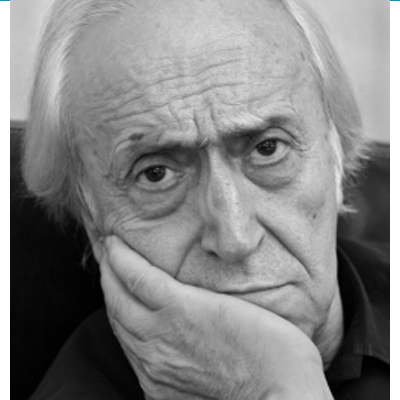
Djordje Kadijevic to receive lifetime achievement award at Grossmann Festival
NEW DELHI: Serbian writer and director Djordje Kadijevic, author of numerous unforgettable cinematic masterpieces and pioneer of fantastic cinema in ex-Yu region will receive the Honorary Vicous Cat Award for lifetime achievement on the closing day of the 10th Grossmann Fantastic Film and Wine Festival.
The festival which began on 15 July will conclude on 19 July at Ljutomer, Slovenia.
Kadijevic already had got a place among the giants of cinema with his debut feature, the gloomy wartime drama A Festivity (Praznik), a multi-layered masterpiece set in World War 2. Among the fans of the fantastic he is most known for his cult TV film She-Butterfly (Leptirica), the first Yugoslavian horror film. He is also an art critic, essayist, publicist and art theorist.
Kadijevic was born in Sibenik, Croatia, in 1933. An art historian by education, he started making in the late 1960s. His next films The Trek (Pohod, 1968), The Fiery One (zarki, 1970) and The Colonel’s Wife (Pukovnikovica, 1971) were also dealing with war. Very soon he also began working for television, his first TV film being medieval drama A Miracle (Cudo, 1971).
In 1973, he made three groundbreaking fantastic films for the TV series entitled Tales of Mystery and Imagination: She-Butterfly, which was initially received with shock and panic, grim gothic romance A Maiden’s Music (DeviCanska svirka) and metaphysical dark fantasy The Protected One (Sticenik). He continued his career on televison with splendid movies such as The Oath (Zakletva, 1974) and The Death of Karadjordje (Karadordeva smrt, 1983), and award-winning TV Series Vuk Karadzic (1987-1988). Gothic horror A Holy Place (Sveto mesto, 1990) was his long awaited return to a film made for cinemas.
A special retrospective will include his films A Miracle, She-Butterfly, The Protected One and A Holy Place.

Hollywood
Disney to cut 1,000 jobs in major restructuring drive
Layoffs span ESPN, studios and tech as company pivots to growth
MUMBAI: The magic isn’t disappearing but it is being reorganised. The Walt Disney Company has announced plans to cut around 1,000 jobs as part of a sweeping restructuring effort aimed at sharpening its edge in an increasingly unpredictable entertainment landscape. The move, led by CEO Josh D’Amaro, reflects a broader internal reset as the company rethinks how it operates, allocates resources and competes in a fast-evolving industry. In a memo to employees, D’Amaro acknowledged the difficulty of the decision but framed it as a necessary step to ensure Disney remains “efficient, innovative, and responsive” to rapid shifts in consumer behaviour and technology.
The layoffs will span multiple divisions, including marketing, film and television studios, ESPN, technology teams and corporate functions. Notifications have already begun, signalling that the restructuring is not a distant plan but an active transition underway.
Importantly, the company has clarified that the cuts are not performance-driven. Instead, they form part of a wider transformation strategy aimed at building a leaner, more agile organisation, one better equipped to respond to streaming dynamics, digital disruption and evolving audience expectations.
The timing is telling. The global entertainment industry is in the middle of a structural shift, with traditional television revenues under pressure and box office returns becoming increasingly volatile. Meanwhile, streaming platforms and digital-first competitors continue to redraw the rules of engagement, forcing legacy players to rethink scale, speed and storytelling formats.
For Disney, long synonymous with blockbuster franchises and timeless storytelling, the pivot is both strategic and symbolic. The company is doubling down on technology, direct-to-consumer services and content ecosystems that align with modern viewing habits, where audiences expect immediacy, personalisation and cross-platform experiences.
Even as the restructuring unfolds, D’Amaro struck a note of optimism, reiterating Disney’s commitment to creativity and long-term growth. Support measures for affected employees are expected as part of the transition, though details remain limited.
In essence, this is less about cutting back and more about reshaping forward. As Disney redraws its organisational map, the message is clear, in today’s entertainment world, even the most magical kingdoms must evolve or risk being left behind.