DTH
Dish TV reports profits in first full quarter post merger with Videocon d2h

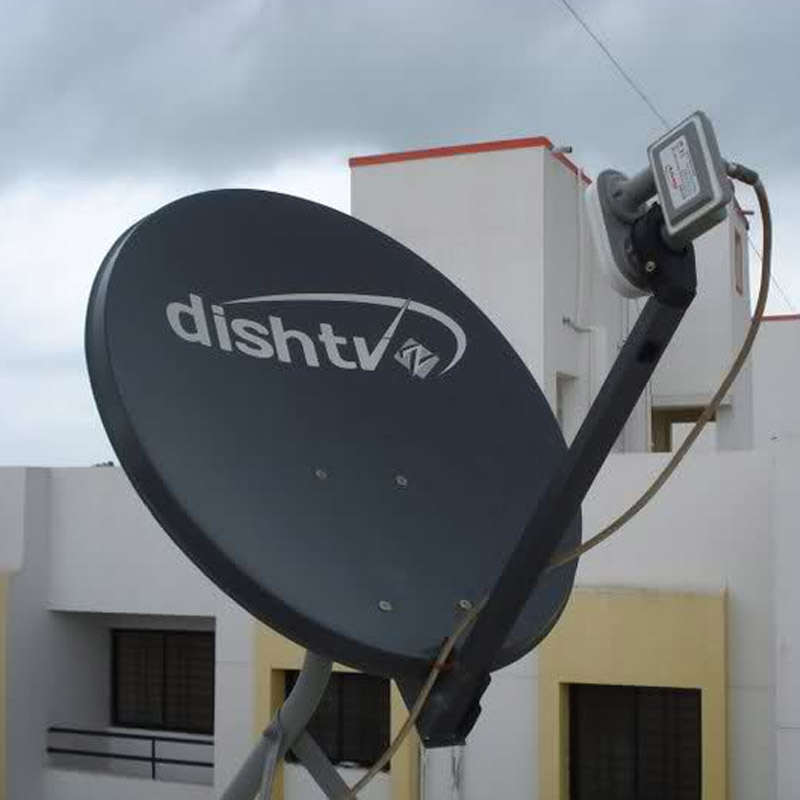
BENGALURU: Indian direct to home (DTH) behemoth Dish TV India Limited (Dish TV) reported profit after tax (PAT) of Rs 22.5 crore for the quarter ended 30 June 2018 (Q1 2019, quarter under review). Dish TV and Videocon d2h were merged on 22 March 2018 and hence Q1 2019 was the first full reporting quarter for the merged entity. In the immediate trailing quarter – Q4 2018, the company had reported more than four times the PAT of Q1 2019 at Rs 118.2 crore, but that could be attributed to differed tax to the extent of Rs 147.1 crore. In Q1 2019, the company reported differed taxes to the extent of Rs 1.8 million.
Since results of the year ago quarter are not comparable, a quarter on quarter (q-o-q) comparison of the numbers of the joint entity has been done here. Operating profit or EBITDA in Q1 2019 was Rs 556.8 crore as compared to an adjusted EBITDA of Rs 400.6 crore in Q4 2018. The company says in its earnings release that adjusted EBITDA is EBITDA adjusted for merger expenses to the tune of Rs. 600 million booked in Q4 2018 that have been excluded while calculating adjusted EBITDA.
The company reported an eight percent q-o-q increase in operating revenue for the quarter under review at Rs1,655.6 crore as compared to Rs 1,532.4 crore in Q4 2018. Dish TV says that subscriber additions picked up speed during the first quarter. The net number of 301 thousand additions took Dish TV’s subscriber base to 2.33 crore.

The company says that higher revenue is attributed to an 8.1 percent q-o-q increase in subscription revenue for Q1 2018 at Rs 1,489.3 as compared to Rs 1,377.1 crore. Incrementally higher HD viewership, lower discounts at package levels and a price hike across a majority of recharge packages brought about this increase in subscription revenues during the quarter. Dish TV says that 44 percent of all subscriber additions were of High Definition and that in total, HD subscribers formed 17 percent of the total net base of the company. ARPU for the quarter increased to Rs 214 from Rs 201 in the previous quarter.
Dish TV CMD Jawahar Goel said, “Price hikes initiated during the quarter were a result of some pricing power gathered over the months. It is a positive sign and should stand us in good stead in the year ahead. The first quarter often sets the pace for the full year. Our performance in the first quarter gives us the confidence to deliver in line with our expectations going forward.”
“We remain positive on achieving the Rs 5.1 billion synergies that we have envisaged from the merger for the current fiscal. Part of the estimated synergies are going to be due to a more rational programming cost. Our interactions with our broadcasting partners so far reinforce our belief in the strength of the new Dish TV platform,” added Goel.
Let us look at the other numbers reported by Dish TV
The merged Dish TV’s consolidated total expenditure reduced 2.9 percent q-o-q in Q1 2019 to Rs 1,098.9 crore from at Rs 1,131.7 crore in Q4 2018. Cost of goods and services in Q1 2019 increased 1.7 percent q-o-q to Rs 884.1 crore from Rs 868.9 crore. Employee benefit expense during the quarter under review reduced 13.7 percent to Rs 57.7 crore from Rs 66.8 crore in Q4 2018. Finance cost in Q1 2019 increased 33.5 percent q-o-q to Rs 177.5 crroe from Rs 132.9 crore. Other expenses in Q1 2019 reduced 19.9 percent q-o-q to Rs 157 crore from Rs 195.97 crore.






DTH
DD Free Dish e-auction revenue dips to Rs 642 crore as slot sales fall
Revenue dips as revised norms reshape bidding in 94th round
NEW DELHI: Prasar Bharati’s DD Free Dish has closed its 8th annual, and 94th overall, e-auction for MPEG-2 slots with total collections of Rs 642 crore for the period April 1, 2026 to March 31, 2027.
That is lower than last year’s Rs 780 crore haul, with 55 slots sold compared with 61 in FY25–26. The softer topline reflects both a slimmer inventory and a recalibrated auction framework.
This was the first auction conducted after amendments to the e-auction methodology, including tighter eligibility norms and a revised reserve price structure for MPEG-2 slots. The stated aim was greater transparency and more serious participation. The immediate outcome appears to be more measured bidding in certain categories.
Day one set the tone. Eight slots were sold, six in the premium Bucket A+ and two in Bucket A. The strong early action in A+, which typically houses Hindi GECs and movie channels, reaffirmed the enduring appeal of mass Hindi programming on the platform.
Among the broadcasters securing slots in the initial rounds were Zee Entertainment Enterprises, Sony Pictures Networks India, Viacom18’s Colors network, Sun Network and Shemaroo Entertainment. Their continued presence signals that, despite the pull of digital platforms, Free Dish remains a strategic must have for legacy networks chasing scale in price sensitive markets.
The final bouquet of 55 channels leans heavily towards Hindi news, movies, devotional fare, Bhojpuri and regional programming.
In Hindi news, familiar heavyweights such as Aaj Tak, ABP News, India TV, News18 India, Republic Bharat and Zee News made the cut. Entertainment and movie offerings include Colors Rishtey, Star Utsav, Dangal TV, Sony Pal, Shemaroo TV, Goldmines, B4U Movies and Zee Biskope. Devotional viewers will find Aastha, Sanskar and Sadhna Gold among the selected channels.
Regional representation includes Sun Marathi, Fakt Marathi, PTC Punjabi and GTC Punjabi.
Equally telling were the absences. Broadcasters such as Big Magic, Filamchi Bhojpuri, India News, Bharat Express, Movieplex Maithili, TV9 Marathi, Shemaroo Marathibana, Zee Chitra Mandir and Satsang did not participate. The pullback is particularly visible across Marathi, Bhojpuri, Maithili and spiritual programming. Industry observers point to the revised reserve prices, tighter eligibility norms and a reassessment of commercial viability as possible factors.
DD Free Dish continues to beam into over 40 million homes, largely in rural and semi urban India. For advertisers and broadcasters alike, it offers efficient access to Bharat markets where pay TV penetration remains uneven and OTT subscriptions are limited.
The moderation in revenue this year may be read as a pause rather than a retreat. Fewer slots, a reworked auction playbook and evolving broadcaster strategies have clearly shaped outcomes. Yet premium Hindi entertainment retains its pull, and the platform’s mass reach remains hard to ignore.
As the FY26–27 line-up settles in, the mix of winners and walkaways will define the private satellite channel landscape on DD Free Dish for the year ahead.