iWorld
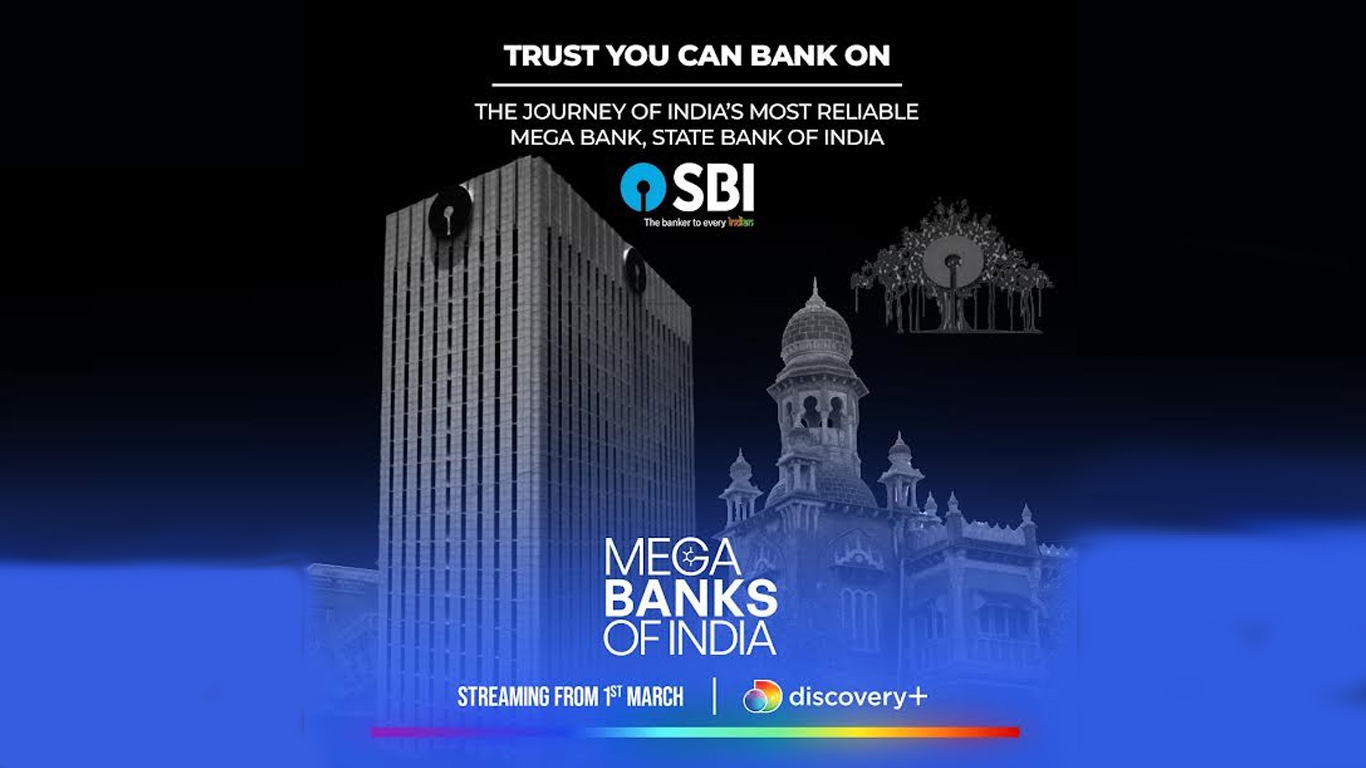
discovery+’s new series “Mega Banks of India” to premiere on 1 March
Mumbai: Warner Bros Discovery is set to launch its new series, Mega Banks of India, streaming on discovery+ from 1 March 2024. The inaugural episode will shine a spotlight on State Bank of India (SBI), exploring its illustrious history, pivotal role in shaping India’s economy, and innovative strides in the banking sector.
In its exploration of the banking, financial services, and insurance (BFSI) sector, Mega Banks of India offers a captivating dive into legacy banks that have shaped India’s economic landscape. Each episode, spanning from pre-independence origins to modern innovations, unveils the remarkable journey of these institutions. Featuring insightful interviews with key figures such as SBI chairman Dinesh Khara, historian Abhik Ray, and SBI’s managing directors, viewers gain a comprehensive understanding of the bank’s historical significance and contemporary relevance.
SBI chairman Dinesh Khara said “The “Mega Banks of India” series launched by Warner Bros. Discovery is a great initiative to showcase the legacy of a strong banking background of the Indian economy. It boosts the flux of various initiatives from time to time for the nation, be it in Agriculture, MSME, Forex, Digitization, Amritkal or even startups. This is a remarkable showcasing of the ‘Millennial India’ at a Global platform. “
Warner Bros Discovery head advertising sales South Asia Tanaz Mehta said, “The Mega Banks of India series marks a significant milestone in our endeavor to explore the fascinating narratives within India’s financial landscape. With the premiere episode featuring the State Bank of India (SBI), audiences will delve into the rich history of Indian banking. Our series reflects our dedication to delivering engaging content and offering valuable insights into the BFSI sector.”

iWorld
Govt pushes live events sector to Rs 196 billion by 2028
LEDC roadmap targets 15–20 million jobs and global hub status by 2030
MUMBAI: India’s live events story is getting louder and this time, it’s policy turning up the volume. The fourth meeting of the Live Events Development Cell (LEDC), chaired by Chanchal Kumar, was held on 30 April 2026 at Vigyan Bhavan, bringing together representatives from nine Central Ministries, six States and 12 industry stakeholders to chart the sector’s next phase of growth. The numbers already tell a compelling story. India’s organised live events industry was valued at Rs 145 billion in 2025 and is projected to grow at 10 per cent to Rs 196 billion by 2028 making it one of the fastest-expanding segments within the media and entertainment ecosystem.
Set up in July 2025 by the Ministry of Information and Broadcasting, the LEDC is tasked with turning that momentum into a structured growth engine. Its long-term ambition is ambitious, position India as a global live events hub by 2030 while generating an additional 15–20 million jobs.
At the meeting, officials emphasised the sector’s multiplier effect spanning tourism, employment and allied industries while underlining the need for coordinated execution. A key update was the rollout of a single-window clearance system for live event permissions via the India Cine Hub portal, aimed at simplifying approvals and improving transparency.
States have been urged to adopt the system, alongside implementing the “Model Executive Order for Streamlining Licensing and Permissions for Live Events in India, 2026” by 31 May 2026. The framework seeks to standardise what has long been a fragmented and time-consuming regulatory process.
Beyond permissions, the discussion also turned to infrastructure and talent. A draft concept for greenfield venue development was tabled, alongside plans to build a skilled workforce. The Indian Institute of Mass Communication, in collaboration with industry bodies MESC and EEMA, is set to introduce certificate courses tailored to the live events sector.
Chanchal Kumar stressed that alignment across stakeholders is already in place, with the next challenge being execution at scale. The government, he noted, remains committed to creating a facilitative and transparent ecosystem for organisers.
For an industry once seen as fragmented and event-driven, the message is clear, India’s live events business is no longer just about the show, it’s about building an entire stage for growth.