iWorld
Discovery to premiere special show ‘PANDEMIC: COVID-19’

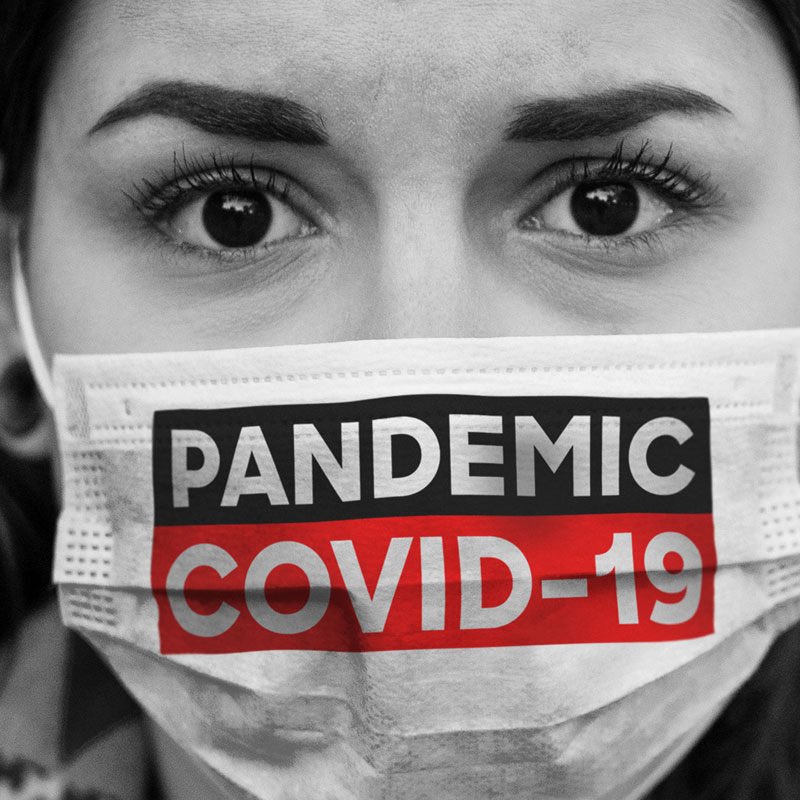
MUMBAI: Discovery, Discovery HD and recently launched streaming service Discovery Plus will stream PANDEMIC: COVID-19, a one-hour special that gives an in-depth look at the COVID-19 pandemic sweeping the globe on 15 April at 10 pm.
As many have heard through the news, COVID-19 is believed to have transmitted from animals to humans in a market in Wuhan, China. But how does this happen? Experts will shed light on its treatment and transmission, which initially baffled doctors and scientists who first encountered early patients who fell ill. The special will also look at how, within a matter of weeks, COVID-19 spread throughout China and beyond, alarming healthcare professionals and scientists.
PANDEMIC: COVID-19 will take viewers inside the fight to contain the pandemic with the latest news on how the government is coordinating to test and treat patients, and to prevent further spread. Experts will reveal why COVID-19 is unique, why the world was so unprepared for it and what could have been done differently to contain its spread.
The special will also trace the origin of the outbreak in the United States to the first patient, its rapid spread in Seattle and probe the dramatic and unexpected transmission across the country. Viewers will hear from the leading experts in medicine on the frontlines as well as academia, government officials and patients with first-hand accounts.
PANDEMIC: COVID-19 is produced for Science Channel by ITN Productions. For ITN Productions, executive producers are Ian Russell and Sarah Jane Cohen and producer is Nick Powell. For Discovery and Science Channel, Executive Producer is Gretchen Eisele.
Is the US prepared to face this global pandemic unrivalled in modern history? Every day the story takes another dramatic turn, as the number of infected and reported dead in the United States continues on an upward trajectory. PANDEMIC: COVID-19 will look at the effects of the drastic measures happening across America as institutions, schools and businesses are shut down to prevent transmission. This timely special will shed insight from those leading the fight to find answers as well as a possible cure.
University College London cell biologist Dr Jennifer Rohn says, “The normal circulating strain in the bats probably isn't causing much of a disease. But when it reaches humans, that's when all havoc breaks out, because it's in a new environment. Respiratory viruses have one aim: that is to get inside a human cell and use it as a factory to make thousands or millions of replacement copies that will then spread onto new cells. So often the cells will, will literally blow apart, as the virus is producing its millions of progenies.”
“The virus, people say sometimes is a piece of bad news wrapped in protein. It is a vector for getting genetic information into a cell and that genetic information just contains a blueprint to make more viruses. They were able to tell that although this virus was new, it was closely related to the original SARS virus,” explains Professor Thomas Friedrich from University of Wisconsin-Madison, in the documentary. “With viruses it's much more challenging because mostly, they use our own cells to make more viruses. And so they're using our own cellular machinery, we can't poison that without poisoning ourselves.”
Highlighting the speed with which Covid-19 spread, professor Dave O'Connor, University of Wisconsin-Madison says, “I think this is an important reminder that we live in an interconnected world where viruses that emerge anywhere in the world, can be a threat to the entire world.” He adds in the documentary, “A vaccine for this virus is unlikely to be available in the next 12 months. What that means is these other sorts of preparedness measures need to be put into place, because we're not going to have a vaccine. And so expecting this to be like the movie Contagion is simply unrealistic.”