English Entertainment
Discovery Channel to celebrate Republic Day with ‘India On Film’

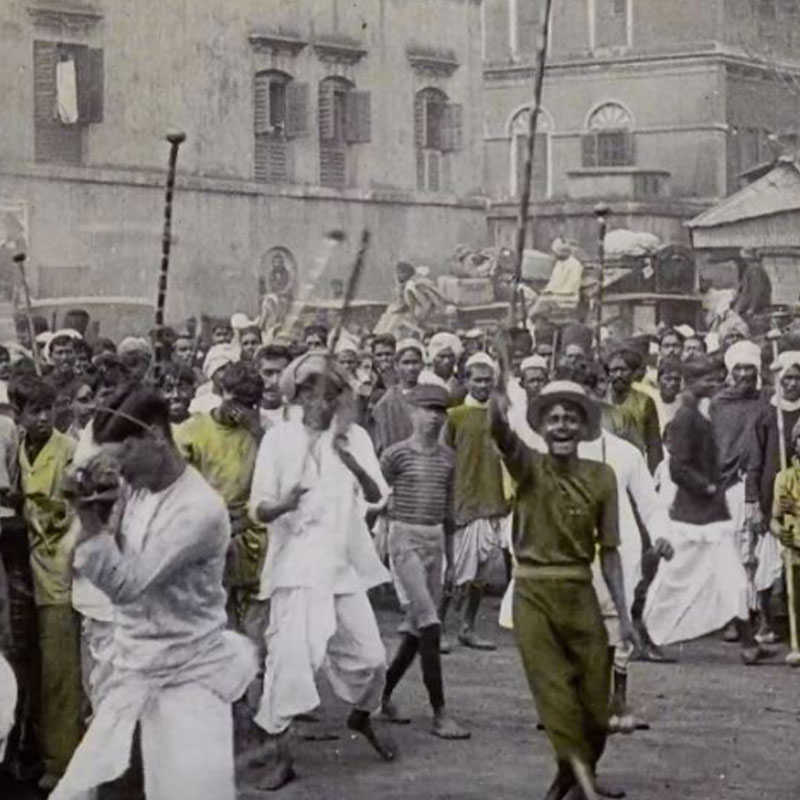
MUMBAI: Discovery Channel, India’s leading destination for real-life entertainment, will celebrate 70 Republic Day of India with a special documentary ‘India On Film’, a unique two-part documentary film, narrated by versatile actor Rahul Bose. The film explores never seen before archival footage expertly restored and digitized by the British Film Institute (BFI) highlighting India’s rich history, society, culture and the daily life in the 1900s. Catch ‘India On Film’ on 26 January at 8PM only on the Discovery Channel and Discovery Channel HD.
‘India On Film’ will take the viewers back in time, to over a century ago, to meet traditionally dressed women and men from across classes, to walk the busy streets with rickshaw pullers, to ride elephants with hunters, to wash in the Ganges, to pick tea in the hills and to join families for a traditional picnic. Since the earliest days of the movie camera, expatriates and travelers from Europe have filmed across the Indian sub-continent, witnessing extraordinary historic events and momentous change in the first half of the 20th century. At times touching, funny and engaging, ‘India On Film’ offers a ringside view of history in the making and a remarkable glimpse into a past way of life. With an archive of over 160 films, the BFI manages to cover landscapes from the foothills of the Himalayas in the north to the tropical south, cities such as Calcutta, Delhi and Bombay, in their rustic setting.
Speaking about his experience of narrating the film, actor Rahul Bose, said, “I am always drawn to projects that look at things through a different lens. India On Film, is unique in its thought and manifestation. Being a part of this film was educative and a privilege in equal parts. The film delicately weaves the rich history of the subcontinent and gives the viewer a rare glance into what it looked like in the 1900s.”

Discovery South Asia content, factual & lifestyle entertainment director Sai Abishek said, “India on Film is a fantastic opportunity for viewers to get a glimpse into an unseen India they have so far only read about in history books or heard about in stories handed down through the generations. It is mesmerizing to visualize such an important piece of our rich past.”
TVF International Acquisitions Manager for India on Film distributor Julian Chou-Lambert said: “From some of the earliest ever films of India through to remarkable footage of Gandhi, India on Film provides a visual and historical treasure trove. Many of the BFI films have never been seen before, so we are very pleased to be bringing these to India for the first time through Discovery.”
Along with chronicling the quotidian life of India in the 1900s, India on Film will also provide a peek into Mahatma Gandhi’s Dandi March and also track British game hunter, Jim Corbett, who filmed many of his expeditions tracking man-eating tigers and leopards. Among the many other events that led to creating a new India, this documentary also encapsulates authenticity of India’s rich past with a detailed understanding of what the country looked like in the 1900s.






English Entertainment
ZEE5 UK partners Narrative Entertainment to add UK channels
Six FAST channels added as platform sharpens hybrid play in Britain
LONDON: ZEE5 UK struck a first-of-its-kind deal with Narrative Entertainment, bringing mainstream UK television channels onto an Indian streaming platform as it pushes to deepen its footprint in a crowded, mature market.
The partnership adds six of Narrative’s FAST channels to the service, including Great! Movies, Great! Romance, Great! Mystery and kids brands POP, Tiny Pop and POP UP, widening ZEE5 UK’s appeal across genres and age groups.
The move reflects a clear shift in strategy. ZEE5 UK is betting on a hybrid model that blends on-demand content with curated, always-on channels to drive discovery and increase time spent on the platform.
“This partnership represents a meaningful evolution in how we serve audiences in mature markets like the UK, where viewers are defined by habits, convenience and choice rather than geography or language alone,” said Parul Goel, territory head, Europe, Zee Entertainment. “By bringing trusted mainstream UK channels together with our premium originals, movies and kids’ content, we are building a more consumer-centric platform that simplifies viewing while increasing depth and relevance.”
Fateha Begum, commercial director, Narrative Entertainment, said the tie-up would fuel growth for both sides. “Our portfolio of quality programming, with such wide and enduring appeal, is a perfect complement to ZEE5 UK. This is a strong partnership that will support growth for both parties, and we share Zee Entertainment’s vision of an increasingly partnership-led future for the industry.”
ZEE5’s global library spans over 4,000 films and more than 500 originals, with over 130 new titles added annually. The addition of Narrative’s channels strengthens its kids offering and introduces genre-led linear experiences alongside its on-demand catalogue.
The deal also gives Narrative access to ZEE5 UK’s fast-growing user base, extending reach without diluting brand identity, while reinforcing ZEE5 UK’s network of more than 40 live channels.
As streaming wars intensify, ZEE5 UK is widening its playbook, blending content, convenience and partnerships in a bid to win screen time in one of the world’s toughest markets.






