Hollywood
Director Guy Ritchie’s new King Arthur movie goes on floors


MUMBAI: Acclaimed filmmaker Guy Ritchie brings his dynamic style to an original King Arthur epic, a sweeping fantasy action adventure starring Charlie Hunnam for Warner Bros. Pictures and Village Roadshow Pictures.
Principal photography has begun at Warner Bros. Studios Leavesden, UK.

The bold new story introduces a streetwise young Arthur who runs the back alleys of Londonium with his gang, unaware of the life he was born for until he grasps hold of the sword Excalibur – and with it, his future. Instantly challenged by the power of Excalibur, Arthur is forced to make some hard choices. Throwing in with the Resistance and a mysterious young woman named Guinevere, he must learn to master the sword, face down his demons and unite the people to defeat the tyrant Vortigern, who stole his crown and murdered his parents, and become King.
Starring with Hunnam is Astrid Berg?s-Frisbey as Guinevere; Oscar nominee Djimon Hounsou as Resistance leader Bedivere; Aidan Gillen as Goosefat Bill; Oscar nominee Jude Law as Vortigern; and Eric Bana as Arthur’s father, King Uther Pendragon.
Ritchie will direct from a screenplay by Joby Harold. Ritchie will also produce the film, alongside producers Lionel Wigram and Steve Clark-Hall, Akiva Goldsman, Joby Harold, and Tory Tunnell. David Dobkin and Bruce Berman will executive produce. Max Keene will serve as co-producer and James Herbert as associate producer.
The creative team joining Ritchie behind the scenes includes two-time Oscar-nominated director of photography John Mathieson, Oscar-nominated production designer Gemma Jackson, editor James Herbert, costume designer Annie Symons, makeup and hair designer Christine Blundell, and Oscar-nominated VFX Supervisor Nick Davis.
The film will shoot primarily at Warner Bros. Studios Leavesden, and on location in Wales and Scotland.
Slated for release on 22 July, 2016, it will be distributed in North America by Warner Bros. Pictures, a Warner Bros. Entertainment Company, and in select territories by Village Roadshow Pictures.





Hollywood
Paramount eyes $24bn Gulf support to fund Warner Bros Discovery merger: Reports
Sovereign funds line up funding as media giants chase streaming scale
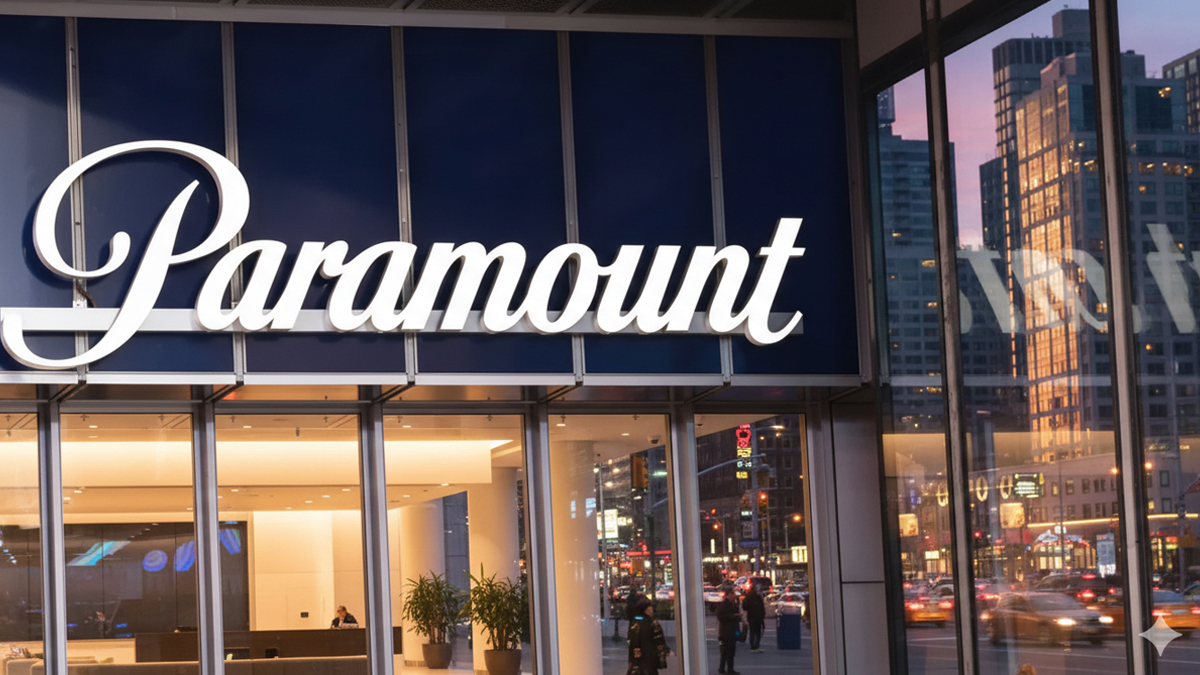
NEW YORK: Paramount Skydance is in talks to secure nearly $24 billion in equity commitments from Gulf sovereign wealth funds to support its planned takeover of Warner Bros. Discovery, according to a WSJ report.
The funding push comes as Paramount Skydance advances its proposed $110 billion deal for Warner Bros. Discovery, which carries an equity valuation of $81 billion and is expected to close in the third quarter of 2026.
At the heart of the financing plan are three major Gulf investors. Saudi Arabia’s Public Investment Fund is expected to contribute roughly $10 billion, while the Qatar Investment Authority and Abu Dhabi-based L’imad Holding are likely to make up the remainder.
Crucially, the proposed investments are structured as non-voting stakes. This means the Gulf backers would not have direct control in the combined entity, a move designed to ease regulatory concerns in the United States. Paramount executives reportedly do not expect the deal to trigger scrutiny from bodies such as the Committee on Foreign Investment in the United States or the Federal Communications Commission.
If completed, the merger would bring together a formidable portfolio of entertainment and news assets, including CNN and CBS. The combined entity aims to better compete in a fast-evolving media landscape where streaming platforms are steadily pulling audiences away from traditional television.
The deal reflects a broader shift in global media, where scale is increasingly seen as essential to survive the streaming wars. By pooling content libraries, technology and distribution, Paramount Skydance and Warner Bros. Discovery are betting on size and synergy to drive future growth.
The involvement of deep-pocketed Gulf investors also underscores the growing role of sovereign wealth in shaping global media consolidation, particularly at a time when high-value deals demand equally large financial backing.
With shareholder votes and regulatory milestones still ahead, the proposed tie-up remains one of the most closely watched media deals of the year. If it clears the final hurdles, it could redraw the competitive map of the global entertainment industry.






