I&B Ministry
Digital & print media ad policy aimed at transparency, accountability: Naidu

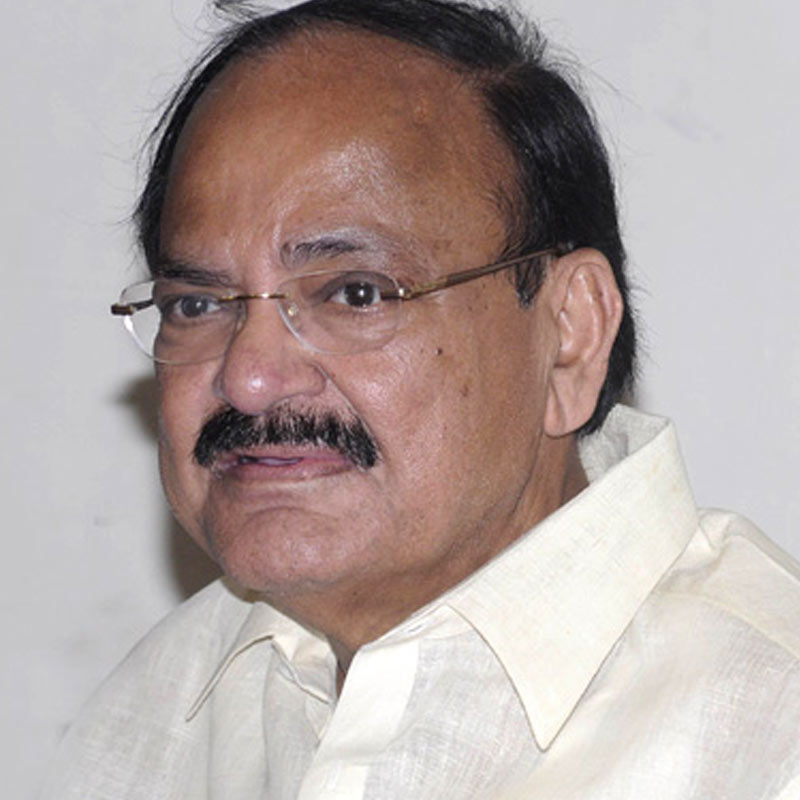
NEW DELHI: Information and Broadcasting Minister M Venkaiah Naidu today said a Digital Media & New Print Media Advertisement policy was framed recently to promote transparency and accountability in issuing of advertisements.
Addressing the first consultative meeting of members of Parliament attached to his Ministry since he took charge, he apprised the members about the three-member committee constituted by the Ministry to address the issues related to Content Regulation in Government Advertising. (The Committee had been formed after orders by the Supreme Court in a case relating to government advertisements.)
All India Radio had completed the FMization of all channels of Vividh Bharati all over the country.
Noting that the focus of the Ministry had been to streamline processes and promote transparency and accountability in its functioning, he said the e-auction of the first batch of has successfully & transparently completed e-auction of first batch of private FM radio channels Phase-III comprising 135 channels in 69 existing cities of Phase-II. He added that Private FM Radio has been permitted to broadcast at no cost AIR News for listeners to get credible information apart from entertainment.
He said the Ministry had played a critical role in the communication and outreach activities for the Government Flagship schemes and Initiatives such as Swachh Bharat Abhiyan, Make in India, Beti Bachao Beti Padhao, etc. through 360 degree Multimedia campaigns. Minister of State Rajyavardhan Singh Rathore was also present in the meeting.
Naidu said that in order to harness the India’s soft power in film sector, the Ministry is in the process of setting up of National Centre of Excellence for Animation, Gaming and VFX (NCOE) in Maharashtra. The institute would be a world class institution to provide skilled manpower in this emerging area.
A Film Facilitation Office to promote and facilitate film shootings by foreign film makers in India. The Ministry has also included “Most Film Friendly State” as a special category award in National Film Awards this year. The Shyam Benegal Committee report for holistic interpretation of the provisions of the Cinematograph Act/ Rules was under consideration of the Ministry.
Referring to the Publications Division which was the subject of the meeting, Naidu said the Division may approach stakeholders as part of corporate social responsibility to sponsor books for schools and libraries across the country. This would enhance the visibility of the rich collection of Divisions publications and at the same time making these books available to the younger generation in far off and remote villages.
He said the Ministry would consider the possibility of publishing Employment News in regional languages also. He added that the Division would consider bringing out books regarding the contribution of large number of heroes of India’s struggle struggle from different regions who have not been given the recognition that they so rightly deserved.
Members of the committee said efforts needed to be taken to enhance the visibility of the rich and diverse collection of books. This could be initiated through appropriate promotional and marketing strategies. Efforts needed to be taken to reach out the younger generation and publish books of their interest. Contemporary publication trends also needed to be a part of the vision and way forward strategy.
A presentation was made by Joint Secretary Mihir Kumar Singh on behalf of the Ministry giving an overview of the steps and initiatives undertaken so far by the Division as well as the future roadmap for the Publications Division. Members of the committee were specially apprised of the digitization and e-initiatives of the Publications Division including the e-version of 100 volumes of Collected Works of Mahatma Gandhi.
Parliamentarians Ms V. Sathyabama, Madhusudan Mistry and Vivek Gupta, Dr Sanjay Jaiswal, Ms Dev (Moon Moon Sen) Varma, and Harivansh attended the meeting.