iWorld
dentsu’s ‘For the Game’ report: The Rise of the Gaming Culture

Mumbai: dentsu Gaming has released its report – ‘For the Game’ – in collaboration with Indiantelevision.com. This report delves into the rise of the gaming culture, exploring the prevalence and variety of gaming behaviours, and how the gaming culture and the broader Indian culture influence one another.
According to the dentsu Gaming survey, gaming has steadily crept into the virtual realm, exploding to an unfathomable degree. In fact, we are at a unique juncture where the virtual gaming ecosystem is also dabbling with realism. As gaming as a category expands in length and breadth, so do the gaming behaviors.
The report found out that due to the changes in lifestyle brought on by the epidemic, gaming has become an even more common activity during the last two years.
According to CCSxGWI statistics from the nine global markets they examined in segmentation, 34 per cent of gamers play daily, and 46 per cent play weekly, In contrast, 32 per cent of gamers in India play every day, and 52 per cent play every week.
People of all age play video games. Gen Z gamers play an average of 24 per cent per day and 40 per cent weekly, compared to 24 per cent and 38 per cent for millennials. 17 per cent of Gen X gamers play every day, and 35 per cent play once a week. This suggests that the gaming audience is multigenerational and primarily plays once a week. But more crucially, the CCSxGWI data demonstrates that gamers are a diverse population, not a monolithic one.
In Mumbai, the survey found out that 33 per cent of gamers play every day while 49 per cent play weekly and 12 per cent play monthly or less. In Delhi, 31 per cent of gamers play every day while 54 per cent play weekly and 11 per cent play monthly or less. In Bengaluru, 34 per cent play every day while 51 per cent play weekly and 10 per cent play monthly or less.

Games span a wide range of genres, from simple mobile games like Wordle to immersive virtual worlds like Roblox and everything in between. Today, gaming includes watching other people play, as evidenced by the success of platforms such as YouTube.
The ecosystem of players is as diverse as the gaming universe itself. However, most existing gaming segmentations in the industry have resulted in groups being identified solely by the device used or the types of games played. Because gaming is so diverse, the players are equally so. However, most existing gaming segmentations in the industry have resulted in groups being identified solely by the device used or the types of games played.
The Boom of Gaming Fandom
In recent years, the transition from physical game copies to online ecosystems has increased the popularity of gaming. Technology platforms have enabled gamers to form vibrant communities and fandoms. The participatory nature of gaming, whether as a player, a viewer, or in any other capacity, is a major draw for people to get into gaming and fandoms.
According to the CCSxGWI survey, gaming serves as a platform for sense of belonging, community building, and even learning in Indian society. Peer dynamics are important for gamers, with 40 per cent turning to friends for gaming information and content, followed by 27 per cent turning to social media.
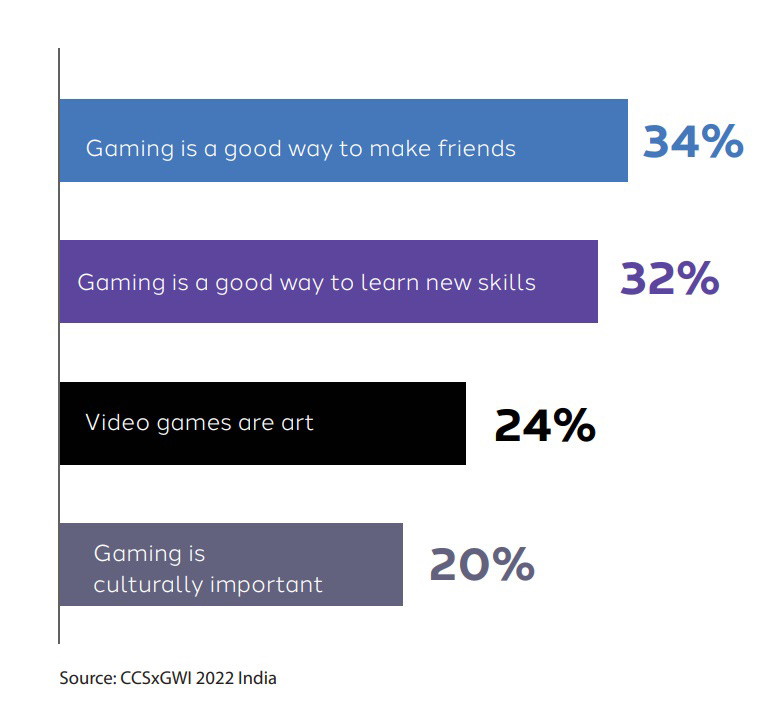
According to the survey, 34 per cent believe gaming is a good way to make friends, 32 per cent said gaming is a good way to learn new skills , 24 per cent noted that video games are art and 20 per cent commented that gaming is culturally important.
For brands, the fandom space is an exciting and potentially profitable one – if they can create new forms of reward and access for these highly engaged communities.
Platforms like Discord, Reddit, and Facebook Groups allow gaming fandoms to grow and multiply at such a rapid pace that it has become a dominant form of online culture. Games like Fortnite bring fandoms together not only to play the game, but also to socialise and collect skins and collectibles associated with their favourite movies or sports teams in order to represent their chosen fandoms and subcultures. The success of Fortnite demonstrates the emergence of a new type of social experience dedicated to fandom culture.
The For the Hype segment best captures the concept of gaming fandom. Gamers in this demographic enjoy not only playing but also sharing their enthusiasm with others through online forums, social media, messaging, and blogs. They enjoy discussing their game selections with their gaming buddies. Plays online but also has offline games for the family. In addition to a strong sense of belonging, the ‘For the Hype’ segment believes gaming is a part of their culture rather than just a way to unwind.
Gamers have a wide range of personalities and interests, are often disproportionately passionate about other activities, and are voracious consumers of all forms of media.
Gamers consume a significant amount of time-consuming media. CCSxGWI data show that in a typical week, gamers watch 28 hours of TV (including linear TV and on demand TV), 22.3 hours of internet on any device, 9 hours of social media sites or apps, and 10 hours of online videos (vs. 25, 20, 8, and 10 hours respectively, for the general population). Gamers have a voracious appetite for media. In India, most gamers are avid viewers of television and online videos. Up to 66 per cent of people get their entertainment from OTT platforms and audio OTTs like Spotify and Gaana.
The generous media consumption of gamers, as well as the response from platforms and media networks, creates numerous opportunities for brands while also increasing pressure on them to be consistent across screens, channels, and formats.
This is where fusing gaming data with broader behavioural and media data, such as the CCSxGWI fusion, enables brands to gain game-changing intelligence.
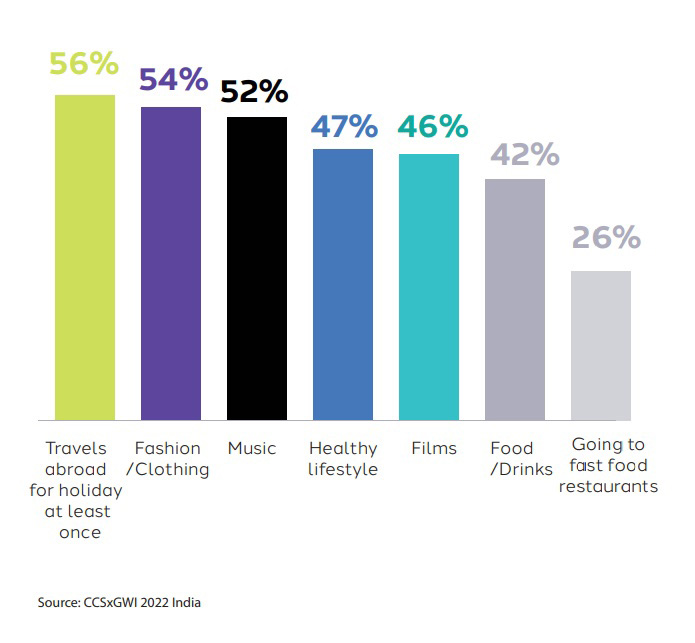
The For the Party segment is made up of avid gamers who also have a variety of other interests. They enjoy travelling, fashion and clothing, and have a diverse media diet that supports their interests, which includes movies, television, and music. However, gaming is a critical component of this mix. 25 per cent usually play on their phones while watching television.
Gaming influence in India
With online gaming apps like Rummy and Teen Patti, gaming’s cultural influence flourished in India. Board games such as Ludo and UNO are also very popular among people of all ages and genders.
Even shows on OTTs such as Clutch, Playground, and Mad House revolve entirely around gaming phenomena. Gaming as a form of entertainment has become so popular that popular youtubers and content creators have begun streaming games as well. Collaborations, gaming skills, and sponsors have accelerated their growth to the point where people have formed clans and fanclubs in their honor.
Esports Popularity
Riot Games’ League of Legends was watched for over 660 million hours in 2021, a figure that many traditional sports could not even fathom. In 2022, esports had firmly established its grip on sports culture. The industry’s biggest names are eager to attract more advertisers by shifting to a 360-content strategy that includes everything from short reality shows to long-form documentaries. This opens up numerous opportunities for businesses interested in collaborating with sports.
The fan base for esports is also growing as tournaments become larger and more intense.
The demand for updates and content has exploded in recent years, and social media has been a major contributor to this in the country.
Fans (47 per cent) and teams (41 per cent) enjoy following their favourite players and teams for a specific game or genre that they are interested in or play themselves. Esports has also become a spectator sport. It has evolved into a form of entertainment, with 38 per cent of the gamer audience watching it every day and another 49 per cent watching it at least once a week. A typical gamer spends close to 4 hours per week watching esports.
Gaming-gateway to the metaverse
The gaming community is the ideal focus audience because they are most likely to make up the early majority segment when metaverse technology becomes widely available.
The For the Win segment exemplifies how gaming is influencing culture in general. Gamers in this group are often at the cutting edge of culture, knowing the latest trends before many of their friends and being more likely to own new technology, such as a VR headset.
According to the CCSxGWI survey, 64 per cent said they know the latest trends before most of their friends, 49 per cent believed gaming is a good way to make friends, 34 per cent said gaming is culturally important, 33 per cent said consider themselves an expert when it comes to new technology and 30 per cent said people come to them for advice before buying things.





