Cable TV
DEN’s Manchanda: Consumers will drive phase III & IV digitisation

MUMBAI: The government mandate to digitise roughly 130 million Indian cable TV homes has been progressing in stops and starts over the past year. But with phase I and phase II almost complete and billing starting or expected to start soon, industry is now gearing up for the third and final fourth phases. And India’s cable cowboy and leading MSO Den Networks’ CMD Sameer Manchanda believes that the process is going to be smoother and easier in the smaller towns and hinterland India.
“It is the consumer who wants digitisation in phase III and phase IV,” said DEN Networks CMD Sameer Manchanda in an interview to CNBC TV 18 today. “Seeing the success of phase I and phase II, it’s the consumer in these smaller towns and rural India who are pushing for the digitisation.”

The ministry of information and broadcasting has declared 31 December 2014 as the sunset date for analogue cable TV. And along with that TRAI has been prodding and pushing the rickety cable TV architecture to upgrade quickly.
Manchanda told the business channel that the government mandate combined with the consumer push, will result in digitisation being completed nationally in the next 15 months, giving leeway for a three month delay.
“We are one of the largest players, with a fairly high share of cable TV homes,” said Manchanda during the course of the interview.
90 million of the 130 million TV homes nationally are delivered TV services via cable, he pointed out adding that “while 20 million homes have already been digitised in phase I and II, around 70-75 million are left to undergo the process in phase III and IV,” he added.
DEN Networks has seeded around 5 million set top boxes – a 25 per cent share of this 20 million digitised universe – and will need to digitise another eight million analogue homes in phase III and phase IV areas. “Of course we will be expanding and have raised money for the same. So we will be doing much more in the remaining phases,” he said.
Though Manchanda acknowledged the competition is coming in from the direct-to-home (DTH) players, he still believes that consumers prefer cable TV over DTH in digitised environment. “In the 42 towns which have so far been digitised, we have seen that 70-72 per cent is cable while 28-30 per cent is DTH, if you leave Chennai out. We do understand there is competition. But what we have seen in phase I and II – and I believe the same will play out in phase III and IV – is that in a digital universe viewers are preferring cable TV,” he revealed.
Cable, according to Manchanda, in the last one year, has added roughly 85 -90 per cent of the homes that got digitised in the 42 towns.
Addressing the question on the coming in of 4G in India, Manchanda said, “As far as 4G goes, I see cable TV and 4G complementing each other. Digitisation has provided us the bedrock for further change like elsewhere in the world and deliver internet and broadband. So far, India has witnessed speeds like 512 kbps, but here we are talking of speeds of 100 mbps and beyond. And we will be leapfrogging technology like offering ethernet on wire or cable and Docsis 3.0. .We will be launching broadband in March-April. I see a complete revolution coming in with broadband and cable TV companies offering triple play services.”
With television here to stay and going to HD and 3D and video getting denser, Manchanda believes the need for fixed bandwidth from consumers at home will rise. “Indian cable TV companies are in an advantageous position as they are the only ones having a wire going into homes – apart from MTNL and BSNL. Hence they will be moving in the way cable companies in the US, Korea have,” Manchanda told the channel.
Citing Comcast, the largest media and cable company which also offers telecom services as an example, Manchanda said that India is going to be moving in the same direction in the next three to five years. “It would change the way education, video and everything else on the internet is done,” he said.




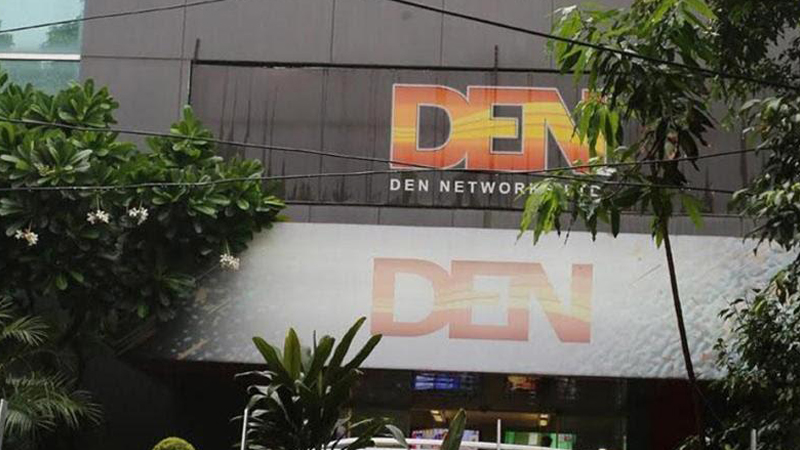
MUMBAI: When margins wobble, liquidity talks and in Q3 FY25-26, cash did most of the talking. Den Networks Limited closed the December quarter with consolidated revenue of Rs.251 crore, marginally higher than the previous quarter but down 4 per cent year-on-year, even as profitability stayed resilient on the back of strong cash reserves and disciplined cost control.
Subscription income softened to Rs.98 crore, slipping 3 per cent sequentially and 14 per cent from last year, while placement and marketing income offered some cheer, rising 15 per cent quarter-on-quarter to Rs.148 crore. Total costs climbed faster than revenue, up 7 per cent QoQ to Rs.238 crore, driven largely by higher content costs and operating expenses. As a result, EBITDA dropped sharply to Rs.13 crore from Rs.19 crore in Q2 and Rs.28 crore a year ago, pulling margins down to 5 per cent.
Yet, the bottom line refused to blink. Profit after tax stood at Rs.40 crore, up 15 per cent sequentially and only marginally lower than last year’s Rs.42 crore. A healthy Rs.57 crore in other income helped cushion operating pressure, keeping profit before tax at Rs.48 crore, broadly stable quarter-on-quarter despite the tougher cost environment.
The real headline-grabber, however, sits on the balance sheet. The company remains debt-free, with cash and cash equivalents swelling to Rs.3,279 crore as of December 31, 2025. Net worth rose to Rs.3,748 crore, while online collections accounted for 97 per cent of total receipts, underscoring strong cash discipline across operations, including subsidiaries.
In short, while Q3 showed signs of operating strain, the financial backbone remains solid. With zero gross debt, steady profits and a formidable cash war chest, the company enters the next quarter with flexibility firmly on its side proving that in uncertain markets, balance sheet strength can be the best growth strategy.







