I&B Ministry
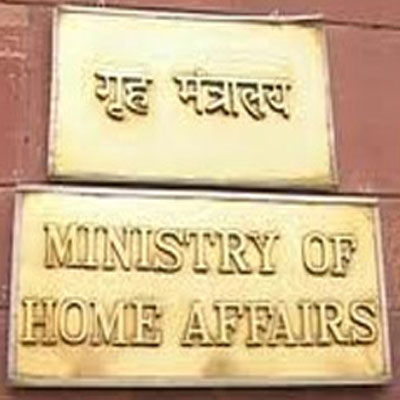
Delhi media protests Home Ministry order on briefings
NEW DELHI: The Delhi Union of Journalists (DUJ) has condemned the gag order for journalists covering the Union Home Ministry.
It noted that such curbs are not new and have been in force since 2014, albeit in a not such an overt manner. It said the new thing was that they are now becoming more obvious and blatant.
A report in a Delhi daily in this regard is an ominous indicator of things to come. It has been reported that the practice of journalists meeting senior officers in their chambers virtually comes to an end.
The directive from Joint Secretary Satpal Chouhan said, “The information flow to mediapersons will be arranged in media room no. 9, North Block. Mediapersons will be told by ADG [Media] that they do not have briefing/meeting with officers other than in the media room.”
Chouhan, in his directive, added that MA Ganapathy, joint secretary (Internal Security), being the official spokesperson of the Ministry, will brief the media on a need-to-do basis.
The DUJ, while expressing its strongest disapproval of this order, expressed its solidarity with the protesting journalists.

I&B Ministry
Prasar Bharati sets EPG standards for DD Free Dish platform
New specs define 7-day guide, LCN mapping, and device compatibility.
MUMBAI: Your TV guide just got a backstage pass structured, scheduled, and far more in sync. Prasar Bharati has released detailed technical specifications for Electronic Programme Guide (EPG) services on DD Free Dish, laying down a standardised framework for how channels and programme information are organised and delivered. At the core of the update is a defined EPG data structure, covering genre-based categorisation, scheduling formats, and Logical Channel Numbering (LCN). The aim is simple: make navigation less guesswork and more guided experience across the platform’s over 40 million households.
The specifications also introduce a seven-day programme guide window for each channel, alongside clear rules for channel grouping and LCN mapping effectively deciding not just what you watch, but how easily you find it.
On the technical front, the document outlines requirements for Program Specific Information (PSI) and Service Information (SI), including descriptor usage across tables such as PAT, BAT and NIT. It further details service lists and network linkage parameters, giving OEMs and developers a clearer blueprint for integration.
Importantly, the framework is designed to work seamlessly with television sets equipped with in-built satellite tuners, enabling users to access DD Free Dish directly without additional hardware, an incremental but meaningful step towards simplifying access.
The platform will continue to operate on GSAT-15 transponders, using MPEG-4 compression and DVB-S2 transmission standards, ensuring continuity even as the interface evolves.
While largely technical, the move signals a broader push towards standardisation and user-friendly discovery in India’s free-to-air ecosystem because sometimes, the real upgrade isn’t what’s on screen, but how easily you get there.