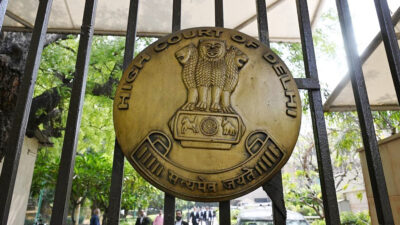
High Court
Delhi High Court, Tdsat refuse to grant stay on Cas

NEW DELHI: This seems to be the last word on Cas (conditional access system). The Delhi High Court and Tdsat (Telecom Disputes Settlement and Appellate Tribunal) today made it clear in separate verdicts that Cas had to roll out on 1 January, ending the efforts of broadcasters and some multi-system operators (MSOs) to obtain a stay.
The High Court heard arguments in two appeals clubbed together, filed before it against the roll out of Cas, while Tdsat heard appeals against the tariff rate being fixed at Rs 5 per channel as well the interconnection order by Trai, regarding sharing of revenue between the MSOs, last mile operators (LMOs), and the broadcasters.
The Delhi High Court, refusing to grant more time to MSOs, said that there is no question of Cas not being rolled out on the notified date. It asked the two petitioners to file replies which will be heard after the court vacation ends.
Star Broadband Services, a MSO in Delhi whose licence for operating under Cas had been cancelled by Trai in an order dated 14 December, had moved the court saying that it was getting ready for Cas roll out but needed more time.
NGO Shakti had filed application seeking postponement on the ground that the MSOs were not yet ready with the infrastructure for Cas implementation on the due date. Hence, Cas should be postponed indefinitely.
Meanwhile, in a separate hearing, the Tdsat declined to grant stay on an appeal filed by ESPN and SET Discovery.
The Tdsat sat through the final arguments by Trai and MSOs and the rejoinder by the broadcasters (ESPN and SET), and asked them to file written submissions, to be taken up after the vacation, but said that nothing that would be argued or heard later would mean that Cas will not roll out on the impugned date.
The Tdsat had been told earlier by the broadcasters’ counsels that there was no rationale in the tariff fixed and that the Chennai model, where Cas had been found to be effective without Trai intervention in pricing, had left the subscribers happy. The broadcasters held that the ‘facts’ shown by Trai and the ‘assumption’ on which they based their order were mutually contradictory.
The counsel for SET Discovery dubbed this as non-application of mind, and said this was unacceptable when Trai is issuing such a momentous order that would govern the industry for a long time.
The counsel for the broadcasters said that Trai’s fixing of price was based on such arbitrary assumptions that went against the survey report quoted by the Authority itself.
The Trai senior counsel, in his argument yesterday, had caused a flutter in the court, showing that the broadcasters had completely failed in Chennai and that only 3.7 per cent of the total cable households there had opted for pay channels because the prices fixed by the pay channels were too high.
This revelation had almost every sit up, and the judges had asked whether this means that Chennai cable homes had the option of both CAS and non-CAS operation. Trai senior counsel Rakesh Dwivedi said that was correct, and that the vast majority had not take the offer.
Dwivedi also argued that the Chennai model in any case could not be extended to Mumbai, Kolkata or Delhi, as in Chennai, four out of the five most popular channels are FTAs, and only one of the top five is a pay channel The case is the reverse with the other three metros.
In fact, he argued that by fixing the ratio of revenue sharing at 45 per cent, Trai had actually given the broadcasters three benefits at one go: it has got rid of underdeclaration as a perennial problem; cut out ‘piracy’ that broadcasters had accused LMOs of indulging in; and given them a 300 per cent rise in their revenues.
He argued that the broadcasters had complained that under the present system of operations, the LMOs and MSOs retain 85 to 90 per cent of the revenue from subscriotion, and only 15 per cent reach them, and that too becomes difficult to collect. “We are ensuring them a 45 per cent share and besides, the bulk of their revenue, as they claim, from advertisements remains intact,” the Trai counsel said.
The counsel for SET Discovery today in his rejoinder said that while Trai had the legal authority to fix the tariff, it was the manner in which that had been done that bordered on perversity.
His argument was that the Trai had itself admitted that there was not enough material on which the fixation was based.
The SET Discovery counsel held that Trai had been referring to a document, an IMRB survey that was two and half years old and today could not be valid, since so many FTAs have now become pay channels. He said also that the budgets of households had increased manifold and that Trai had fixed the tariff without adequacy of material to support that pricing.
Besides, the Trai had so long not brought up the issue of the IMRB survey, which had not been mentioned in the Consultation Paper issued by Trai, nor in later discussions, and was only using it to justify a wrong decision taken without any basis.
The SET Discovery counsel also held that the Trai itself had repeatedly admitted in the court that any price fixation is arbitrary. The price, thus, fixed could not be held to be legal.
SET Discovery’s last plea was that Tdsat should ask Trai to undertake a fresh survey and base the new tariff fixation on that. He said that actually the price fixed should be around Rs 10 per pay channel, and that if the price is fixed now at Rs 5, then there would never be an upward revision, even if Trai held a review. Public ire would prevent that upward revision, if Trai did the review at all, which he doubted would ever happen in actuality.