Connect with us

I&B Ministry

Delhi HC adjourns ad cap case to 25 September

Published

on

Updated: 03:46 PM


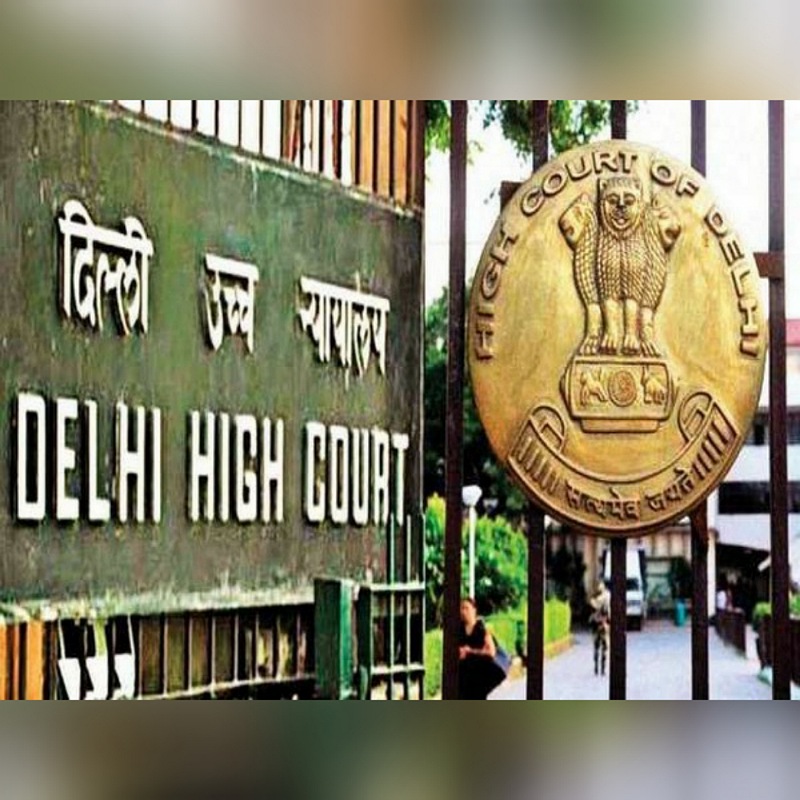
NEW DELHI: The Delhi High Court today once again adjourned – this time to 25 September – the final hearing of the bunch of petitions challenging the ad cap sort to be imposed by the Telecom Regulatory Authority of India (TRAI) as the authority has not finalised its rejoinder.

Advertisement


In any case, Chief Justice G Rohini and Justice Rajiv Sahai Endlaw also noted that the Court did not have sufficient hearing at present for a final hearing in view of the large pendency of other cases.


Advertisement

However, the assurance by TRAI given in an earlier hearing that it will not take any coercive action under the ad-cap regulations will continue.
 
However, the Court had said the petitioners have to submit a weekly report on the consumption of commercial airtime in a clock hour.


This matter had initially been filed before the Telecom Disputes Settlement and Appellate Tribunal (TDSAT) but fresh petitions were filed in the High Court after the Supreme Court ruled that TRAI regulations could not be adjudicated upon by the Tribunal.

Advertisement


During the last hearing on 6 May, TRAI Counsel Saket Singh had said that the Cable TV Networks (Regulations) Rules of 1994 were clear about the ad cap and TRAI had only sought to implement that.
 
However, Neeraj Krishna Kaul who represented one of the petitioners – News Broadcasters Association – argued that the case involved important constitutional issues as there were cases where the freedom of the press and freedom of speech and expression are involved and the case cannot be decided without having all facts on record.
 
The case had been first heard in the High Court on 17 December last year and 13 March this year.


Advertisement

The NBA had challenged the ad cap rule, contending that TRAI does not have jurisdiction to regulate commercial airtime on television channels.


Apart from the NBA, the petition have been filed by Sarthak Entertainment, Pioneer Channel Factory, E24 Glamoru, Sun TV Network, TV Vision, B4U Broadband, 9X Media, Kalaignar, Celebrities Management, Eanadu Television and Raj Television.

Advertisement


The news and regional broadcasters fear that the capping of commercial airtime will curtail their ad revenues. They also argue that the ad cap must be brought only after the benefits of cable TV digitisation start kicking in.


Advertisement

Earlier this year, the Court had also granted interim relief to Hyderabad-based MAA Television Network against the ad cap regulation. However, the court had also observed that the cap on advertisements is a ‘reasonable exercise’.


Four major broadcast networks—Star India, Zee Entertainment, Multi Screen Media and TV18 Group—are following the regulations.

Advertisement
Click to comment

Leave a Reply

Your email address will not be published. Required fields are marked *

I&B Ministry

MeitY proposes continuous labelling for AI-generated content

Draft IT Rules amendments mandate visible labels, feedback open till May 7, 2026

Published

on

MUMBAI: If AI is blurring the line between real and rendered, the government wants the label to do the talking non-stop. The Ministry of Electronics and Information Technology has proposed tighter disclosure norms for AI-generated content, signalling a sharper regulatory push on transparency across digital platforms.

Under draft amendments to the Information Technology (Intermediary Guidelines and Digital Media Ethics Code) Rules, 2021, the Ministry has moved to strengthen how such content is identified. The key shift lies in Rule 3, sub-rule (3), clause (a), sub-clause (ii), where the earlier requirement of “prominent visibility” is being replaced with a stricter mandate labels must now remain “continuous and clearly visible” for the entire duration of the content.

In simple terms, no more blink-and-miss disclaimers. If content is AI-generated, the label must stay on screen, start to finish.

Advertisement

The Ministry has also extended the deadline for stakeholder feedback on the proposed changes to May 7, 2026, widening the consultation window as it seeks industry and public input. The move follows earlier consultation papers released on March 30 and April 10, which addressed intermediary compliance and digital media oversight in light of existing advisories and directions.

Alongside the amendments, the government has released multiple documents, including draft rules covering intermediary obligations, artificially generated information and digital media governance, as well as a consolidated version of the IT Rules incorporating the proposed revisions.

The direction of travel is clear. As AI-generated content becomes more sophisticated and more difficult to distinguish from reality, the regulatory response is shifting from guidance to enforceable visibility.

Advertisement

For platforms and creators alike, the message is straightforward: if it’s generated, it must be declared and not just once, but all the way through.

Continue Reading

Advertisement News18
Advertisement
Advertisement
Advertisement
Advertisement Whtasapp
Advertisement Year Enders

Indian Television Dot Com Pvt Ltd

Signup for news and special offers!

Copyright © 2026 Indian Television Dot Com PVT LTD

This will close in 10 seconds