iWorld
DD News goes mobile, launches app
MUMBAI: In its efforts to make the channel available far and wide especially on new platforms, DD News has launched the new mobile app to make live TV, news feed and top videos available on smart phones.
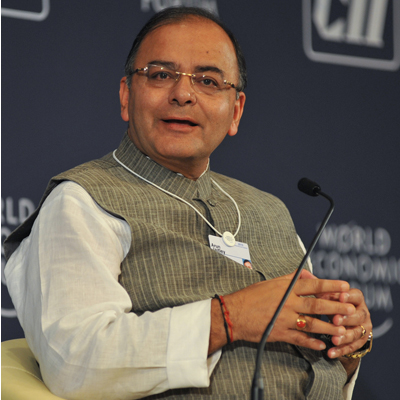
The app was launched by the Finance, Corporate Affairs and Ministry of Information and Broadcasting minister Arun Jaitley.
The DD News mobile app has a user friendly interface and is available even in poor network conditions. Both Android and iPhone versions of the app are available.
Speaking at the launch he said that in view of the multifarious channels of information dissemination, the objective presentation of news should never become a casualty. While the news domain currently was event based, competitive and anchor driven, there still existed space for news based on facts and correct information. The audience for information was extremely keen to have a comprehensive view of issues and events. At the same time the credibility of presenting objective news depended on the ability to update information consistently.
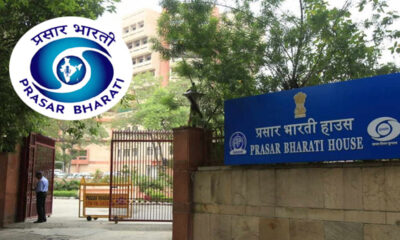
Elaborating further, Jaitley said that the launch of the application by DD News was an important milestone for Prasar Bharati as it catered to the information needs of the pan-Indian audience. It also provided DD News a platform to instantly communicate the objective news on a 24×7 basis and added a new dimension to its profile in addressing the vast needs of the Indian audience. The app also seeks to adress the changing profile of viewers who today sought information through the app mode.
Regarding the e-version of India-2015 and Bharat-2015, Jaitley said the availability of these publications on e-mode would enable the digital medium audience to utilize the wealth of information on India at large. By placing itself on the digital mode, Publications Division was in tune with the contemporary changes taking place in the publications industry. It was imperative to constantly and consistently improve the ongoing efforts to go digital. The focus of the e-book was to present the content in a multi-media, reader friendly format with pictures and embedded videos.
The e-version of the India/ Bharat-2015, reference annual was aimed at providing better reading experience to public. These e-books are easily downloadable and supported by major operating systems like iOS, Android, Windows etc. The e-India / e-Bharat has a variety of reader-friendly features like search ability, hyperlinks, easy referencing, assured back up and retrieval.

iWorld
Telcos push for unified rules as spam shifts to OTT platforms
Over 80 per cent fraud moves online, operators seek common framework.
MUMBAI: The spam may have left your phone network but it hasn’t left you alone. India’s telecom operators are once again dialling up the pressure for a unified regulatory framework, warning that fraud is rapidly migrating to internet-based platforms where oversight remains far looser. According to industry communication, a leading operator has written to multiple arms of the government including the Department of Telecommunications, the Ministry of Electronics and Information Technology and the Ministry of Finance arguing that tighter controls on traditional telecom networks are inadvertently pushing bad actors towards over-the-top (OTT) communication platforms.
The concern is not new, but the framing has sharpened. What was once an industry grievance is now being positioned as a consumer protection issue. Operators say that tackling spam in silos no longer works, as fraudsters seamlessly shift across platforms, exploiting regulatory gaps. The result: a moving target that traditional safeguards struggle to contain.
Executives point to a clear shift in fraud patterns. OTT platforms are increasingly being used for phishing links, impersonation scams and bulk unsolicited messaging, with industry estimates suggesting that over 80 per cent of spam activity has now migrated online. In this environment, the lines between telecom networks, messaging apps and financial fraud are blurring fast.
At the heart of the industry’s demand is a call for a technology-neutral regulatory framework, one that applies consistently across telecom and internet-based communication services. Operators argue that the absence of uniform safeguards, such as sender verification systems, robust spam filters and clearly defined accountability mechanisms, has created enforcement blind spots that fraudsters are quick to exploit.
The proposal is straightforward but far-reaching. Telcos are pushing for baseline anti-fraud measures across all communication platforms, alongside faster response systems and deeper coordination between ministries. Given the interconnected nature of telecom networks, digital platforms and financial systems, they argue that fragmented oversight only weakens the overall defence.
The broader issue is regulatory arbitrage, the ability of bad actors to hop between platforms based on which is least regulated at any given time. Without harmonised rules, operators say, efforts to curb fraud risk becoming a game of whack-a-mole.
As digital communication continues to expand, the debate is shifting from who regulates what to how consistently it is regulated. For now, telecom operators are making their case clear: in a world where spam travels freely, regulation cannot afford to stay fragmented.