Connect with us

Hollywood

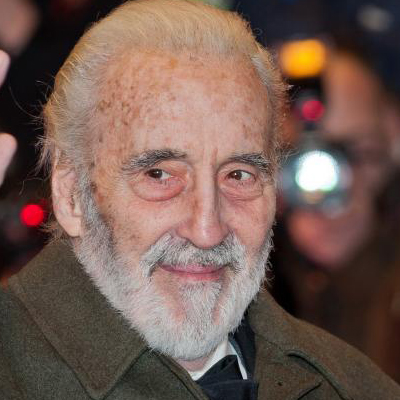
Curtains down for showman Christopher Lee at 93

Published

on

MUMBAI: Actor Christopher Lee, who immortalised Count Dracula in the minds of viewers even generations later, through his stunning act in the film, died in Chelsea and Westminster Hospital, London, on 7 June after being treated for respiratory problems. 


Not only did he become synonymous as Count Dracula after his stunning portrayal of the role in Hammer Horror films, he is well known amongst Bond lovers as Scaramanga from Man With The Golden Gun (1974). His other notable roles include a part in the seventies British horror classic The Wicker Man as the eccentric and evil Lord Summerisle, and, more recently in Lord of the Rings.

Advertisement


Born in Belgravia, Westminster, London, Lee was hard to manage as a child and therefore he would often be reprimanded by his teachers at school, which he accepted as  “logical and therefore acceptable” for being the rule breaker that he was. After his parents’ divorce he lived with his mother and sister in Switzerland and later went to Miss Fisher’s Academy in Territet, where he played his first role, as Rumpelstiltskin. 


Advertisement

Before establishing his career as an actor Lee volunteered with the Finnish forces in World War II and later assisted SAS in their operations  —  a part of his life he kept to himself with an air of secrecy. After returning to London, he did not find his calling in office work, nor did he find himself fit to teach at the University like other war veterans of his time. It was during a lunch meeting with his cousin Nicol? Carandini, now the Italian Ambassador to Britain, that the prospect of him being an actor came out. 


Initially worried that he was too tall to be an actor, Lee found instant fame after his first feature film The Curse of Frankenstein for Hammer Horror films. And there was no looking back for him post that.

Advertisement


Lee wasn’t just fit for the fantasy roles he played, he was an avid fantasy reader as well. In fact he re-read Lord of the Rings trilogy every year, and was the only member of the film cast to have met the author JRR Tolkien. While he is known for his astounding roles as an actor, Lee also tried his luck at single and faired pretty well. This multi-lingual talent had also rendered his voice for many animated movies as well. 


Advertisement

According to many, he was often dubbed as the ‘real life James Bond’ thanks to his exploits as a war veteran and his close association with James Bond author and his cousin Ian Fleming.


While Twitter and Facebook flooded with comments from industry and fans alike, pouring down their grief at the loss of this great artiste, Lee’s family has refrained from giving any comment.


Advertisement
Click to comment

Leave a Reply

Your email address will not be published. Required fields are marked *

Hollywood

Utopai Studios partners Huace to deploy PAI for long form content

Deal includes revenue sharing as Huace adopts AI engine across global ops

Published

on

MUMBAI: Lights, camera… algorithm, the script just got a silicon co-writer. In a move that signals how storytelling itself is being re-engineered, U.S.-based Utopai Studios has partnered China’s Huace Film & TV Co. Ltd. to bring artificial general intelligence into the heart of long-form content creation.

At the centre of the deal is PAI, Utopai’s cinematic storytelling system, which Huace will deploy as a core engine across its production pipeline from development and creative iteration to global localisation. The partnership includes a large-scale annual usage commitment from Huace, alongside a usage-based revenue-sharing model, underscoring both ambition and commercial confidence on both sides.

For Huace, one of China’s largest film and television companies, the bet is not on automation alone but on scale with control. With distribution spanning over 200 countries and a presence across more than 20 international platforms, including Netflix and YouTube, the company brings a vast content ecosystem where even marginal efficiency gains can translate into significant output shifts. Its extensive TV IP library further positions it as fertile ground for AI-assisted storytelling workflows.

Advertisement

The choice of PAI follows what Huace described as a rigorous evaluation of existing AI tools, many of which remain limited to fragmented use cases such as video generation or editing. What tipped the scales, according to the company, was PAI’s ability to handle long-form narrative complexity maintaining continuity, structure, and creative coherence across entire story arcs rather than isolated clips.

Utopai, for its part, is using the partnership to anchor its international expansion strategy, pitching PAI as an enterprise-ready system built for customisation, privacy, and regulatory adaptability across markets. That positioning becomes particularly relevant as global media companies increasingly scrutinise how AI integrates into proprietary workflows.

The timing is notable. Earlier this month, Utopai upgraded PAI to support three-minute 4K video generation and advanced multi-shot sequencing features designed to tackle one of AI storytelling’s biggest hurdles: consistency across scenes.

Advertisement

What emerges is not just another tech collaboration, but a glimpse into how the grammar of filmmaking could evolve. Because if stories were once crafted frame by frame, the next chapter might just be coded scene by scene.

Continue Reading

Advertisement News18
Advertisement
Advertisement
Advertisement
Advertisement Whtasapp
Advertisement Year Enders

Indian Television Dot Com Pvt Ltd

Signup for news and special offers!

Copyright © 2026 Indian Television Dot Com PVT LTD

This will close in 10 seconds