News Broadcasting
Court silent on Star Movies’ ‘Independence Day’ screening


NEW DELHI: A Mysore court has reserved its judgement on a copyright infringement suit against Independence Day and whether the 20th Century Fox movie can be re-screened on Star Movies, as scheduled throughout this month.
Though the hearing on an injunction filed by plaintiff, NRI Film Production Associates Pvt. Ltd., took place last week, since the court made no observation, Star Movies did air the movie on 8 November. The next broadcast of Independence Day on Star Movies is slated for 12, 17 and 25 November.
Contacted by indiantelevision.com, NRI Film Productions MD Veda Nayak said, The principal district judge of the Mysore district court, G V Hegde, reserved orders on the application for injunction. A court directive is expected this week, he added.

Star India, a Rupert Murdoch company as 20th Century Fox, refused to comment on the issue, saying it has not heard formally on the matter.The plaintiff had argued that Star Movies should be restrained from airing Independence Day at a time when the orders on the main suit are about to be delivered by the court.
Whats the whole case all about? In a case filed in a Mysore court, Nayak has alleged that 20th Century Fox Film Corporation (News Corp’s movies arm) infringed on the copyright of a script written by him, called Extra Terrestrial Mission, by producing and releasing the film Independence Day in 1996.
After coming to know about the fact that Star planned to broadcast Independence Day through November on Star Movies, Nayak sought the court’s help in restraining Star from airing the film.
It’s an alleged case of copyright infringement. The principal district judge at Mysore has admitted an application from the plaintiff (Nayak’s) company to grant an ad interim mandatory injunction during further pendency of the suit, restraining the defendant (20th Century Fox Film Corporation, USA) in re-releasing the film Independence Day on Star or any other TV network or theatrical re-release in India or any other part of the world under the international provisions of the Copyright Act: Section 40 and the International Copyright Order under that section.
The plaintiff has brought to the notice of the court that the defendants, according to information available on the Internet, have already made over $ 800 million from the film throughout the world thus far, whereas the production cost of the film was only $ 75 million. Nayak has argued that the defendants could not have made such huge profits but for the important dramatic events and incidents they had copied in the film Independence Day from Extra Terrestrial Mission, written by Nayak and registered by him too in the US when residing there. The copyright infringement suit has been keenly contested between the parties since November 1998 in US courts too.



News Broadcasting
CNN-News18 to host Fury in the Gulf conclave on West Asia crisis
Three-hour summit to unpack geopolitical fallout and impact on India
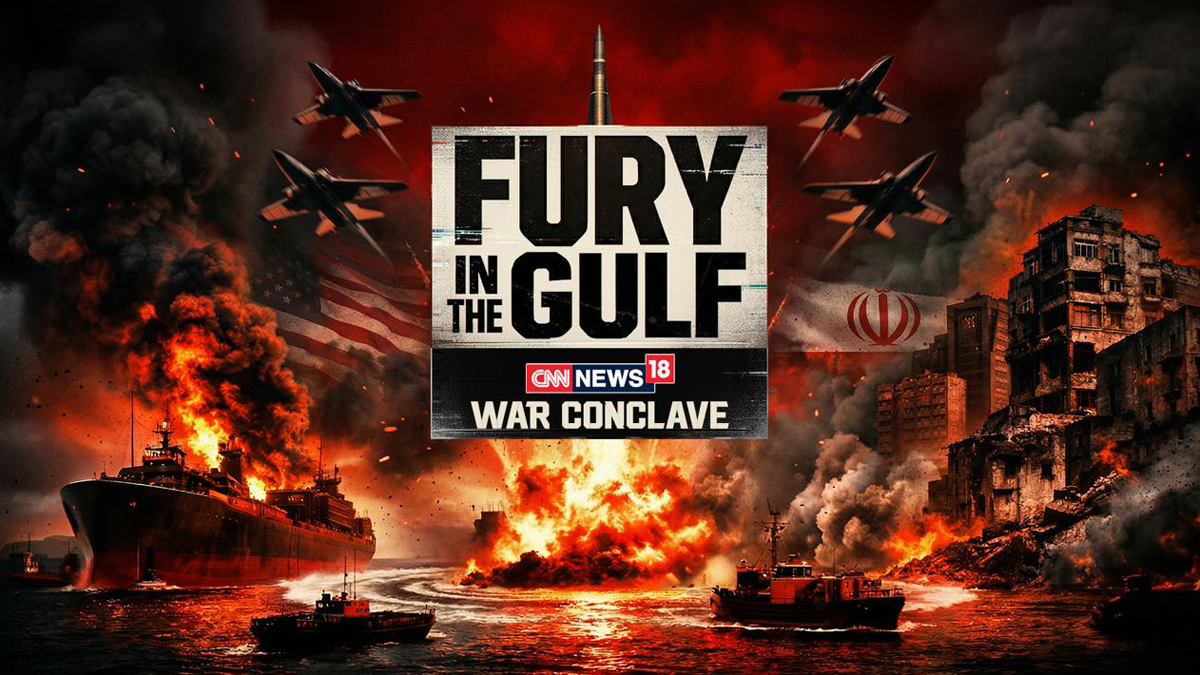
MUMBAI: CNN-News18 is set to host a special three-hour broadcast, Fury in the Gulf – War Conclave, on April 7, aiming to decode the escalating West Asia crisis and its far-reaching implications for India.
Scheduled from 4:00 PM to 7:00 PM, the conclave comes at a time when tensions between Iran and the United States are reshaping global geopolitics and triggering economic uncertainty. With India’s deep energy ties, trade links and large diaspora in the Gulf, the developments carry significant domestic relevance.
Built around the theme ‘Conflict, Consequences, and The Future,’ the programme will feature six curated sessions combining one-on-one interviews and panel discussions. The focus is to cut through the clutter and offer viewers a clearer understanding of the fast-evolving situation.
Key sessions include ‘Diplomacy in Times of War’ featuring Shashi Tharoor, and ‘World After the Iran Conflict’ with voices such as Ram Madhav, Reuven Azar, representatives from the European Union and the Iranian Deputy Envoy. Another session titled ‘Another Dunkirk?’ will bring together K. J. S. Dhillon and Jitin Prasada among others.
CNN-News18 editorial affairs director Rahul Shivshankar said, “In times of war, clarity becomes the most powerful tool. Fury in the Gulf – War Conclave brings together credible voices to address the questions and confusion that arise amid an overwhelming influx of information.”
He added that the initiative is aimed at delivering “facts, perspective, and insight” at a time when misinformation can easily cloud public understanding.
Echoing the sentiment, CNN-News18 CEO– English and business news Smriti Mehra said the conflict marks a defining global moment, with consequences that extend well beyond the region. She noted that the conclave seeks to present the crisis with “depth, nuance and responsibility” so audiences can better grasp its real-world impact.
As geopolitical tensions continue to dominate headlines, the conclave positions itself as an attempt to bring order to the noise, offering viewers a structured, insight-led look at a complex and rapidly shifting global situation.






