I&B Ministry
Copyright Board may become part of Intellectual Property Appellate Board

NEW DELHI: The Copyright Board may soon be a part of the Intellectual Property Appellate Board (IPAB).
Though the move was hardly unexpected in view of representations by creative artists, the modus operandi of making this part of the Finance Bill came as a surprise.
Although Intellectual Property was shifted from Human Resource Development Ministry to the Department of Industrial Policy and Promotion (DIPP) early last year, several stakeholders including writers, software producers and singers and musicians felt that copyright should not be part of one single Ministry or Department.
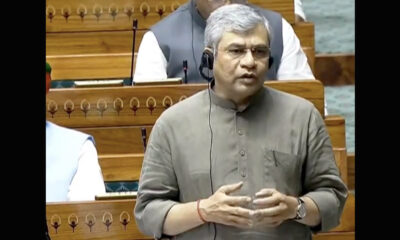
The Finance Bill 2017 piloted by the finance minister Arun Jaitley and passed in the Lok Sabha earlier this week has proposed this merger
The Bill proposes an amendment to the Copyright Act so as to transfer the functions of the Copyright Board to IPAB which as of now deals only with matters relating to trademarks, patents and geographical indications.
There is also a proposal to amend the rules pertaining to qualifications, appointment and other terms of service of the members of IPAB as provided under the Trade Marks Act. It introduces Section 89A to the Act which leaves these matters to be solely governed by Section 179 of the Finance Act 2017 in respect of members appointed after the commencement of this Act. The Central Government will then make rules in this regard.
Being a money bill, the Finance Bill had to go the Lok Sabha first and then receive assent of the Rajya Sabha, which is only empowered to make suggestions. It will become law after receiving the Presidential assent.
The Finance Bill also proposed merger of seven other tribunals (including the Competition Law Appellate Tribunal and the Cyber Appellate Tribunal) with other existing tribunals.
However, the move of including several non-finance/taxation related amendments in a money bill has not gone unnoticed, and some opposition parties see this as a way of by-passing the Rajya Sabha where the Government would otherwise have difficulty in getting controversial legislation through.
However, Finance Ministry sources said these amendments are related to government expenditure.
Meanwhile, the ministry of information and broadcasting confirmed to indiantelevision.com that on the applications of several film bodies, it was working on an alternative for overseeing implementation of IPR laws for the entertainment industry.