Content Hub
Content Hub 2021: Television – A Twist in the Tale

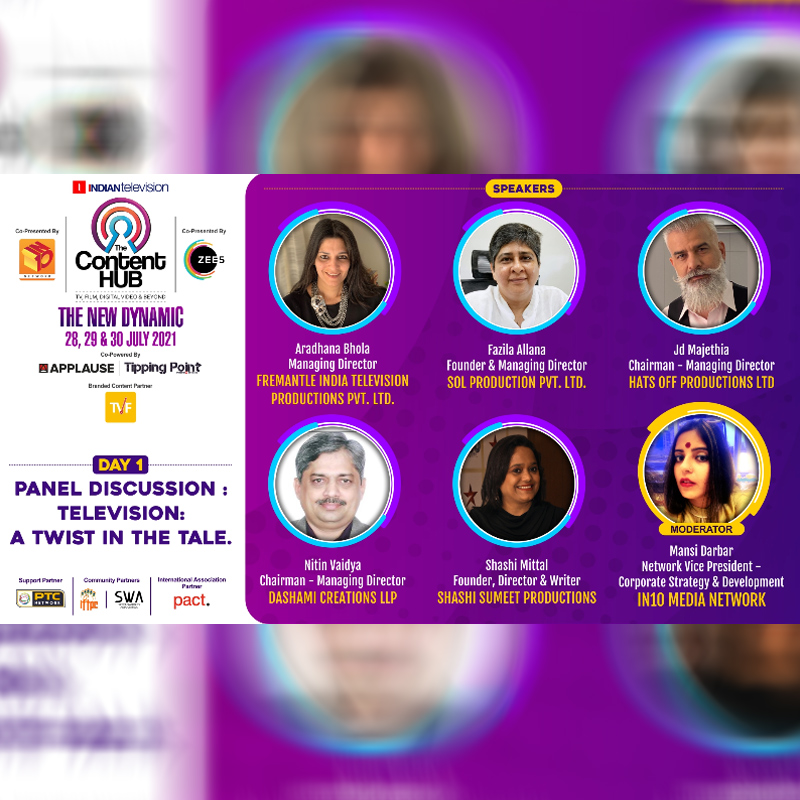
Mumbai: At the fifth edition of the ‘Content Hub 2021 – TV, Film, Digital Video, and Beyond’ being organised by Indiantelevision.com, veteran producers from the media and entertainment industry delved into the state of television programming in the context of growing competition from OTT platforms.
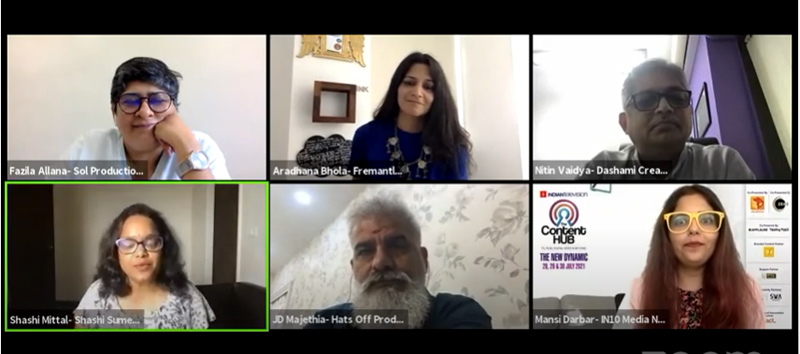
Deliberating on the topic ‘Television – A Twist in the Tale’ were FremantleMedia, managing director – Aradhana Bhola, Sol Productions, founder and MD – Fazila Allana, Hats Off Productions, chairman and MD – JD Majethia, Dashami Creations, chairman and MD – Nitin Vaidya and Shashi Sumeet Productions, founder, director and writer – Shashi Mittal. The virtual session was moderated by IN10 Media Network, network vice president – corporate strategy and development, Mansi Darbar.
Ever since the meteoric rise of OTT platforms, there have been apprehensions regarding the imminent cannibalisation of TV audiences. While industry watchers and experts have been debating it for long, the content creators seem confident about the two formats coexisting with each other. In fact, they are also excited about the possibilities that OTT opens up for them, especially in terms of experimenting with content and also the economics of it.

Allaying apprehensions around the TV-OTT battle, Fazila Allana stated that even though there seems to be some differentiation of content, at present all the major OTT players are getting major traction from the catch-up TV. Likening their original programming to ‘exotic weekend dinners’, she added, “Most viewers log on to OTT platforms for staples or ‘daal chawal’ i.e. daily soaps. So, even if TV were to become obsolete as a medium of distribution, the content will not change drastically.”
Agreeing with Fazila, Sol Production’s Aradhana Bhola remarked, “Given the socio- economic and cultural diversity in India, we have so many different consumption patterns that as content creators we are happy to be having a new platform for telling more and different stories. While some stories are better suited for a two or three-hour movie format, others are fit for a short series or a daily soap, but whatever the delivery mechanism, it is content, and ‘great content’ that matters.”
Dashami Creations’ Nitin Vaidya concurred on the fact that audience choice is determined by economic conditions, and cultural and social values, but unlike Bhola, he cites them as factors that limit the scope of OTT in India. That being said he does agree that, “OTT has brought along with it disruptive subjects, narratives and scale, and this is where the challenge for TV lies. If the television industry doesn’t innovate and keeps on offering the same regressive content, it will lose its audience to other platforms.”
JD Majethia believes that the familiarity and affordability of television gives it an edge over other mediums, yet “creative content will decide what survives in the long run”. Citing his ongoing show ‘Wagle ki Duniya’ as an example, he said, “We coined the term TWEB Series for it, because it is a particularly challenging format where each episode is a different story.”
Talking of innovation, while TV programming has often been accused of being regressive and recycling the same content, Majethia contented that “stories and plot have broadly remained unchanged; it’s the storytelling which makes all the difference. The problem is that people think of TV as a perishable commodity. If the content is enjoyable, it’s relevant. We must also not forget the fact that TV is still a growing medium in India. So, when it comes to recycling or adapting content, we have to consider the segment, market, time slot and several other factors to determine relevance.”
Chiming in, Shashi Mittal said, “The Indian market offers viewers with so many different types of mindsets that there’s room for all. What’s progressive for me could be regressive for my kids. It is these perceptions that we are in effect catering to.” “Ultimately, through every story told, we are addressing emotions and aspirations,” added Fazila Allana.
Discussing the scope that television offers for creativity and experimentation, the panellists agreed that although the intention to innovate is ubiquitous among broadcasters and producers, ‘Thursday Ratings’ run the show. “…audience evolution is a slow process, and until they evolve, you have to give them what they want,” Allana explained. However, not all is gloomy. Despite the constraints there’s still enough headroom for innovation in television, Majethia’s ‘TWEB series’ being one such example.
While it’s true that content producers find the OTT proposition to be more attractive, is it lucrative too? Web series or daily soap? Where are the monies? The resounding answer to this question from our panelists was that it’s a ‘volume game’, and despite all the criticism notwithstanding, daily soaps are the biggest drivers of volume.
“OTT and TV have many lessons to learn from each other. Television channels can, for instance, think about serials with a limited number of episodes. Many TV viewers who don’t opt for OTT due to economic constraints could well be interested in short series format. Such time-bound storytelling will be in the interest of all – the audience, advertisers, channels and content creators,” said Nitin Vaidya.
JD Majethia had a slightly differing opinion in this regard. According to him, a series on a big OTT platform may be more lucrative for production houses than a daily soap on television that runs for six to eight months. “TV shows are successful only if they are long running”, he remarked adding that with Covid changing the dynamics rapidly, the uncertainty will only grow further. “If you can match the strength of your ideas with that of the platform – movies, OTT or TV – you are home,” surmised a more hopeful Aradhana Bhola.
Centred on the theme – ‘The New Dynamic’, the three-day event will witness several such insightful sessions with industry stakeholders deliberating on how the new forces are transforming the way content is created and stories are told. It will also delve upon the impact of these changes on the business models for the world of films, TV and OTT.
The fifth edition of Content Hub 2021 is co-presented by IN10 Media Network and ZEE5, and co-powered by Applause Entertainment and Tipping Point, the digital content unit of Viacom18 Studios. PTC Network is the supporting partner.
For more details, visit: https://www.thecontenthub.in/






Mumbai: Exploring the shift from regional to national content, this synopsis delves into the trends and challenges. It navigates the transformation, analyzing industry dynamics, emerging trends, and the hurdles faced. From preserving regional variation to adapting to a broader audience, it examines the multifaceted journey of regional content evolving into a national narrative. In what ways do the emerging trends and challenges influence the dynamics of the entertainment industry during this transition? How can creators navigate these changes effectively? What strategic approaches can content creators adopt to strike a balance between maintaining regional identity and fostering a cohesive national narrative in their work? How can the transition from ‘regional’ to ‘national content’ impact cultural diversity within the entertainment industry, and what measures can be taken to ensure the preservation of regional variation?
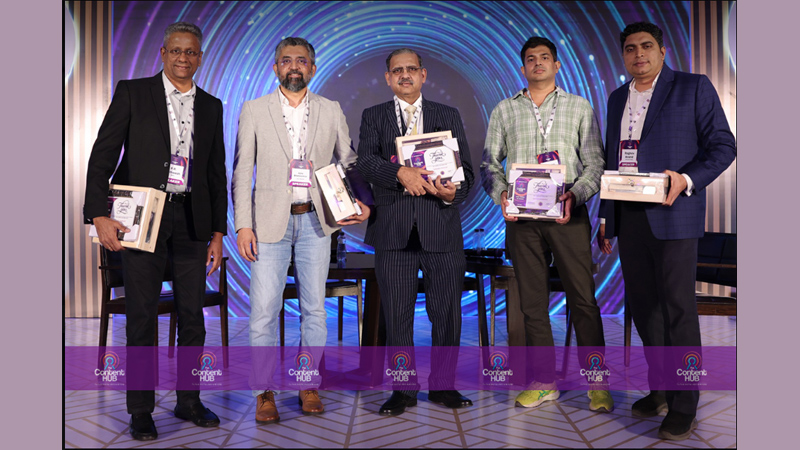
In a rapidly evolving media landscape, seasoned industry professionals have offered valuable insights into the transformation of content consumption and production. The session was chaired by Ernst and Young partner Raghav Anand, MMTV chief executive officer P.R. Satheesh, Sony Marathi business head Ajay Bhalwankar, PTC Network chairman & MD Rabindra Narayan, Shemaroo Entertainment COO, Digital, Saurabh Srivastava esteemed voices in the field, have articulated their perspectives on the burgeoning shift towards globalised content.
Rabindra Narayan emphasised the dissolution of regional boundaries in content consumption, attributing it to the accessibility facilitated by global platforms and connectivity options. He predicts a future where language barriers will fade, citing the potential of technology to clone and adapt voices, thus enabling seamless localization across languages.
Saurabh highlighted the democratisation of content creation in the digital era, underscoring its empowerment and revenue potential, particularly in linguistically diverse markets like India. He emphasizes the value of culturally rooted storytelling in filling gaps in content supply, with technology enabling effective monetization, especially through OTT platforms.
Ajay Bhalwan sheds light on the evolving landscape of Hindi and regional language content, noting a significant shift where a substantial portion of content on Hindi film channels originates from regional languages. He accentuates the importance of language in enhancing authenticity and audience engagement, exemplified by the strong resonance of Marathi content in Maharashtra.
PR Satheesh underscored the paramount importance of content quality in driving viewership and transcending language barriers. Drawing parallels with the global popularity of Korean dramas, he advocates for leveraging technology, including AI and real-time translations, to enhance content creation and distribution.
These insightful perspectives collectively echoed the industry’s adaptation to a globalised content landscape, where technology catalyzes innovation and accessibility. As content continues to evolve, these experts offered valuable guidance on navigating the dynamic media landscape and maximizing the impact of storytelling in diverse markets worldwide.






