iWorld
Content creators see value in social media data

MUMBAI: Twitter, Facebook and television go hand in hand these days. The relationship between television and social media has been growing over the years. But does it have the potential to turn into a major revenue stream?
Discussing this was a panel at TV.Nxt 2014 comprising Viacom18 Media VP and Colors commercial and digital head Vivek Srivastava, CNN International New Delhi bureau chief Ravi Agrawal, Nielsen India MD Prashant Singh, GroupM South Asia managing partner Tushar Vyas and Star India VP and digital marketing and CRM head Venke Sharma. The session was headed by Provocateur Advisory principal Paritosh Joshi.
Firing up the session, Joshi asked Agrawal to share some insights as to how CNN evolved and now functions with the proliferation of social media since it was one of the early entrants into it. Agrawal highlighted that in the early 2000s, CNN had created a website called ireport.com where it invited people to click pictures and post from places where a journalist couldn’t be. “That’s when we saw that regular citizens can get the story before anyone can. We saw this even in the 2008 attack on the Taj Hotel in Mumbai, when the first few images that came were from the common people which were of superb quality. That became a great tool for us to tell stories from places unreachable to us,” he said. He went on to add that the notion of TV and social media being a new marriage is actually an old one in many parts of the world.

While the possibility of getting a return path was natural for news, how does it work for fiction makers? Sharma started off by saying that there are people for whom entertainment is defined by buzzing topics and a fear of missing out. Talking about Star Plus’ hit show Diya Aur Baati Hum, he said that although it rates high on TAM ratings, it doesn’t garner the same on social media vis-a-vis Iss Pyaar Ko Kya Naam Du which doesn’t get the ratings but gets the buzz.
Joshi went on to ask Vyas about the translation of social media into a source of revenue. Vyas said that social media works as a surrogate and is also an incremental data point. “We capitalise on the second screen behaviour and try and reach out to all set of audiences on various platforms. Social media is an incremental data over TV data,” he said.
Nielsen had recently launched its Twitter TV ratings in the US for calculating data on TV shows on the social networking platform. Said Singh, “In this, we don’t count the number of tweets but rather the impressions. It is the GRP equivalent. Whether the market will decide to trade on it or to use it as another dimension against TV ratings is to be seen. But we believe that being able to measure impressions would be more and more important.”
 |
Talking about how the medium works in sync with the TV, Srivastava said that it is mostly important from a catch-up stand point in the media space. Facebook was to interact while not watching TV while Twitter was an accompaniment while watching TV. This was agreed upon by Sharma who said that Star had used Facebook to sharply target and get viewers to sample its latest Pro Kabaddi League.
However, Agrawal pointed out that the capability of knowing how people react to your stories also puts the onus on journalists to be more careful and responsible.
Joshi said that content makers are worried about the fact that the value of a viewer on TV is 100 times more than on digital. To this Vyas said that although it might be true in terms of absolute value, the audience on a platform like YouTube is higher than many other TV monetisation that is happening today. “If you look at advertising money, then digital is slowly reaching the top of the pyramid,” said Vyas.
Star has set up its own listening hub to understand trends and draw actionable insights, highlighted Sharma. Agrawal ended the session by stating that drawing data from social media is also a danger. “It isn’t always a reflection of reality. The demographics that use social media are of a certain type and especially globally I would be slightly vary about extrapolating data from there,” he concluded.




iWorld
Samay Raina returns with Still Alive, confronts 2025 controversy in bold comeback special
Comeback set tackles controversy, blending humour with raw storytelling
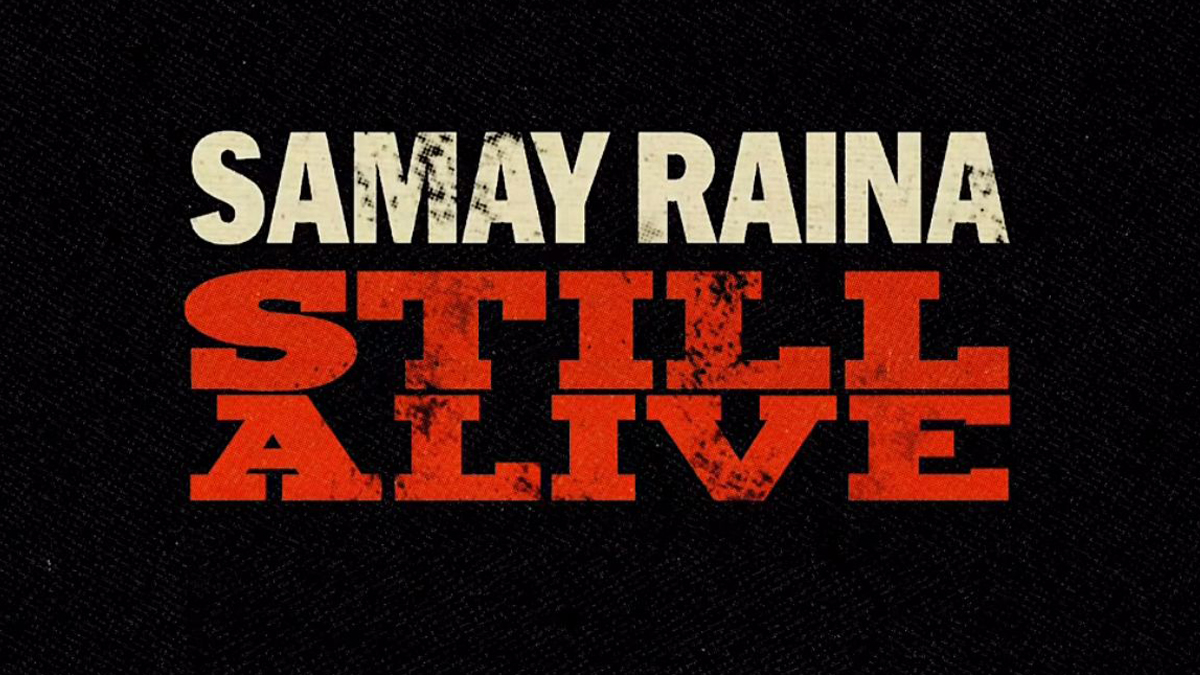
MUMBAI: Samay Raina is set to release his new stand-up comedy special, Still Alive, on YouTube on April 7, 2026, marking a high-profile return following a turbulent year.
The trailer for the special dropped on April 5, offering a glimpse into what Raina describes as a raw and unfiltered set that leans as much on honesty as it does on humour.
Positioned as a comeback of sorts, Still Alive draws heavily from the controversy surrounding his show India’s Got Latent in early 2025. The episode led to legal trouble, multiple FIRs, and a lengthy six-hour interrogation by the Maharashtra Cyber Cell, placing the comedian at the centre of intense public scrutiny.
Rather than sidestep the episode, Raina leans into it. The special reflects on the fallout and his personal journey through it, blending observational comedy with moments of emotional candour. Early audience feedback from live performances suggests the tone is less about rapid-fire punchlines and more about storytelling with bite.
The special was filmed during his global Still Alive & Unfiltered tour, which ran from August 2025 to early 2026. The tour saw Raina perform across major international venues, including the Madison Square Garden Theatre in New York, a milestone that places him among the youngest Indian comedians to take that stage.
The title itself signals resilience. “Still Alive” is a nod to navigating both legal and public backlash while choosing to remain unapologetically authentic, a theme that appears to anchor the set.
With the special set to premiere online, all eyes are now on how audiences respond to a performance that promises equal parts reflection and wit. For Raina, the message is clear. He is not just back, he is ready to be heard on his own terms.






