News Headline
‘Consumer annoyance with intrusion in their space will take a new turn’


Spatial Access Solutions managing partner Meenakshi Madhvani, while reviewing the predictions she made last year as to what the critical drivers in the television and media space would be, comes away pretty satisfied, and does some more crystal ball gazing…
If there’s anything more challenging than predicting the media scene in India, it’s reviewing them a year later. It does feel good though if you are more right than wrong on your own predictions. Here’s how the reality played out in 2006 and some more predictions for 2007.

Technology and its impact
As predicted, the impact of technology on communication in 2006 was rather limited. Consumer pull rather than organizational push continues to determine the rate of acceptance and dissemination of technology. 2007 will see the adoption of newer technology but again, this is likely to be at the very top of pyramid. CAS may be pushed through by legislation but 3G, TiVo and wi-fi zones still appear to be a while away. Value-added SMS services though are likely to thrive.
Consumers’ annoyance with intrusion in their space will take a new turn. We don’t think consumers are convinced that a “Do Not Disturb” option keeps pesky telemarketers at bay. In 2007, consumers will hit back. Beware all marketers who think they can intrude on consumers’ privacy and get away with it!
The television medium
Last year we had predicted that the television media owners would look at sampling the product and then worry about revenue. The resultant of this would be longer gestation periods and fewer media players who will want to enter the space on a whim. True enough, 2006 has seen no significant launches as far as television is concerned.
To a great extent, this is also impacted by the lack of differentiation in product offerings. We had thought Times Now had the potential to make a dent in the English news segment but it doesn’t seem to have done as well as its competitors. Sticking to the basics though has meant that a NDTV 24×7 continues to hold its own and a CNN-IBN has created a niche for itself.
We had also mentioned that those who do come in will be serious players with deep pockets. Our prediction that Disney’s entry would make players like Hungama feel the heat couldn’t have been truer. Disney went on to acquire Hungama!
In 2007, we see major players attempting to build adequate critical mass and then leveraging on it. This could either mean acquisition of existing channels or launch of new ones to fill gaps in their content offerings. NDTV and their proposed general entertainment channel is a case in point.
This brings us to the point on media companies who sought public funds for consolidation and expansion. 2007 should see a lot more activity in each of these companies. While entities like NDTV and TV18 are seen to be active, some like Mid-Day appear overdue for a significant expansion.
We had also predicted that television channels (especially the bigger ones) would not be able to hold on to their advertising rates. This too is turning out to be true. The reasons are not hard to find: lack of differentiation and consumers drifting towards more compelling (read niche) content. Already, we see the effective rates for some top rated Hindi soaps dip by as much as 30% over the last quarter. On the other hand, niche content channels have been able to hold on to or slightly better their effective rates.
The internet
Last year we had predicted that the internet is going to come into its own in 2006. That has failed to happen or at least failed to match our expectations. 2007 should be year for advertisers to fully wake up to the potential of the web and for web marketers to accelerate the process. Failure to do so may result in advertising monies getting diverted to the “new” medium on the block – FM radio.
FM radio
Last year we had mentioned that 2007 and not 2006 will be the year of the radio. Though a few stations have managed to go on air, 2007 will see the complete roll-out. We believe the sheer numbers of channels present and the pressure to deliver a differentiated product will see a few exciting programming formats being developed.
A contentious issue on radio is research data or the lack of it. We see a TV like situation developing where there may be more than one “industry” data source. The only way to avoid multiplicity of research data is for major players to come together and push the agenda for the industry. This also means that the only available research data, the ILT, needs to expand its coverage to more areas to be relevant to the radio channels and advertisers.
The growth of smaller towns into bigger metros will result in more action for newspapers. While this means higher readership, it also means higher advertising costs. Newspaper publishers’ insistences on maintaining a low cover price mean that they are almost entirely dependent on advertising revenues to sustain the venture. Subsidizing cover price only works when there is adequate advertising support. Unfortunately, not all editions may be advertising money spinners. To make newspaper publishing a viable venture, newspapers will have to find a way to rationalize their cover price.
Interestingly, the magazine scenario in India has become more active than ever before. While newspapers seem to be reaching new lows as far as cover price is concerned, magazine publishers, specifically those specializing in niche content, are intent on making circulation revenue a viable source of income.
2007 may be too soon to expect newspapers to rationalize cover price but do expect magazines to up their cover price and consolidate.
While at one point, newspaper supplements almost dealt the death blow to magazines, over a longer time period, the tables may turn. One factor is the size of operations. The bigger a newspaper grows, the more difficult it becomes to cater to specific reader groups and the more expensive it becomes to an advertiser. The cost of creating a 16 page supplement is soon not going to be justified by the ad revenue it brings in!
The other factors are the speed and depth of coverage. Here, newspapers will get caught between news channels and magazines. And accelerating that process once again will be the consumer who demands what he wants rather than remain pleased with what he gets. Isn’t it ironical that some newspapers actually have magazine inserts these days?
Other predictions
An unlikely fall-out of segmentation of media is that we are likely to see more working relationships between players who are not in direct competition to each other. There is even likely to be greater co-operation between direct competitors, like India Today and Outlook, to protect their turf (magazine advertising) and grow it. A similar trend may be observed in radio.
With consumers now buying around the year, traditional advertising peak periods, like Diwali, may well be on the decline. This can have serious ramifications on budgeting exercises for advertisers as well as the media.
A shake out on media research seems likely in 2007. aMap versus TAM and NRS versus IRS are the two big title fights.
Media agencies will continue to face a tough time, all of their own making. Dwindling avenues of compensation, advertisers seeking better ROI, Greater acceptance of the need for media audits, more aggressive media houses and man-power problems will continue to plague Media Agencies.
With specialists emerging for each degree of the much abused 360 degrees approach to marketing, one wonders what will happen to the traditional media planner. However, all the specialization does present a great scope for people who specialize in multi-tasking to hold all of these activities together. Maybe the much abused client servicing person will be back in the spotlight, for the right reasons this time around.
By the way, this is another prediction. 2007 will see the resurgence of the Account Executive – he will now play the role of the aggregator! Smart agencies will fuel this need among advertisers and help advertisers manage the process. Smart Agencies have realized that if you cannot get your client to give you all his business, lock stock and barrel, you keep an eye on the outflows and monitor where the money is going. For this you need sharp servicing!
Finally, 2007 is a year in which we hope issues plaguing the industry are not swept under the carpet but addressed. (We at Spatial Access will be doing our bit to add transparency to the Industry)
The rot, as they say, may be deep rooted but we need to make a start somewhere. And 2007 just seems right for it.







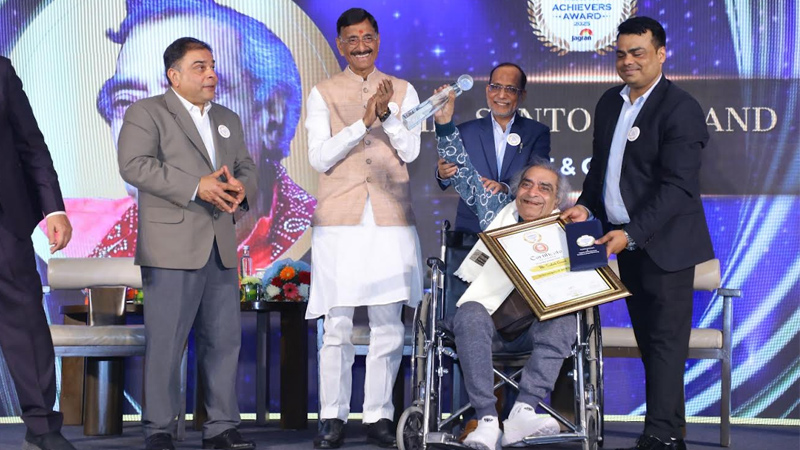
NEW DELHI: Hamdard Laboratories gathered a cross-section of India’s achievers in New Delhi on Friday, handing out the Hakeem Abdul Hameed Excellence Awards to figures who have left their mark across healthcare, education, sport, public service and the arts.
The ceremony, attended by minister of state for defence Sanjay Seth and senior officials from the ministry of Ayush, celebrated individuals whose work blends professional success with a sense of public purpose. It was as much a roll call of achievement as it was a reminder that influence is not measured only in profits or podiums, but in people reached and lives improved.
Among the headline awardees was Alakh Pandey, founder and chief executive of PhysicsWallah, recognised for turning affordable digital learning into a mass movement. On the sporting front, Arjuna Awardee and kabaddi player Sakshi Puniya was honoured for her contribution to the game and for pushing women’s participation onto bigger stages.
The cultural spotlight fell on veteran lyricist and poet Santosh Anand, whose songs have echoed across generations of Hindi cinema. At 97, Anand accepted the honour with characteristic humility, reflecting on a life shaped by perseverance and hope.
Healthcare honours spanned both modern and traditional systems. Manoj N. Nesari was recognised for strengthening Ayurveda’s place in national and global health frameworks. Padma shri Mohammed Abdul Waheed was honoured for his research-backed work in Unani medicine, while padma shri Mohsin Wali received recognition for his long-standing contribution to patient-centred care.
Education and social development also featured prominently. Padma shri Zahir Ishaq Kazi was honoured for decades of work in education, while former Meghalaya superintendent of Police T. C. Chacko was recognised for public service. Goonj founder Anshu Gupta received an award for his dignity-centred rural development initiatives, and the Hunar Shakti Foundation was honoured for empowering women and young girls through skill development.
The Lifetime Achievement Award went to former IAS officer Shailaja Chandra for her long career in public healthcare and governance, particularly in the traditional systems under Ayush.
Speaking at the event, Hamdard chairman Abdul Majeed said the awards were a tribute to those who combine excellence with empathy. “These awardees reflect Hakeem Sahib’s belief that healthcare, education and public service must ultimately serve humanity,” he said.
Minister Seth struck a forward-looking note, saying India’s young population gives the country a unique opportunity to become a global destination for learning, health and wellness by 2047.
The ceremony also featured the trailer launch of Unani Ki Kahaani, an upcoming documentary starring actor Jim Sarbh, set to premiere on Discovery on 11 February.
Instituted in memory of Unani scholar and educationist Hakeem Abdul Hameed, the awards have grown into a national platform that celebrates those building a more inclusive and resilient India. For one evening at least, the spotlight was not just on success, but on service with substance.






