Hindi
Cinema can play a major role in nation branding initiatives: Anurag Thakur

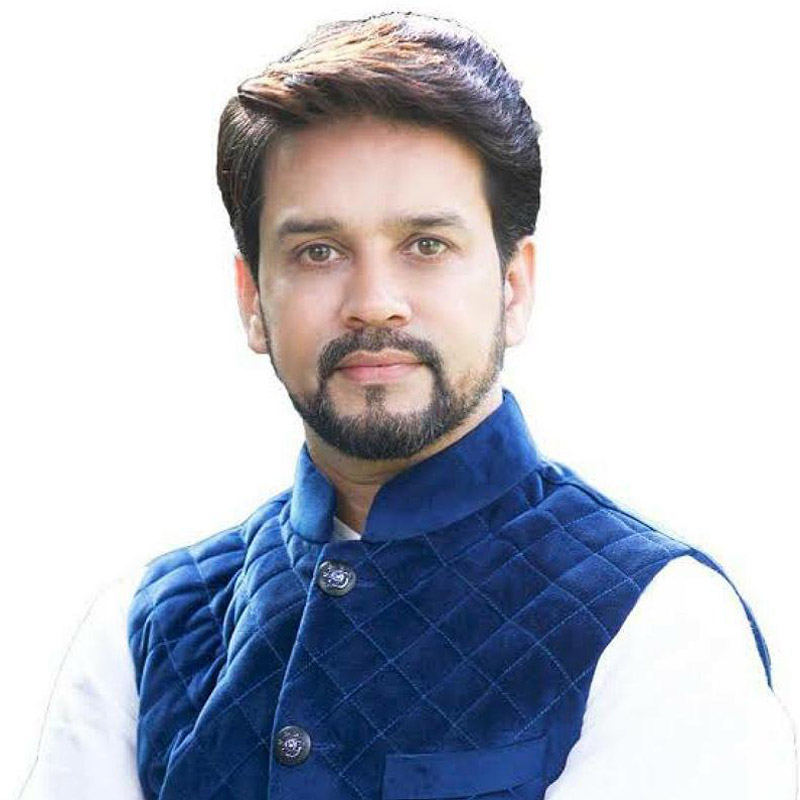
Mumbai: The union minister of information and broadcasting Anurag Thakur on Wednesday said that the globalisation of Indian cinema aided by a large diaspora has played a role in promoting India’s public diplomacy.
He said, “We need to promote a public-private partnership to brand India using the power of our film fraternity and the power of India to create the content and become the content sub-continent of the world.”
The minister addressed a valedictory session during a two-day seminar in Mumbai organised by the Indian Council for Cultural Relations (ICCR) and FLAME University, Pune. “Cinema, as a soft power, can play a major role in nation branding initiatives,” said Thakur in the video message. “Indian film industry and the government today recognise the potential of culture at the highest level. Depiction of one’s culture is a very strong component of any country’s soft power.”

The minister noted that the capacity of a nation to make themselves attractive in a global marketplace for ideas has become an important aspect of contemporary international relations. He observed that rapid liberalization, deregulation, privatization of the media and culture industry have transformed the film industry in India over the past few decades, and at the same time the expansion of global digital media industries and distribution technologies have ensured that Indian entertainment channels and films are increasingly visible in the global media space.
“Today, Hindi films are released simultaneously across the globe and its stars are recognised faces in international advertising and entertainment space,” he said. “Even the far-flung African countries are fascinated by our movies and music. We know about countries like Nigeria where the Nollywood market takes a lot of inspiration from Indian Cinema; Bollywood has also expanded in uncharted countries like Latin America; our cinema is making inroads into countries like South Korea, Japan, China,” he added.
The minister also highlighted the role being played by Indian language cinema and stated, “It is not just the Hindi movies, but also the films in Indian languages that are getting a vast audience nationally and internationally.”
ICCR president Vinay Sahasrabuddhe, while addressing the gathering, advocated for institutional arrangements for subtitling Indian films in several foreign languages, particularly in the languages of countries where India’s cultural influence is strong such as Myanmar, Malaysia, Indonesia, Kazakhstan etc. He announced that ICCR will organise a national seminar on foreign language training in India and soft power.
He said, we can pitch our language cinema to the NRIs (non-resident Indians), who are nostalgic about the culture that they left behind. A category such as ‘soft power promotion friendly films’ could be introduced in film awards. “Those films that show a comprehensive and correct understanding of India could be awarded under the category”, he added.




Hindi
Remembering Gyan Sahay, the lens behind film, television and advertising
From a puppet rabbit selling poppadums to Hindi cinema, he framed it all.
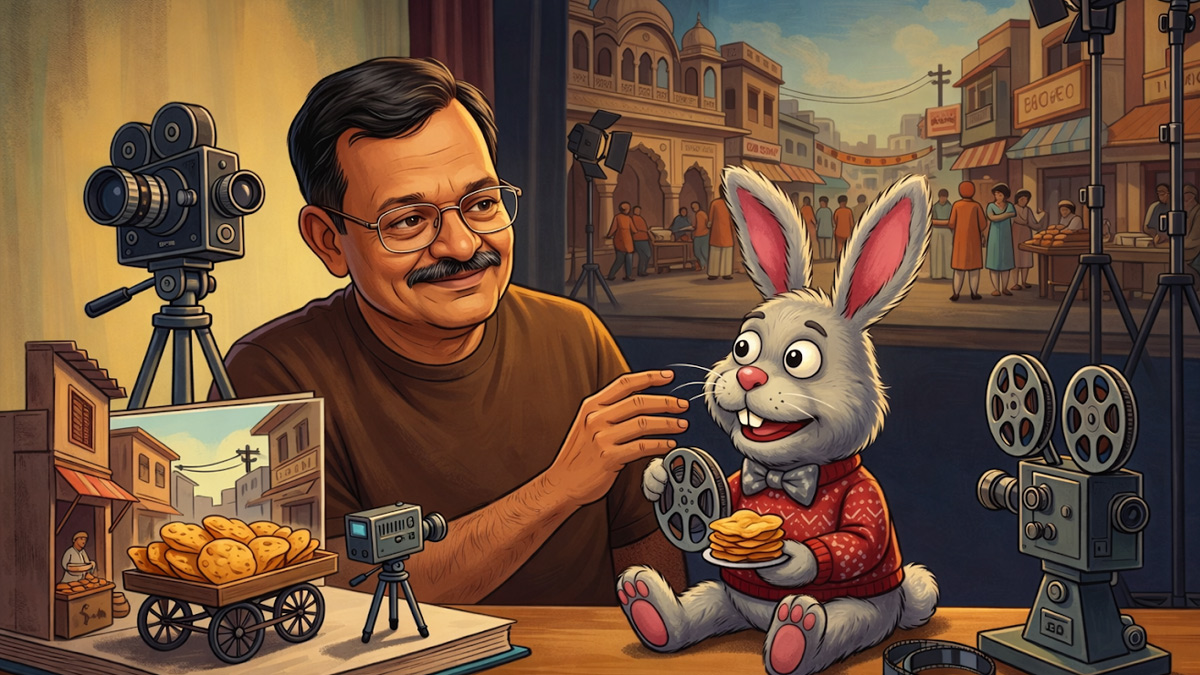
MUMBAI: There are careers, and then there are canvases. Gyan Sahay, the veteran cinematographer, director, and producer who passed away on 10 March 2026 in Mumbai, had one of the latter. Over several decades in the Indian film and television industry, he turned lenses, lights, and the occasional puppet rabbit into something approaching art.
A graduate of the Film and Television Institute of India (FTII) in Pune, Sahay built his reputation as a director of photography across a career that stretched from the early 1970s all the way to the digital age. He was the kind of craftsman who understood that a well-composed shot is not merely a technical achievement but a quiet act of storytelling.
For most Indians of a certain age, however, Sahay will forever be the man behind the rabbit. His direction of the iconic long-running television commercial for Lijjat Papad, featuring its now-legendary puppet bunny, gave the country one of its most cheerfully persistent advertising images. It was the sort of work that sneaks into the national subconscious and takes up permanent residence.
His big-screen credits as cinematographer include Anokhi Pehchan (1972), Pagli (1974), Pas de Deux (1981), and Hum Farishte Nahin (1988). In 1999, he stepped behind a different kind of camera altogether, making his directorial debut with Sar Ankhon Par, a drama that featured Vikas Bhalla and Shruti Ulfat, with a cameo by Shah Rukh Khan for good measure.
On television, Sahay was particularly prized for his command of multi-camera production setups, a skill that made him a go-to technician for large-scale shows and reality programmes. In an industry that has never been especially patient with complexity, he was the calm hand on the rig.
In later life, Sahay turned teacher. He participated regularly in masterclasses and Digi-Talks, often hosted by organisations such as Bharatiya Chitra Sadhna, sharing hard-won wisdom on cinematography, the comedy of timing in a shot, and the sweeping changes brought by the shift from celluloid to digital. He was also said to have been involved in a project concerning a biographical film on Infosys co-founder N.R. Narayana Murthy.
Tributes from the film industry poured in following the news of his passing, with colleagues remembering him as a senior cameraman who served as a rare bridge between two entirely different eras of Indian cinema. That is, perhaps, the finest thing one can say of any craftsman: he kept up, and he brought others along with him.







