Hindi
Chinese Film Festival opens in Delhi, Jackie Chan wins hearts


NEW DELHI: Information and Broadcasting Minister Manish Tewari has expressed the hope that an agreement would be reached soon for co-production of films with China.
He said that cinema is a great medium to strengthen and substantiate relations amongst people of the two countries.
While films of Raj Kapoor and some other veterans have been popular for decades in China, the film 3 Idiots was dubbed in Chinese and proved to be a great hit in that country, he added.

The Minister along with Chinese Minister of State Administration for Press, Publication, Radio, Film and Television Cai Fuchao were jointly inaugurating a six-day Chinese Film Festival at Sirifort Auditorium here. Matinee idol Jackie Chan, whose film Chinese Zodiacopened the festival, was the guest of honour. Chinese Ambassador to India Wei Wei, I&B secretary Uday Kumar Varma, and Indo-China Economic Council president P S Deodhar were also present.
Tewari said the time appeared ripe for intensive sharing of films as a potent medium of exchange. “I believe that considering the popularity of Indian films in China, there would be more exposure for Indian films in China in the future, and vice-versa. I am confident that this interaction with the Chinese counterparts would prove to be fruitful and the two countries look forward to agreement on co production in films, as also cooperation in the fields of radio and television An audio visual agreement would not only promote our shooting locations, but will also boost film related tourism between the two countries and hence pave for a more vibrant people-to-people contact,” he added.
The Minister announced that since 2014 marked sixty years of the enunciation of Panchsheel or the Five Principles of Peaceful Coexistence, the year would be marked as the Year of Exchanges between India and China.
Speaking earlier, the Chinese Information Minister said Chinese movies would offer an opportunity for Indian audiences to be acquainted with Chinese landscape, Arts, Music and culture. He further added that this would also enable citizens of both nations to view Indo-China relationship from a broader perspective. He noted that both countries shared cultural similarities.
The Chinese Minister announced that an Indian film festival would soon be held in China
Speaking at the event, Chan said amid loud cheers that he was touched by his popularity in India. He rendered a Chinese song he had composed around two years earlier, ‘Country my Country, Home my Home’, which he said was in Chinese but would find empathy with everyone. He claimed that over ten million downloads of the song had already been done all over the world.
Earlier addressing a press meet, actor Jackie Chan who is based in Hong Kong stressed the need to screen movies in India and China which talk about the need to strive for peaceful co-existence between the two neighbours.
He said, “We cannot choose our neighbours. In fact, we should love each other; why hate each other? Through films we need to promote peace,” replying to a question on the recent border tension.
Dressed in an immaculate white dress, the bespectacled actor said he did not want to be seen as a martial arts actor but as someone in the league of Hollywood actor Robert De Nero.
The actor, whose martial arts — not withstanding his comic fight sequences — has been compared with the legendary actor Bruce Lee, admitted that he held the late actor in high regard: “When I was young I used to watch him do his action sequences.”
Chan – who came to India a decade ago to make The Myth – said it was a successful venture not only in China but across the globe: “I shot the film for a month here. During this period, I watched a lot of television and was impressed with all the singing and dancing. I loved the music of 3 Idiots and wanted to dance with co-actor Mallika Sherawat for the Indian version of The Myth.”
The actor is open to the idea of doing a Bollywood film which has traditional song and dance routines provided the writer must have the ability to make the people understand Indian culture.
“Ordinary people in China do not understand Indian culture… I am just waiting and hoping that some Indian director understands that I am a pretty good actor and not just a fighter.”
“I like cooperation but the script is very important. We will make one version for India and the other for the rest of the world,” he said.
The festival is being supported by Huawei Telecommunications India which claims to be the largest telecommunications equipment maker in the world.
The movies being showcased at the festival include the latest offering, The Grandmastersfrom Wong Kar-Wai, internationally renowned as an auteur for his visually unique, highly stylised, and emotionally resonant cinema. And Back to 1942 by Feng Xiaogang, the Chinese film director, who besides being a highly successful commercial filmmaker, has also made comedic films which have consistently done well on the box office. He has also attempted to break out from that mould by making drama or period drama films recently. This film premiered at the International Rome Film Festival in 2012.







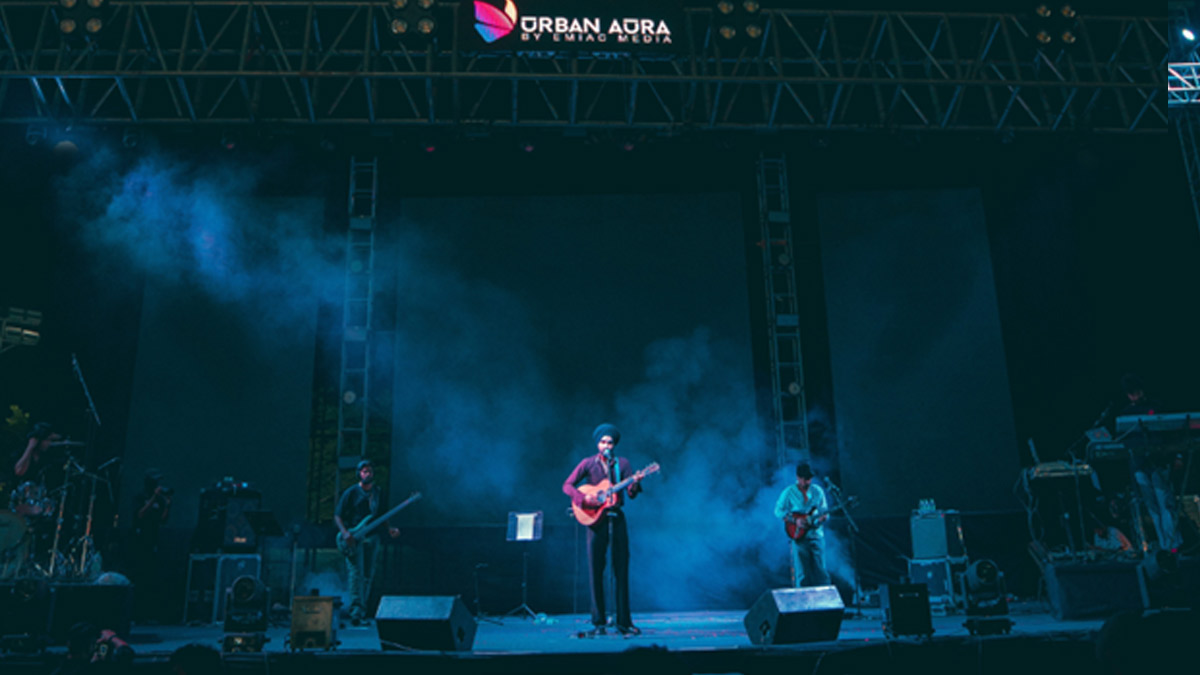
In a music industry that often rewards speed, spectacle, and instant recall, Navjot Ahuja’s journey feels refreshingly different. His story is not built on noise. It is built on patience, discipline, emotional honesty, and a quiet commitment to becoming better with every passing year. After 14 years of struggle, learning, performing, and writing, Navjot stands today as an artist whose success has not changed his centre. If anything, it has only made his purpose clearer.
For Navjot, music has never been about chasing fame alone. It has always been about expression. It is about writing more truthfully, singing more skillfully, understanding himself more deeply, and becoming a kinder human being in the process. That rare clarity is what gives his journey its beauty.
Where It All Began: A Writer Before a Singer
Indian singer and songwriter Navjot Ahuja’s musical journey began in the most familiar of places: school assemblies. But even then, what was growing inside him was not only the desire to sing. It was the need to write.
Long before he saw himself as a performer, he had already discovered the emotional release that writing offered him. For Navjot, words became the first true channel for feeling. Songwriting came before singing because writing was the only way he could let emotions flow through him fully. That inner pull shaped his artistic identity early on.
Like many young musicians, he sharpened his craft by creating renditions of popular songs.
Those experiments became his training ground. But the turning point came in 2012, when he wrote his first original song. That moment did not just mark the beginning of songwriting. It marked the beginning of self-definition.
A Calling He Did Not Chase, But Accepted
What makes the latest Indian singer-songwriter Navjot’s story especially compelling is the way he describes his relationship with music. He does not frame it as a career he aggressively pursued. In his own understanding, music was not something he chose. It was something that chose him.
There was a time when he imagined a very different future for himself. He wanted to become a successful engineer, like many young people shaped by ambition and conventional expectations. But life had a different script waiting for him. During his college years, around 2021, music entered his life professionally and began taking a firmer shape.
That shift was not driven by image-building or industry ambition. It came from acceptance. Navjot embraced the fact that music had claimed him in a way no other path could. That sense of surrender continues to define the artist he is today.
An Artist Guided by Instinct, Not Influence
Unlike many singers who speak openly about idols, icons, and musical role models, Navjot’s creative world is built differently. He does not believe his music comes from imitation or inherited influence. He listens inward.
He has never considered himself shaped by ideals in the traditional sense. In fact, he admits that he does not particularly enjoy listening to songs, especially his own. His decisions as a songwriter and singer come from instinct. He writes what feels right. He trusts what his inner voice tells him. He positions his music according to what he honestly believes in, not what trends demand.
That creative independence gives his work a distinct emotional sincerity. His songs do not feel calculated. They feel alive.
The Long Years of Invisible Struggle
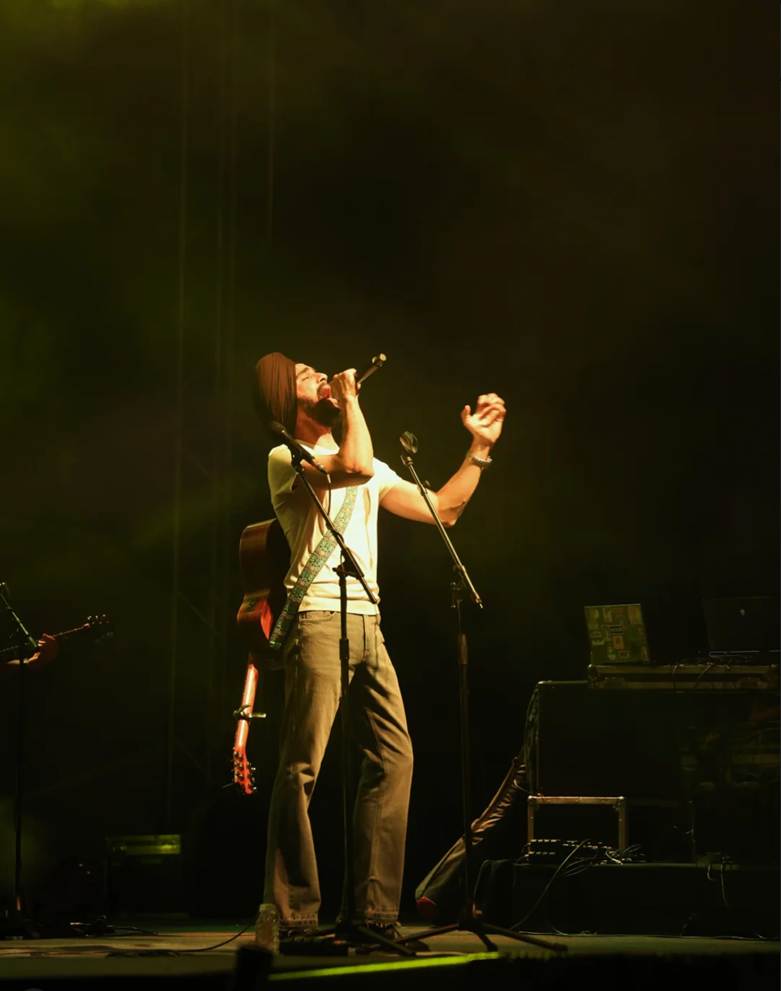
Every artist carries a chapter of struggle, and Navjot’s was long, demanding, and deeply formative. One of the biggest challenges he faced was building continuity as the best new indian singer songwriter in an era where musical collaboration is increasingly fluid.
For emerging singers, especially those trying to build with a band, consistency can be difficult. Instrumentalists today have more opportunities than ever to freelance and perform with multiple artists. While that growth is positive and well deserved, it can make things harder for singers who are still trying to establish a steady team and sound around their work.
For Navjot, one of the most difficult phases came during 2021 and 2022, when he was doing club shows almost every day. It was a period of relentless performance, but not always personal fulfillment. He was largely singing covers because clubs were not open to original songs that audiences did not yet know.
For a new Indian singer and songwriter, that can be a painful compromise. To perform constantly and still not have the freedom to share your own voice requires not just resilience, but restraint.
“Khat” and the Grace of Staying Unchanged
After 14 years of effort, Navjot’s new love song Khat became a defining milestone. Professionally, he acknowledges that the song changed how society viewed him as a musician. It strengthened his place in the public eye and altered his standing in meaningful ways.
Yet personally, he remains unchanged.
That is perhaps the most striking part of his story. Navjot says his routine is still the same. His calm is still the same. His writing process is still the same. He does not want success or failure to interfere with the purity of his art. For him, emotional detachment from public outcomes is essential because the moment an artist becomes too attached to validation, the writing begins to shift.
His joy comes not from numbers, but from the attempt. If he has tried to improve his skill today, if he has written his heart out more honestly than before, then he is at peace.
Growth, Not Glory, Remains the Real Goal
Even now, Navjot is not consumed by labels such as singles artist, performer, or digital success story. His focus remains deeply personal. He wants to sing better. He wants to play instruments better. He wants to understand himself more. And he wants to become a kinder person.
That is what makes Navjot Ahuja’s journey so moving. It is not simply the story of a musician finding recognition. It is the story of an artist who continues to grow inward, even as the world begins to look outward at him. In an age obsessed with applause, Navjot reminds us that the most meaningful success often begins in silence, honesty, and the courage to remain true to oneself.






