Cable TV
Charter & Cox to merge to create largest cable TV & broadband provider in the US

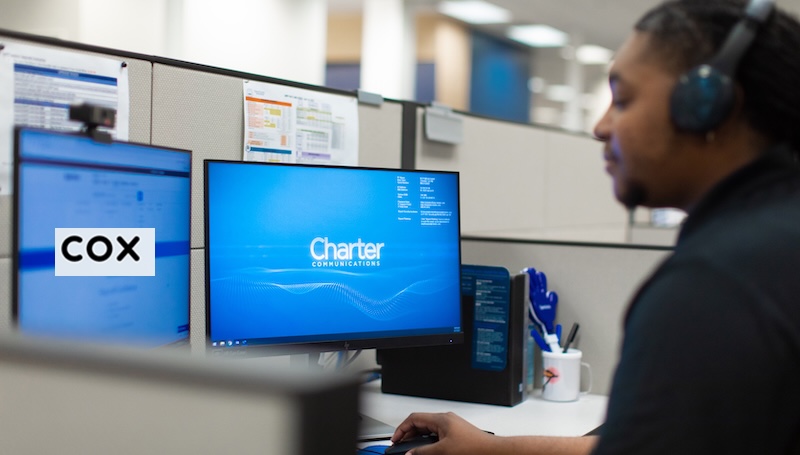
MUMBAI: In a mega-merger straight out of a business blockbuster, Charter Communications and Cox Communications have inked a definitive agreement to combine their businesses, creating an industry giant in mobile, broadband, and video entertainment. As part of the agreement, Charter Communications will buy the privately held rival Cox for $21.9 billion.
The deal values Cox Communications at a cool $34.5 billion, calculated using Charter’s 2025 estimated adjusted EBITDA multiple.
Under this arrangement, Charter will snap up Cox’s commercial fibre, managed IT, and cloud businesses, while Cox’s residential cable will be folded into Charter Holdings, a subsidiary of Charter. The merger, which still needs regulatory and shareholder approval, will see Cox Enterprises pocket $4 billion in cash, $6 billion in convertible preferred units, and 33.6 million common units in Charter’s partnership.
The merger will create the largest US cable TV and broadband provider with around 38 million subscribers, surpassing market leader Comcast. Industry observers may recollect that Charter had last year agreed to acquire cable TV billionaire John Malone’s Liberty Broadband, which will now have an indirect interest in Cox, following the merger’s clearance.
The Cox family, which has been in the cable business since 1962, is handing over the reins to Charter but keeping a significant seat at the table. Cox Enterprises, will own approximately 23 per cent of the combined entity and its CEO Alex Taylor will become chairman of Charter’s board, while Chris Winfrey will continue as president & CEO of the combined company.
“We’re honored that the Cox family has entrusted us with its impressive legacy and are excited by the opportunity to benefit from the terrific operating history and community leadership of Cox,” said Winfrey. “Cox and Charter have been innovators in connectivity and entertainment services – with decades of work and hundreds of billions of dollars invested to build, upgrade, and expand our complementary regional networks to provide high-quality internet, video, voice and mobile services. This combination will augment our ability to innovate and provide high-quality, competitively priced products, delivered with outstanding customer service, to millions of homes and businesses. We will continue to deliver high-value products that save American families money, and we’ll onshore jobs from overseas to create new, good-paying careers for US employees that come with great benefits, career training and advancement, and retirement and ownership opportunities.”
“Our family has always believed that investing for the long-term and staying committed to the best interests of our customers, employees and communities is the best recipe for success,” said Taylor. “In Charter, we’ve found the right partner at the right time and in the right position to take this commitment to a higher level than ever before, delivering an incredible outcome for our customers, employees, suppliers and the local communities we serve.”

In a patriotic move, the combined company is pledging to bring customer service jobs back to the US, with all employees earning a starting wage of at least $20 per hour, alongside industry-leading benefits. Cox customers will also be treated to Charter’s famed 100 per cent US-based customer support, fast technician dispatches, and transparent pricing—no more surprise fees.
The consumer-facing brand across Cox’s territories will become Spectrum, while the combined company will eventually rebrand as Cox Communications, maintaining its headquarters in Stamford, Connecticut, and a significant presence in Atlanta, Georgia.
Spectrum customers can expect access to advanced wifi, Spectrum Mobile with mobile speed boost, and the Spectrum TV app, all under a simplified pricing model. For business customers, Charter’s robust portfolio of business telecom services, including Segra and RapidScale, will become part of the combined offering.
The merger isn’t just about size—it’s about smarts. With more network muscle, the new entity will ramp up investments in mobile, video, and AI tools while taking the fight to big tech in advertising and content distribution.
The deal is expected to generate $500 million in annual cost savings within three years, thanks to streamlined operations and better buying power. But it’s not just about the bottom line—Charter will establish a $50 million foundation to support community leadership in Cox’s territories and launch an employee relief fund to help staff in times of crisis.
The combined company will carry Cox’s $12 billion in debt but expects higher cash flow and better investment returns over time, with a new leverage target of 3.5x to 4.0x. Industry observers may recollect that Charter had last year agreed to acquire cable TV billionaire John Malone’s Liberty Broadband, which will now have an indirect interest in Cox, following the merger.
It’s a blockbuster telecom tale where two rivals become allies, customers win, and big tech finally faces a serious challenger.