iWorld
Centre approves amendments in FM Radio Phase-III Policy guidelines

Mumbai: The central government has approved the amendments to certain provisions contained in the policy guidelines on the expansion of FM radio broadcasting services through private agencies (phase-III), referred to as the private FM phase-III policy guidelines.
The decision was taken in a cabinet meeting chaired by Prime Minister Narendra Modi.
The three-year window for restructuring FM radio permissions within the same management group throughout the licensing duration of 15 years has been eliminated by the government in order to move in this direction.

The government has also agreed to remove the 15 per cent national cap on channel holdings, which has been a long-standing demand of the radio industry.
Furthermore, as part of the FM radio policy’s simplification of financial eligibility norms, an applicant company can now participate in bidding for ‘C’ and ‘D’ category cities with a net worth of just Rs 1 crore, as opposed to Rs 1.5 crore previously.
These three amendments will help the private FM radio industry fully leverage economies of scale and pave the way for further FM radio and entertainment expansion in tier-III cities across the country.
This will not only create new job opportunities but will also ensure that music and entertainment are accessible to the general public in even the most remote parts of the country through FTA (free-to-air) radio media.
To improve the ease of doing business in the country, the government has focused on simplifying and rationalising existing rules in order to make governance more efficient and effective, so that the benefits reach the common man.






iWorld
Bill Ackman’s Pershing Square makes $64 billion bid to acquire Universal Music Group
Ackman pitches NYSE relisting plan as UMG board weighs unsolicited offer
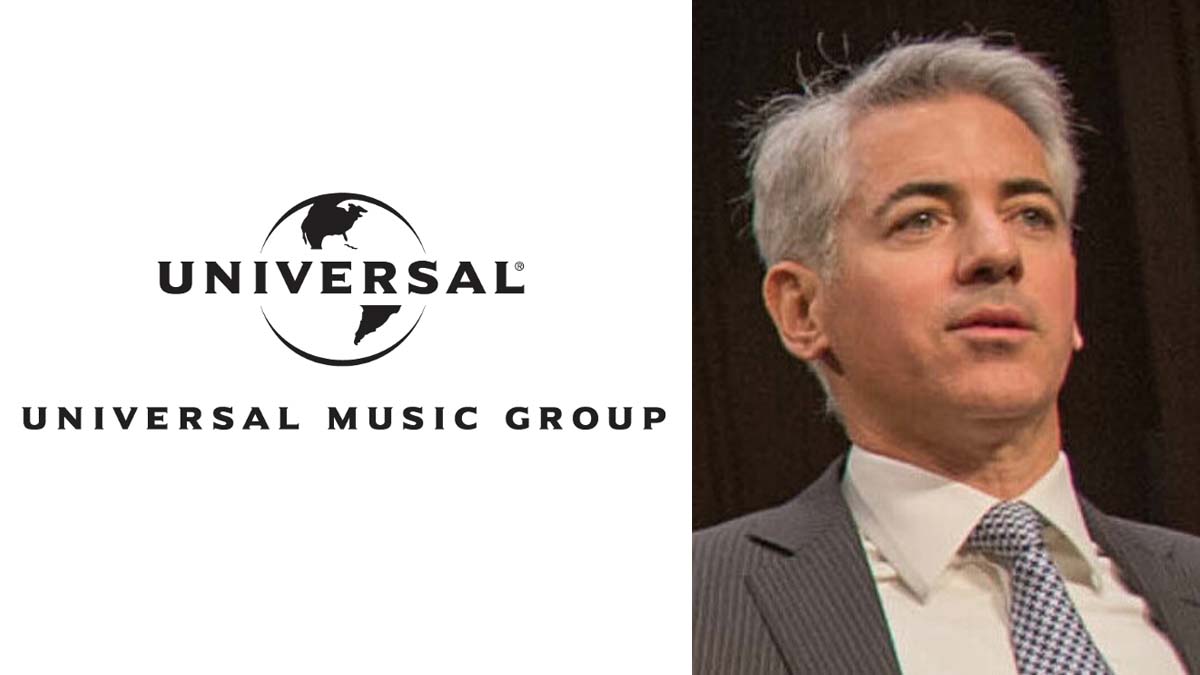
The hedge fund has proposed a business combination that values UMG at €30.40 per share, representing a hefty 78 per cent premium to its current trading price. The offer includes €9.4 billion in cash alongside stock in a newly formed entity, with shareholders set to receive €5.05 per share in cash and 0.77 shares in the new company for each UMG share they hold.
Under the proposal, UMG would merge with Pershing Square SPARC Holdings Ltd and re-emerge as a Nevada-based entity listed on the New York Stock Exchange. The move is designed to boost investor visibility and potentially secure inclusion in major indices such as the S&P 500.
Pershing Square Capital Management ceo Bill Ackman argued that while UMG’s operational performance remains strong, its market valuation has lagged due to external factors. “UMG’s stock price has languished due to a combination of issues that are unrelated to the performance of its music business,” Ackman said, pointing to concerns ranging from shareholder overhang to delayed US listing plans.
Ackman also flagged what he sees as untapped potential in UMG’s balance sheet and a lack of clear capital allocation strategy. He added that the market has not fully recognised the value of UMG’s €2.7 billion stake in Spotify, alongside gaps in investor communication.
The proposed transaction would also result in the cancellation of around 17 per cent of UMG’s outstanding shares, while maintaining its investment-grade balance sheet. Pershing Square has said it will fully backstop the equity financing, with debt commitments secured at signing. The deal is targeted for completion by the end of the year.
UMG, however, has struck a measured tone. The company confirmed that its board has received the non-binding proposal and will review it with advisers. It reiterated confidence in its current strategy and leadership under Lucian Grainge, signalling no immediate shift in stance.
The proposal comes at a time when global music companies are navigating evolving investor expectations, streaming economics and capital allocation pressures. For Pershing Square, the bet is clear: sharpen the financial story, relist in the US, and let the music play louder in the markets.
Whether UMG’s board is ready to change the tune remains to be seen, but the spotlight on its valuation just got a lot brighter.






