Connect with us

I&B Ministry

CBFC took unilateral decision to put list of offensive words on hold: Rathore

Published

on

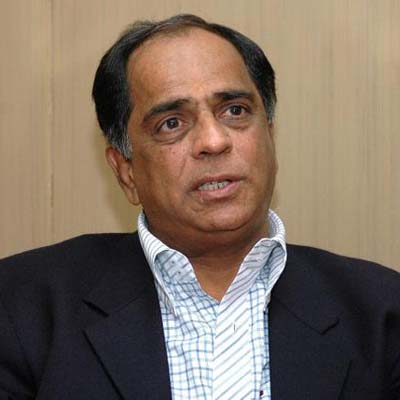
NEW DELHI: The Parliament was informed on 13 March that the list of 28 “objectionable and abusive” words suggested for banning from Indian films by Central Board of Film Certification (CBFC) chairman Pahlaj Nahalani was held back. This, because a need was felt to consult on the same with people from different sections of society.


Minister of State for Information and Broadcasting Rajyavardhan Rathore told the Lok Sabha today that the decision in this regard had been taken by the Board in a meeting on 23 February.

Advertisement


The Minister also said that the list of objectionable words circulated by Nihalani on 12 February this year had been compiled by regional offices of the CBFC in 2003.


Advertisement

Meanwhile, a Ministry official told Indiantelevision.com last month that any decision in this regard may have been taken at the level of the Board or by its chairman, who had issued the list leading to protests from some members.


Rathore had earlier said, “CBFC under the Ministry certifies films for public screening in accordance with the Cinematograph Act, 1952 and Cinematograph (Certification) Rules, 1983. Section 5B of the Cinematograph Act, 1952 provides principles for guidance in certifying films. Guidelines for certification of films notified under the Cinematograph (Certification) Rules lay down among other things that CBFC shall be guided by the following principles in this regard: (i) human sensibilities are not offended by vulgarity, obscenity or depravity; and (ii) such dual meaning words as obviously cater to baser instincts are not allowed.”

Advertisement


In a circular to the producers’ association and regional officers, the Board had last month listed several “objectionable words” that are being used in films and directed its regional officers to ensure a ban on the list of cuss words. It also aimed to seek more conformity from directors and scriptwriters on cultural matters and political correctness. It also said Mumbai should be used in place of Bombay.


Advertisement

The list led to a Twitter war of words, where some members said Nihalani had taken the decision unilaterally.


However, Nihalani told Indiantelevision.com that he was within his rights to issue the list as he was only using the powers given to him under the Cinematograph Act and was only referring to words that the Certification Guidelines do not allow.

Advertisement
Click to comment

Leave a Reply

Your email address will not be published. Required fields are marked *

I&B Ministry

Government sets up AI governance group to steer policy

AIGEG to align ministries, assess jobs impact, guide AI deployment.

Published

on

MUMBAI: If artificial intelligence is the engine, the government is now building the dashboard and making sure everyone reads from the same screen. The Centre has constituted a new inter-ministerial body to coordinate India’s approach to AI, formalising a key recommendation from its governance framework and the Economic Survey. The AI Governance and Economic Group (AIGEG), set up by the Ministry of Electronics and Information Technology, will act as the central platform to align AI-related policy across ministries, regulators and departments, an attempt to bring coherence to what has so far been a fragmented and fast-evolving landscape.

The group will be chaired by union minister Ashwini Vaishnaw, with minister of state Jitin Prasada as vice chairperson. Its composition reflects both technological and economic priorities, bringing together the principal scientific adviser, the chief economic adviser, and the CEO of NITI Aayog, alongside key secretaries from telecommunications, economic affairs and science and technology. A representative from the National Security Council Secretariat is also part of the group, while the MeitY secretary will serve as member convenor.

At its core, AIGEG is designed to do two things: coordinate and anticipate. On the policy front, it will review existing regulatory mechanisms, issue guidance across sectors and ensure companies remain compliant with evolving legal frameworks. Beyond that, it will oversee national initiatives on AI governance, with a focus on enabling responsible innovation rather than merely regulating it.

Advertisement

The economic dimension is equally central. The group has been tasked with assessing how AI-driven automation could reshape jobs identifying which roles are most at risk, where those impacts may be geographically concentrated, and whether technology will augment or replace human labour. Based on these assessments, it will develop mitigation strategies and transition plans, signalling a more proactive stance on workforce disruption.

In parallel, AIGEG will work with industry stakeholders to chart a long-term roadmap for AI adoption, categorising use cases into “deploy”, “pilot” or “defer” buckets depending on readiness factors such as data availability, skill levels and regulatory clarity. The aim is to move from broad ambition to structured execution deciding not just what can be built, but what should be built now.

The group will function as the apex layer in India’s AI governance architecture, supported by a Technology and Policy Expert Committee that will track global developments, emerging risks and regulatory priorities. Together, the two bodies are expected to shape both the pace and direction of AI adoption in the country.

Advertisement

In a landscape where technology often outruns policy, the creation of AIGEG signals an attempt to close that gap ensuring that India’s AI journey is not just rapid, but also coordinated, accountable and economically grounded.

Continue Reading

Advertisement News18
Advertisement
Advertisement
Advertisement
Advertisement Whtasapp
Advertisement Year Enders

Indian Television Dot Com Pvt Ltd

Signup for news and special offers!

Copyright © 2026 Indian Television Dot Com PVT LTD