International
Cannes: Thurman to preside over Un Certain Regard Jury, Indian ‘Afternoon Clouds’ in shortlist
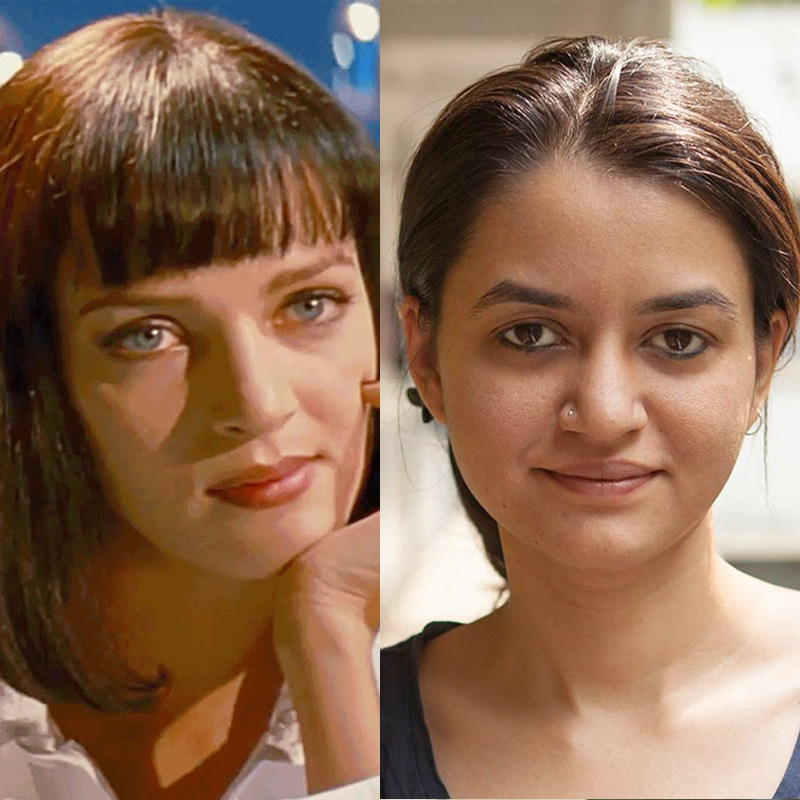
NEW DELHI: American actress Uma Thurman will preside over the Un Certain Regard jury of the 69th Cannes Film Festival next month.
The Un Certain Regard is the second competition of the Official Selection showcases works which offer a unique perspective and aesthetic. The prize list will be revealed on 27 May. She was a member of the Jury headed by Robert De Niro in 2011.
In a career spanning more than 20 years, the American actress has made some daring choices and enjoyed taking risks. She made her debut at the age of 17 in Stephen Frears’ Dangerous Liaisons and in Terry Gilliam’s The Adventures of Baron Munchausen. She became Quentin Tarantino’s muse, playing in Pulp Fiction (Palme d’or winner 1994) and in Kill Bill (volumes 1 & 2), both presented at the Festival de Cannes.
Since then, Uma Thurman has worked with many directors, including Andrew Niccol (Gattaca); Woody Allen (Sweet and Lowdown); Roland Joffé (Vatel) and Ethan Hawke (Chelsea Walls). She recently joined the cast of Lars von Trier’s new project, The House that Jack Built, alongside Matt Dillon and Bruno Ganz.
Her filmography encompasses everything from action films to science fiction; intimate dramas to light comedies. This wide variety is a testament to her free and independent spirit, nurtured by her childhood in a hippy family. Whether playing crazy, sexy or dominant, the woman whose namesake is the Hindu goddess of beauty and light has definitely entered the pantheon of movie greats, with several of her scenes attaining cult status.
Meanwhile, even as no Indian film finds a place in the official selection, only one Indian short film – from the Film and Television Institute of India – has made it to the 16 films shortlisted by the the Cinéfondation Selection of the Cannes International film festival to mark the 20th year of this section. The film is ‘Afternoon Clouds’ by Payal Kapadia and has a duration of 13 minutes.
The 16 films include 14 works of fiction and 2 animations from among the 2,600 works submitted this year by film schools from all over the world. Fourteen countries from three continents are represented. Four of the films selected come from schools taking part for the first time.
The three Cinéfondation prizes will be awarded at a ceremony preceding the screening of the prize-winning films on 26 May in the Buñuel Theatre.

International
Utopai Studios unveils 4K three-minute video generation for PAI platform
New Story Agent and editing tools aim to streamline AI-led filmmaking workflows
MUMBAI: Utopai Studios has announced a major upgrade to its PAI storytelling AI platform, introducing what it claims is an industry-first capability to generate three-minute videos in 4K resolution, alongside enhancements to its Story Agent feature.
The update, rolling out from April 15, expands the platform’s capabilities across the filmmaking process, from early concept development to post-production. The company said the new features are designed to help filmmakers maintain continuity across characters, scenes and visual styles, a key challenge in AI-driven storytelling.
At the heart of the release is a next-generation model that enables more structured narrative development, allowing creators to move more seamlessly from idea to execution. With tools such as multi-shot sequencing and multi-turn editing, the platform aims to give both studios and independent creators greater control over complex storytelling workflows.
Commenting on the launch, Utopai Studios co-founder and CTO Jie Yang said, “The next phase of AI in media will not be defined by isolated tools, but by systems that can carry story, continuity and collaboration across the full creative process.” He added that the update is a step towards enabling more practical, end-to-end narrative development at a professional level.
Echoing this, Utopai Studios co-founder and chief scientific officer Zijian He said, “Generative video is opening the door to a new production model, where creative ambition is less constrained by traditional cost and complexity.” He noted that the platform combines multimodal models with iterative editing to give creators more speed, control and consistency.
The company said PAI is already being used in professional film and television productions, particularly in Hollywood, for tasks such as pre-visualisation, scene design and post-production refinements. The latest update adds features including improved voice options, character consistency, unlimited editing and more flexible asset management.
Utopai also emphasised that its models are not trained on copyrighted material, positioning the platform as a cleaner alternative for creators and rights holders navigating the evolving AI landscape.
As AI continues to reshape content creation, Utopai’s latest push signals a shift from standalone tools to integrated systems, aiming to make high-quality filmmaking faster, more flexible and increasingly accessible.