Cable TV
Cable TV strike call fails to make an impact

NEW DELHI/MUMBAI: The cable operators’ strike has evoked mixed response in most big cities, including the metros, with the blackout of TV channels happening in areas where monopolies (meaning one cable op servicing the area) exist and life as usual in places where there is competition and more than one cable network available.
For example, in Delhi, in places like Punjabi Bagh (North Delhi), Hauz Khas, Green Park, Safdarjung Enclave and Safdurjung Extension (South Delhi) and Jor Bagh (partly in Central Delhi) the blackout of TV channels is almost 100 per cent. Reason: existence of monopolies. In most of these places mentioned The Rajan Raheja-controlled Hathway Datacom is the sole service provider. However, in some other places like Cannuaght Circus or Rajiv Gandhi Chowk, Janpath (Central Delhi), Saket, Maharani Bagh, Ashram, Nehru Place, Friends Colony and New Friends Colony, cable TV services are on because of the presence of independent cable ops, most of whom have not sided with the All India Cable TV Forum.
While the supporters of the strike have claimed success, independent cable operators and head of various cable bodies like Vikki Chowdhry, Rakesh Dutta and Roop Sharma (head of Cable Operators’ Federation of India) dismissed the strike as a failure.

So much so that in a joint statement these three have pointed out that “some people (MSO and their distributors) in the Indian cable industry, just because of their vested interests, are trying to instigate the operators to go on strikes in order to protest against the increase in service tax.”
The blackout did not affect Mumbai as many of the city’s cable operators continued with their service. The fact that the dominant Hinduja Group MSO InCableNet distanced itself from the strike didn’t help the strike call either.
Cable Operators and Distributors Association (CODA) president Anil Parab said CODA backed out from the strike last night after the finance ministry called for a meeting to discuss the issues.
“We will decide our future course of action after the talks with the ministry,” Parab said.
Consumer Action Network chairman Ahmad M Abdi pointed out that the strike call by India Cable TV Forum was against a 2003 Mumbai High Court order which banned cable TV blackouts and mass disconnections.
The All India Cable TV Forum, a body comprising some big MSOs and industry bodies in various states, yesterday gave a call for an indefinite strike in the cable industry to protest against the imposition of service tax on the industry and bringing with the tax net MSOs too from this year. While INCablenet stayed away from the stir call, Chowdhry, Dutta and Sharma have said that the last mile operators are already paying a tax for the last four years and this service tax is levied on consumers. Therefore, it is the consumer bodies that should come forward in opposing these taxes, the joint statement says, adding, “the MSOs are unnecessarily opposing the service tax issue, as now only they have been brought under the tax net.”
Interestingly, Star, which is a minority equity stakeholder in Hathway Datacom, according to industry sources, has dashed off a letter to the Raheja company seeking clarifications on the reasons leading to it supporting the strike call. It has also been pointed out that Star was not consulted while the decision to support the stir was taken by Hathway.






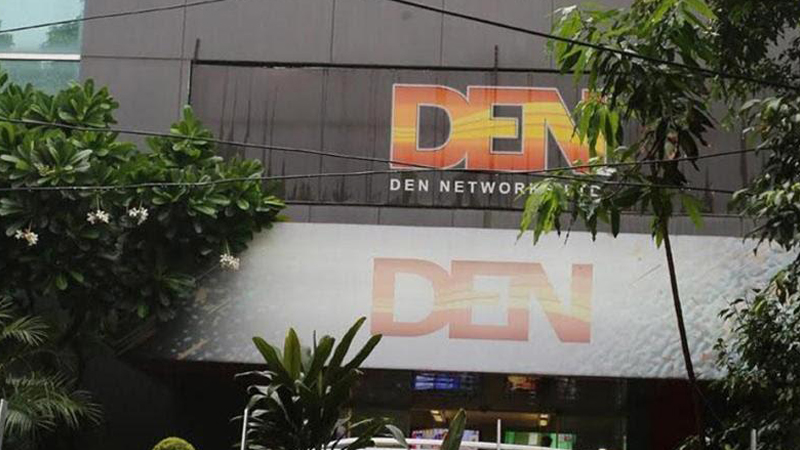
MUMBAI: When margins wobble, liquidity talks and in Q3 FY25-26, cash did most of the talking. Den Networks Limited closed the December quarter with consolidated revenue of Rs.251 crore, marginally higher than the previous quarter but down 4 per cent year-on-year, even as profitability stayed resilient on the back of strong cash reserves and disciplined cost control.
Subscription income softened to Rs.98 crore, slipping 3 per cent sequentially and 14 per cent from last year, while placement and marketing income offered some cheer, rising 15 per cent quarter-on-quarter to Rs.148 crore. Total costs climbed faster than revenue, up 7 per cent QoQ to Rs.238 crore, driven largely by higher content costs and operating expenses. As a result, EBITDA dropped sharply to Rs.13 crore from Rs.19 crore in Q2 and Rs.28 crore a year ago, pulling margins down to 5 per cent.
Yet, the bottom line refused to blink. Profit after tax stood at Rs.40 crore, up 15 per cent sequentially and only marginally lower than last year’s Rs.42 crore. A healthy Rs.57 crore in other income helped cushion operating pressure, keeping profit before tax at Rs.48 crore, broadly stable quarter-on-quarter despite the tougher cost environment.
The real headline-grabber, however, sits on the balance sheet. The company remains debt-free, with cash and cash equivalents swelling to Rs.3,279 crore as of December 31, 2025. Net worth rose to Rs.3,748 crore, while online collections accounted for 97 per cent of total receipts, underscoring strong cash discipline across operations, including subsidiaries.
In short, while Q3 showed signs of operating strain, the financial backbone remains solid. With zero gross debt, steady profits and a formidable cash war chest, the company enters the next quarter with flexibility firmly on its side proving that in uncertain markets, balance sheet strength can be the best growth strategy.








