I&B Ministry
“Cable TV like regulation to affect OTTs growth,” say experts on Broadcasting Bill

Mumbai: The government’s move to regulate OTT video streaming apps like Netflix, Disney+Hotstar, SonyLiv, etc., under the Broadcasting Services (Regulation) Bill, 2023, could affect content innovation and autonomy, derailing the growth path, experts said. Content on OTTs works on a “pull model”, wherein consumers choose the content. As such, any stringent programme and advertising codes might lead to content censorship and affect the audience experience.
Another area of concern experts cite is whether the government will bring in a pricing regime for OTT content, much like it has for television channels. The Bill also contains a provision for a Content Evaluation Committee (CEC), a self-certification body that will certify the content of broadcasters.
“While they have brought OTTs under regulation, they have not specified how a self-certification model will work and what role the government will play,” an executive at a media and entertainment company said. He added that once the Bill becomes an Act, the Telecom Regulatory Authority of India (Trai) will be the regulator for these streaming platforms as well.

As per the Bill, the government may prescribe the number of members in the CEC, the quorum required, and such other details to facilitate the formation of CEC and its smooth functioning.
Besides, there will also be a government appointed body, the Broadcast Advisory Council, that will have five government members and five government-nominated independent people from media, entertainment, broadcasting, child rights, disability rights, etc., to advise the government on orders to be issued to the broadcaster or the broadcasting network operator.
“In light of increasing scrutiny of streaming platforms such as Netflix, Disney+ Hotstar, powers assigned to the government, specifically with respect to the size, quorum, & operational details of the Content Evaluation Committee, raise censorship concerns,” said policy advocacy group Internet Freedom Foundation (IFF) in a post on X (formerly Twitter).
Currently, the OTT platforms are regulated by the IT Rules, 2021, with guidelines for self-regulation as well as code of ethics for digital content. Such platforms do not require any licence from the government, as they are classified as TV channels and have a different model.
“It looks like a very ambitious project to bring OTT and cable TV under one piecemeal regulation because both the platforms are different and distribute different types of content to consumers,” said The Dialogue senior programme manager – online safety and platform regulation Shruti Shreya.
According to Shreya, while there can be basic ratings and guidelines for these OTT streaming apps, the regulation does not need to be similar to that of cable TV. The government should not hinder creativity, but should give freedom to creators as the content is at the discretion of viewers, they can refuse to watch that and have filters.
Once the Bill becomes an Act, it would bring streaming platforms such as Netflix and Hotstar completely within the ambit of the ministry of information and broadcasting (MIB) without having to rely on the Information Technology Rules, 2021, government officials said.
The policy experts however said that first, the Bill should clearly mention if this would supersede the IT Act and second, the government can only amend certain codes of ethics in the IT Act instead of bringing them under a new legislation.
“The requirement for all online content creators to adhere to a ‘programme code’ requires careful consideration. The government will have to ensure that while giving a code of ethics for content, it should not give subjective terms like content should be of ‘good taste’ or ‘decency’ as they did in the IT Rules, as that leads to ambiguous interpretations,” Shreya added.
Nandita Saikia, a tech policy lawyer said, “the Bill missed the opportunity to legally separate broadcast content and carriage”.
“The programme and ad codes currently in force have been notoriously difficult to deal with…also contains provisions which are so subjective that it is often difficult to foretell how they’ll likely be interpreted,” Saikia said in her comments on the Bill on LinkedIn.
Even as experts demanded clarity on codes, they applauded the government on inclusion of content accessibility provision in the Bill. This would pave the way for persons with disabilities to access the content based on their comfort and not based on the current forms, they said.





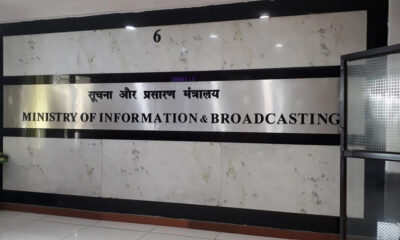

I&B Ministry
Digital radio, D2M tech set to reshape broadcasting and public messaging
Govt pushes next-gen delivery while TRAI tightens grip on spam ecosystem
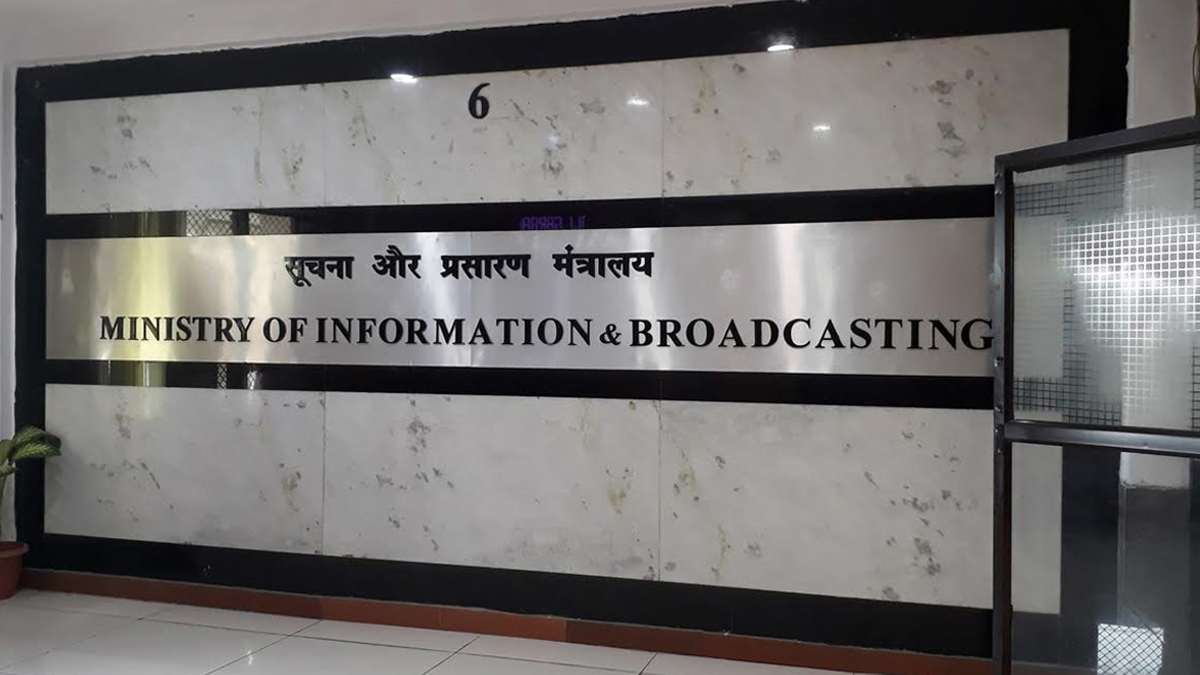
NEW DELHI: India’s broadcasting and telecom landscape is undergoing a quiet but significant upgrade, with digital radio and Direct-to-Mobile (D2M) technologies emerging as powerful tools for mass communication, while regulators step up efforts to tackle spam calls.
According to the Ministry of Information and Broadcasting, digital radio and D2M are poised to transform how content reaches audiences by making more efficient use of spectrum. In simple terms, multiple channels can now be delivered over a single frequency, opening the door to a wider range of free-to-air content.
D2M technology takes this a step further by enabling video, audio and data to be broadcast directly to mobile handsets without relying on SIM cards or mobile data. The result is a resilient and cost-effective data pipe that can deliver everything from entertainment and education to critical emergency alerts, even in low-connectivity scenarios.
At the same time, the Telecom Regulatory Authority of India is tightening its grip on unsolicited commercial communication, better known as spam calls. The regulator has deployed a distributed ledger technology platform to bring transparency and accountability into the system.
Through this blockchain-based setup, consumers can register their preferences on receiving promotional messages, while businesses and telemarketers must also sign up and operate within defined rules. The platform also includes a complaint mechanism that allows users to report spam, with complaints shared across telecom operators for coordinated action.
The government’s broader push is being supported by infrastructure upgrades under the Broadcasting Infrastructure and Network Development scheme. Implemented through Prasar Bharati, the initiative focuses on modernising networks such as Akashvani and Doordarshan, including digitisation and adoption of next-generation broadcast equipment.
In a written reply in the Lok Sabha, Ministry of Information and Broadcasting minister of state for information and broadcasting L. Murugan said these steps are part of a larger effort to promote emerging technologies and strengthen the country’s broadcasting backbone. The response came to a query raised by member of Parliament Rao Rajendra Singh.
Together, these developments point to a dual-track strategy: expanding access to reliable, low-cost content while cleaning up the communication ecosystem. As digital pipes get smarter and spam filters sharper, India’s airwaves may soon feel a lot less noisy and far more useful.






