Cable TV
Cable ops hijack consumer bodies’ press conference

NEW DELHI: The CAS conundrum is getting more confounding and murky.
Even as consumer organisations were attempting to put forward their case at a press conference here, today, as to how conditional access is “anti-consumer”, the proceedings got hijacked by a section of cable operators who entered into a slanging match with the organisers and raised the bogey that the consumer organisations were “acting on behalf of broadcasters.”
Some 50 leading consumer organisations of the country announced that they have come under the umbrella organisation Consumer Co-ordination Council (CCC). The representatives said that they would file a public interest litigation (PIL) if the Indian government does not defer CAS implementation. However, they did not seem to have done their homework properly and dished out half baked truths and facts in an attempt that more looked like putting pressure on the government.
About six consumer organisations’ representatives present at the press conference — the big daddy of them all, HD Shourie kept away from the interaction with the journalists — had some three-four points to make.
CCC representatives had the following points to make:
*CAS is anti-consumer
* The implementation of CAS should be deferred (no time limit given for deferment)
*A regulatory authority should be in place before CAS is rolled out
*Pay channels should not have dual streams of revenue in subscription and advertising and pay channels should not carry ads
While Anand Patwardhan, chairman of the Consumer Guidance Society of India, terming CAS related amendments as a “shabby piece of legislation”, said that the PIL against CAS would be filed on the ground that it curbs an Indian citizen (read the consumer)’s freedom of speech and expression and right to information, CCC director S. Krishnan said: “We will file the PIL before 14 July (the deadline for CAS rollout in four metros) if we have to.”
Patwardhan said that the Sec 4 a(ii) of the amended Cable TV (Network) Regulation Act is the offensive part and gives the government the control to monitor and regulate even the free to air channels that a consumer in a certain area can watch or not. But when it was pointed out that this can be done only when the government thinks there is a national security risk or some other risks, Patwardhan had no answer.
Though Mumbai Grahak Panchayat member Varsha Raut, who is also a member of the task force on CAS, made some valid points that pay channels should not carry ads and that the “government was forcing CAS” on the consumers, did get carried away when she said that in a 30-minute programme, consumers have to suffer 20 minutes of advertising— a fact that, if really true, would make broadcasters like Star and Sony look like fools because they claim to be following the global norm of about 10-12 minutes of commercial time every hour.
Those who were present at today’s press conference included VOICE’s HK Awasthi, RD Saxena of Consumer Forum, Delhi and Rajan Gandhi of Consumer Unity and Trust Society, amongst others.
According to the consumer activists, the particular piece of legislation on CAS, which has caused many a heartburn, was supposed to give the consumer a choice, but fails to address issues like quality of service or under-declaration by cable operators.
A statement released on the occasion also asks several questions like:
*Why do consumers have to pay for the set top boxes?
* Why has the government failed to address the issue of cable monopolies?
*Why has the government not protected the consumers’ interests by specifying the service quality parameters?
*Who will address the consumer complaints as there is no regulatory provision to offer a redressal mechanism?
There were questions galore at the press conference, more from the cable operators who had barged in, but very few answers. There was more of cable operator bashing (by the consumer activists) than valid facts given. Of course, big daddy Shourie — on whose name the whole press conference was sold to the media –kept away from the heat and dust preferring to communicate through a prepared statement that was distributed amongst journalists.
However, to an important question (why were the consumer organisations sleeping all this six months when CAS was being deliberated upon in the task force to wake up so late?), none of the participants had any convincing answers. Still Raut defended the whole move by saying, “Consumer activists on the task force and she had raised several objections, but the bureaucrats kept ignoring their pleas saying `CAS had to be implemented’.”
Unfortunately, nobody from the government was present to validate the observation.
Meanwhile, the cable ops present openly threatened everybody that if there was any rollback of CAS implementation deadline, the monthly cable subscription fee for an average India would go up to Rs 500 (over $ 10 from the existing average of $ 3.5).
Consumer body urges PILs against govt on CAS
NCTA gives memo on CAS to president, PM and deputy PM







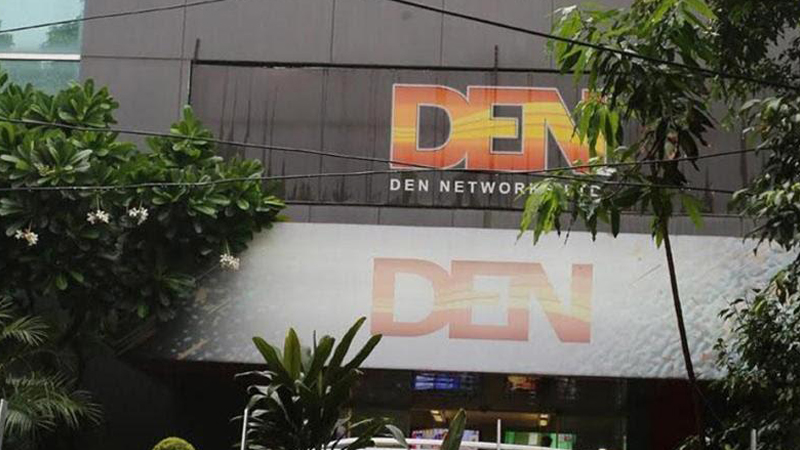
MUMBAI: When margins wobble, liquidity talks and in Q3 FY25-26, cash did most of the talking. Den Networks Limited closed the December quarter with consolidated revenue of Rs.251 crore, marginally higher than the previous quarter but down 4 per cent year-on-year, even as profitability stayed resilient on the back of strong cash reserves and disciplined cost control.
Subscription income softened to Rs.98 crore, slipping 3 per cent sequentially and 14 per cent from last year, while placement and marketing income offered some cheer, rising 15 per cent quarter-on-quarter to Rs.148 crore. Total costs climbed faster than revenue, up 7 per cent QoQ to Rs.238 crore, driven largely by higher content costs and operating expenses. As a result, EBITDA dropped sharply to Rs.13 crore from Rs.19 crore in Q2 and Rs.28 crore a year ago, pulling margins down to 5 per cent.
Yet, the bottom line refused to blink. Profit after tax stood at Rs.40 crore, up 15 per cent sequentially and only marginally lower than last year’s Rs.42 crore. A healthy Rs.57 crore in other income helped cushion operating pressure, keeping profit before tax at Rs.48 crore, broadly stable quarter-on-quarter despite the tougher cost environment.

The real headline-grabber, however, sits on the balance sheet. The company remains debt-free, with cash and cash equivalents swelling to Rs.3,279 crore as of December 31, 2025. Net worth rose to Rs.3,748 crore, while online collections accounted for 97 per cent of total receipts, underscoring strong cash discipline across operations, including subsidiaries.
In short, while Q3 showed signs of operating strain, the financial backbone remains solid. With zero gross debt, steady profits and a formidable cash war chest, the company enters the next quarter with flexibility firmly on its side proving that in uncertain markets, balance sheet strength can be the best growth strategy.






