Cable TV
Cable operator’s arrest exposes India’s unencrypted piracy racket

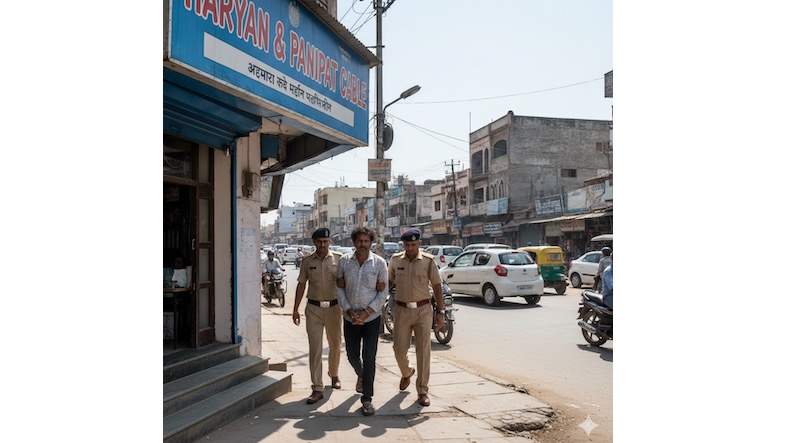
NEW DELHI: Haryana police have collared a cable operator in Sonipat for beaming unauthorised television signals—a bust that lays bare the booming black market in unencrypted feeds across northern India.
Anurag Narwal, known locally as Nura, was arrested in Gohana for illegally broadcasting JioStar channels without permission, according to storyboard18.com. The first information report charges him under the Copyright Act, 1957, for criminal infringement and possession of illicit broadcast kits.
Gohana police station inspector Arun Kumar confirmed the clamping of handcuffs on the guilty party. “The accused was arrested and was released on bail. We are investigating the matter further,” he said.
During a raid on premises in Kathmandi, Gohana, officers seized two optical transmitters and two optical receivers from the upper floor of a commercial shop. The gear had allegedly been used to distribute pirated signals.
The investigation has revealed that Narwal was sourcing the unauthorised feed from a multi-system operator in Panipat. Police are now probing whether other local cable operators were tapping into the same distribution chain—suggesting an unregulated network pumping unencrypted signals across multiple districts.

The absence of watermarking on these feeds has made tracing the source fiendishly difficult. Unlike encrypted satellite feeds or internet-delivered streams that carry forensic markers, unencrypted fibre-fed signals leave no traceable fingerprint once they are illicitly redistributed.
A senior executive at a leading entertainment broadcaster, speaking anonymously, called it a growing crisis. “The biggest loophole today is unencrypted distribution. When feeds are shared without watermarking, it becomes nearly impossible to trace who extracted it, who retransmitted it, and where the leak originated. It’s a blind spot that pirates have learned to exploit very effectively.”
The sector has poured money into anti-piracy technology, but broadcasters say these efforts crumble when multi-system operators and local cable operators run parallel networks outside the encrypted ecosystem. “We keep closing the gaps at our end, but unencrypted feeds undo everything,” another broadcaster said.
The ministry of information and broadcasting has launched a nationwide consultation with industry stakeholders to tighten anti-piracy mechanisms. In a notice dated 7 November 2025, the ministry said it is reviewing enforcement and monitoring frameworks to tackle piracy affecting films, television broadcasts and over-the-top content.
Industry players say the Haryana case makes the argument for mandatory watermarking unanswerable. Without it, they warn, illegal signal-sharing will keep multiplying—and crackdowns will remain a game of whack-a-mole that bleeds broadcasters and legitimate operators dry.
(The picture featured at the beginning of this report was generated by using gemini.ai and is representational in nature and in no way claims to be a picture of the accused or his or anyone else’s cable TV network by name. No offence to any one is intended)






Cable TV
Hathway Cable appoints Gurjeev Singh Kapoor as CEO
Leadership change comes as cable TV faces shrinking subscriber base and modest earnings pressure
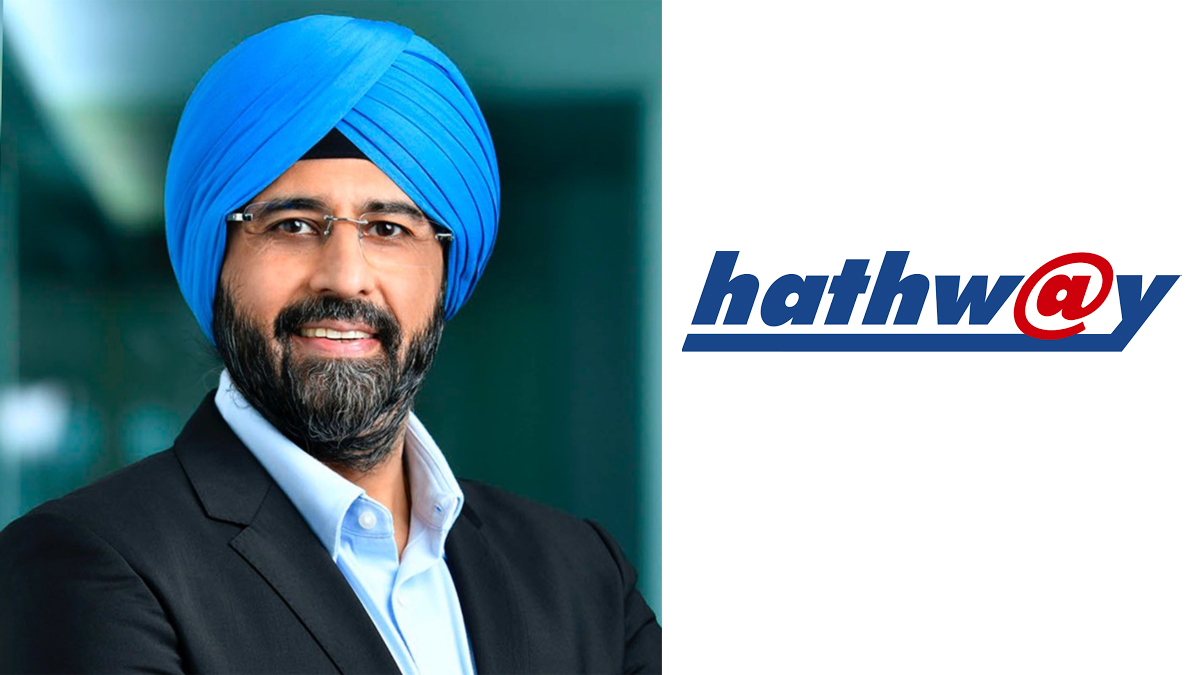
MUMBAI: Hathway Cable and Datacom has tapped industry veteran Gurjeev Singh Kapoor as chief executive officer, marking a leadership pivot at a time when India’s cable television business is under mounting strain.
Kapoor will take over from Tavinderjit Singh Panesar, who is set to retire in August after a long innings with the company. Panesar, chief executive since 2023, has held multiple leadership roles at Hathway, including his latest stint beginning in 2022.
Kapoor brings more than three decades of experience in media and entertainment. He most recently led distribution at The Walt Disney Company’s Star India business, now part of JioStar. His career spans television distribution and affiliate partnerships, with stints at Sony Pictures Networks India, Discovery Communications and Zee Entertainment.
Panesar, with over three decades in the industry, has worked across strategic planning, distribution and business development in media, broadcasting and manufacturing. His past associations include ESPN Star Sports, Star India, Apollo Tyres and JK Industries.
The transition lands as the cable sector grapples with structural disruption. Traditional operators are losing ground to streaming platforms, while telecom and broadband players tighten the squeeze with bundled offerings.
An EY report estimates India’s pay-TV base could shrink by a further 30 to 40 million households by 2030, taking the total down to 71 to 81 million. The slide follows a loss of nearly 40 million homes between 2018 and 2024, a contraction that has already wiped out more than 37,000 jobs in the local cable operator ecosystem.
Hathway’s numbers reflect the strain. The company reported a consolidated net profit of Rs 93 crore for FY25, down from Rs 99 crore a year earlier. Revenue inched up to Rs 2,040 crore from Rs 1,981 crore. As of December 2025, it had about 4.7 million cable TV subscribers and roughly 1.02 million broadband users.
Kapoor steps in with a familiar brief but a shrinking playbook. In a market where viewers are cutting cords faster than companies can reinvent them, the new chief executive inherits a business fighting to stay plugged in.