News Broadcasting
Cable frat sees deal between govt, pay broadcasters to quash CAS


NEW DELHI: What was originally meant to be a public support seeking conference turned out to be a government bashing exercise and also a platform to take a swipe at the consumer in whose name the whole fight over CAS (conditional access system) is being carried out.
His predecessor Sushma Swaraj should replace information and broadcasting minister Ravi Shankar Prasad. The present lot of bureaucrats in the ministry should be done away with. It is the broadcasters who are at the bottom of the CAS impasse because they don’t want addressability to be rolled out and the media was not reporting CAS developments “honestly”. This is what a section of the cable industry chorused here today at a press conference.
If one could make oneself heard over the babble of the cable fraternity — top guys like Siti Cable’s Jawahar Goel and Hathway Datacom’s president for North India, SN Sharma were said to be away meeting some anti-CAS politician — it all boiled to one stock reply: CAS is the best medicine for all the ills afflicting the industry.

“The I&B minister should be replaced as he’s playing into the hands of the broadcasters,” said Rakesh Dutta of the Cable Networks Association, while National Cable & Telecom Association’s Vikki Chowdhry hinted that the broadcasters have come to an understanding with politicians on a quid pro quo basis with an aim to sabotage CAS.
It was unfortunate that amidst the likes of Dutta, Chowdhry and Roop Sharma — all hard working entrepreneurs, no doubt — a probable saner voice could not be heard much. Siti Cable’s Rajiv Khattar, the right hand man and deputy of Goel, preferred to keep a low profile. But he came up with the most logical explanation when a journalist asked whether the set-top boxes, being sold and rented out, conformed to the standards mandated by the government.
At times, the whole meet looked like a charade, propped up, probably, to send across a message more to the government than the consumer — don’t tinker around with the CAS rollout. “We would move the courts also if the government brings about an ordinance putting an end to CAS implementation,” thundered Dutta.
But when he was asked why weren’t industry factions like the cable ops and broadcasters sitting across a table and hammering out their differences, instead of resorting to under-declaration, Dutta evaded a direct answer. According to him, the “arm twisting by broadcasters” forced them to resort to under hand tactics to keep afloat.
“The government always wants to rein in the cable industry, but is unable to check the pay channels, which raise their prices and also collect advertising revenue,” Sharma of Cable Operators Federation of India said.
In the end, it seemed that some reports on a government proposal to have an ordinance junking CAS had upset the cable fraternity. And that too badly.
“We feel that this move may have come about as a consequence of the decision to advance general elections. Pursuing CAS may mean a fallout with the pay channel broadcasters, whose support is crucial to the government in view of the elections,” a statement circulated by the cable ops stated.
The statement further added: “The media has been constantly listing out the negative fallout of a poorly implemented CAS, thereby confusing the general public about the system itself. Certain senior journalists (hinting at the likes of Vir Sanghvi who have written on CAS in Hindustan Times) have been criticizing CAS severely. It must be asked if these media persons can think of any other system that will be more consumer friendly. Do they think that cable operators should continue under declaration and avoid paying taxes to help consumers pay less than what they give to the broadcasters or spend on operating the networks?”
So, in this whole drama where was the consumer friendliness? “For 10 years the consumers have made hay (by paying low monthly cable subscription rates). Now they should pay more or have to do with the free to air channels,” pointed out Chowdhry.
Indeed words of encouragement for a section of society whose support the cable fraternity had wanted to seek and which was the purpose for calling today’s press meet.





News Broadcasting
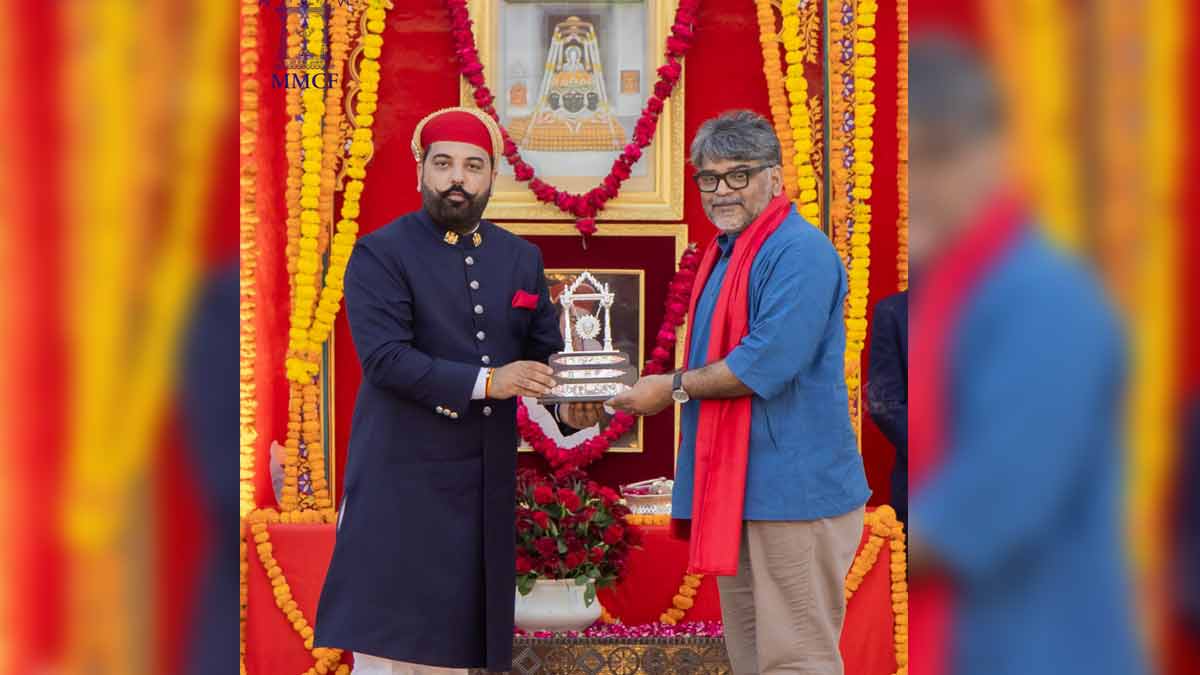
Kamlesh Singh receives Haldi Ghati Award from MMCF
India Today Group editor honoured for three decades of journalism at Udaipur ceremony.
MUMBAI- Kamlesh Singh just turned a lifetime of sharp words into a shiny shield because when journalism wakes up a society, even the Maharana of Mewar wants to pin a medal on it.
The Maharana of Mewar Charitable Foundation (MMCF) conferred its prestigious Haldi Ghati Award on Kamlesh Singh, a senior editor at the India Today Group, during a ceremony in Udaipur on 15 March 2026. The national award, instituted in 1981-82, recognises “work of permanent value that initiates an awakening in society through the medium of journalism.”
Singh, who leads several editorial initiatives including Aaj Tak Radio, the Teen Taal community and The Lallantop, was presented the honour by Lakshyaraj Singh Mewar, Managing Trustee of MMCF. The citation highlighted his three decades of contributions to Indian media, innovations in digital journalism, mentoring young reporters, and his popular podcast persona “Tau” on Teen Taal, which fosters thoughtful public discourse.
The Haldi Ghati Award, named after the historic Battle of Haldighati symbolising valour and resilience, is one of four national awards given annually by MMCF. Past recipients include Tavleen Singh, Piyush Pandey and Raj Chengappa.
Other honourees this year included Padma Vibhushan Pt Hari Prasad Chaurasia, Vedamurti Devvrat Rekhe, Treeman of India Marimuthu Yoganathan, Vir Chakra Capt Rizwan Malik, and US-based researcher Molly Emma Aitken, who received the Colonel James Tod Award for contributions to understanding Mewar’s spirit and values.
In an era where headlines often shout louder than substance, the MMCF quietly reminded everyone that real journalism isn’t about noise, it’s about the quiet, persistent work that stirs society awake, one thoughtful story at a time.







