Budget
Budget 2026 has put the creative economy in the driver’s seat


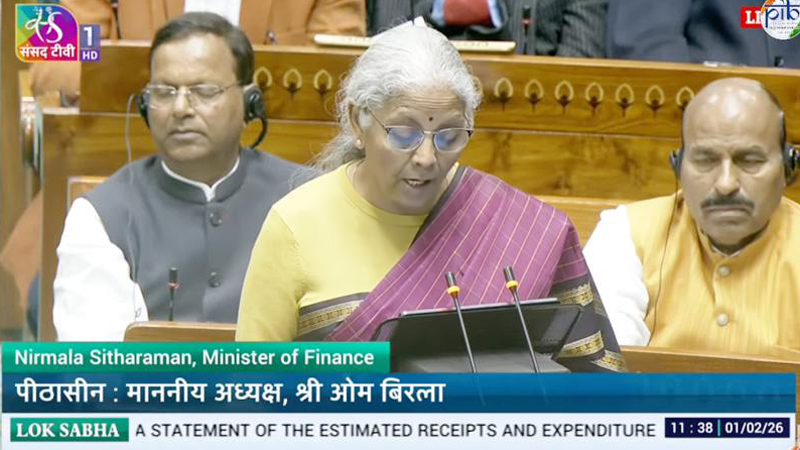
MUMBAI: India’s Budget 2026 has put the creative and digital economy squarely in the spotlight, signalling a shift in how policymakers view content, technology and marketing-led industries. From the so-called “orange economy” to AI skilling and AVGC (animation, visual effects, gaming and comics), industry voices see both a validation of creative work and a test of execution.
At the heart of the excitement is the government’s explicit push for the orange economy and the proposed content labs. Pratik Shinde, co-founder and COO of BlueRays Mediaverse, calls it a turning point.
“The explicit focus on the ‘orange economy’ and the establishment of content labs in the 2026 Budget is a landmark moment for the Indian creative sector. The government has effectively validated that content creation is a core economic engine, not just a recreational activity,” says Shinde.
He argues brands must rethink strategy. “For brands, the signal is loud and clear: stop treating content as a temporary marketing cost and start treating it as intellectual property. We are moving into an era where a brand’s owned media, its podcasts, shows and educational content, will be as valuable as its physical assets. The businesses that win in 2026 will be the ones that stop renting attention from influencers and start building their own media infrastructure.”
Others see promise tempered by realism. Vejay Anand, senior advisor at Prequate and marketing strategist, says the creative economy push is overdue but execution-heavy.
“Budget 2025 marks a welcome shift in how the government views the creative economy, from a cultural add-on to a growth engine. Initiatives like the AVGC content creator labs, planned across 15,000 schools, signal intent to democratise creative careers beyond metro cities,” says Anand. He notes they could unlock tier-2 and tier-3 talent “where aspiration often outpaces access.”
He welcomes the Rs 10,000 crore SME Growth Fund and support for artisans under the Mahatma Gandhi Gram Swaraj Initiative, saying these address financing and market access gaps.
Yet Anand flags risks. “The projection of 2 million creative professionals appears optimistic amid volatile AVGC hiring and global cutbacks. Training infrastructure without clear career pathways risks producing skilled but unemployed talent.” He adds that clarity on faculty, curriculum and employment pathways is thin, and that gig-creator protections such as fair pay, IP rights and social security will be crucial. “The direction is right. The doubts are real. Delivery will decide the outcome.”
Artificial intelligence is the other big pillar. Dinakar Menon, managing partner and business head at BigTrunk Communications, says the Budget shows AI is now a present-day growth lever.
“The decision to increase funding for AI-powered, industry-linked labs in tier-2 and tier-3 institutions is especially important because it expands the talent and innovation base beyond metros and brings applied intelligence closer to real business problems,” says Menon. For marketing, he notes, data and machine learning already shape content, consumer insight and automation.
He also points to the planned committee on emerging technologies and jobs as a sign of balance. With sustained support, he argues, India can build a marketing ecosystem that is “smarter, more export-ready and globally competitive while remaining inclusive and future-facing.”
Tanya Swetta, co-founder and CEO of id8 Media Solutions, frames the Budget as part of a larger economic pivot.
“The Union Budget 2026–27 reflects a clear recognition of the role that the creative, digital and services economy will play in India’s next phase of growth,” says Swetta. She highlights AVGC, AI-led skilling and technology services as signals of a future-ready talent push, adding that digital infrastructure and emerging tech support help media and communication sectors “scale responsibly and compete globally.”
From the immersive-tech corner, Abhishek Razdan, co-founder and CEO of Avtr Meta Labs, sees momentum for AI-driven experiences.
“With the announcement of a dedicated committee to assess AI’s impact on jobs, skills and enterprise growth, it’s clear that India is serious about harnessing technology for innovation,” says Razdan. He notes that AI-driven content and meta influencers are already reshaping brand engagement and expects more “immersive, scalable and impactful digital experiences.”
Taken together, the reactions paint a Budget that courts creators, coders and marketers alike. The ambition is clear: make creativity and code engines of growth. The caveat is just as clear: policy can spark an industry, but only delivery can scale it. In India’s creative economy, the next blockbuster will depend less on the script and more on the execution.