News Headline
Broadcasters in minimum guarantee deals with cable ops to drive growth

MUMBAI: Broadcasters are using the might of the big cable networks to drive revenue growth from subscription business in a price regulated and highly fragmented cable TV market.
Exclusive deals are being struck with individual operators for distribution of their channels in different territories on a minimum guaranteed amount. The trend has particularly caught on after the price freeze on subscription rates imposed by the Telecom Regulatory Authority of India (Trai) since 26 December, 2003.
Star India has entered into a series of agreements with the big operators over the last few months. “We have done such deals in Bhopal, Indore, Jalandhar and some other towns in north India. This is helping us grow and clean up the mess in those markets where the territory of the different cable operators is not defined,” says Star India executive vice-president of distribution Tony D’Silva.

Sony-Discovery’s One Alliance has already worked out an exclusive arrangement with InCablenet in Bangalore. And both Star and Sony have signed with Hathway Cable & Datacom to distribute their bouquet of channels in Hyderabad. The Kolkata-based RPG also has a similar deal in place for both networks.
According to the arrangement, the operator pays a minimum guaranteed amount to the broadcaster while being given exclusive authority to distribute the bouquet of channels in a particular territory. This allows the broadcaster to increase subscriber declarations and squeeze more revenues in difficult markets.
Star, in fact, claims to have seen a 10-12 per cent growth in subscription revenue last year. This is despite not being able to increase rates, as stipulated by Trai. “We have managed to grow in non-metro markets. Our subscription revenue rose 10-12 per cent last year,” says D’Silva.
Star is the most aggressive broadcaster to carry out such deals. “They are using this strategy heavily in the northern region of the country. They are in a position to do so because of their strong content lineup,” says a cable operator.
The practice of “minimum guarantee” deals is seen by small cable operators as a drive to create monopolies. While pay TV broadcasters are able to boost subscription revenues in a difficult environment, cable networks have the potential of improving collections from the ground and consolidating operations. “The privileged operator can switch off the feed of rival networks, if necessary. The broadcaster is able to divide the operators and create monopolies in certain markets that suit his business interests,” says a local cable operator.
There were cases earlier also where broadcasters used to have operators as the distributors of their channels. But what is new is the minimum guarantee amount and the scale in which these operations are being carried out. “It is like having the highest bidder as your exclusive distributor. The operator who is chosen is a dominant player in that market,” says a senior official in a leading broadcasting company.
Not everybody thinks it is a bad practice. “Broadcasters can offer security to the operators by assuring them of the feed. The operators, in turn, can use this to drive in more subscriber declarations and realise better recoveries from the system,” says the head of a multi system operator.






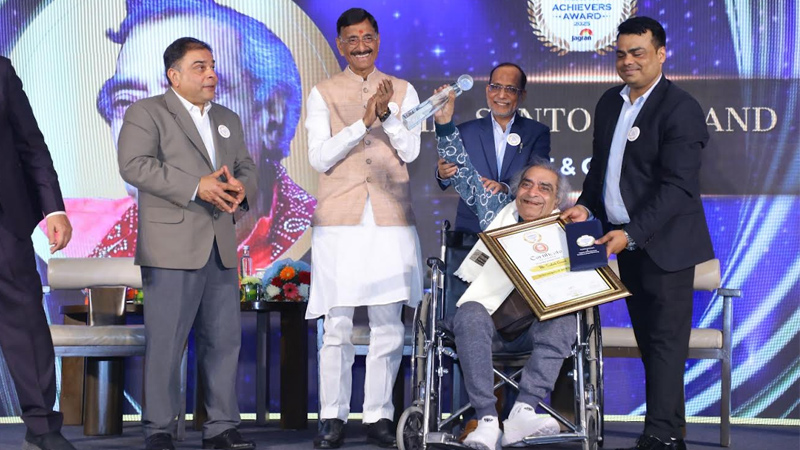
NEW DELHI: Hamdard Laboratories gathered a cross-section of India’s achievers in New Delhi on Friday, handing out the Hakeem Abdul Hameed Excellence Awards to figures who have left their mark across healthcare, education, sport, public service and the arts.
The ceremony, attended by minister of state for defence Sanjay Seth and senior officials from the ministry of Ayush, celebrated individuals whose work blends professional success with a sense of public purpose. It was as much a roll call of achievement as it was a reminder that influence is not measured only in profits or podiums, but in people reached and lives improved.
Among the headline awardees was Alakh Pandey, founder and chief executive of PhysicsWallah, recognised for turning affordable digital learning into a mass movement. On the sporting front, Arjuna Awardee and kabaddi player Sakshi Puniya was honoured for her contribution to the game and for pushing women’s participation onto bigger stages.
The cultural spotlight fell on veteran lyricist and poet Santosh Anand, whose songs have echoed across generations of Hindi cinema. At 97, Anand accepted the honour with characteristic humility, reflecting on a life shaped by perseverance and hope.
Healthcare honours spanned both modern and traditional systems. Manoj N. Nesari was recognised for strengthening Ayurveda’s place in national and global health frameworks. Padma shri Mohammed Abdul Waheed was honoured for his research-backed work in Unani medicine, while padma shri Mohsin Wali received recognition for his long-standing contribution to patient-centred care.
Education and social development also featured prominently. Padma shri Zahir Ishaq Kazi was honoured for decades of work in education, while former Meghalaya superintendent of Police T. C. Chacko was recognised for public service. Goonj founder Anshu Gupta received an award for his dignity-centred rural development initiatives, and the Hunar Shakti Foundation was honoured for empowering women and young girls through skill development.
The Lifetime Achievement Award went to former IAS officer Shailaja Chandra for her long career in public healthcare and governance, particularly in the traditional systems under Ayush.
Speaking at the event, Hamdard chairman Abdul Majeed said the awards were a tribute to those who combine excellence with empathy. “These awardees reflect Hakeem Sahib’s belief that healthcare, education and public service must ultimately serve humanity,” he said.
Minister Seth struck a forward-looking note, saying India’s young population gives the country a unique opportunity to become a global destination for learning, health and wellness by 2047.
The ceremony also featured the trailer launch of Unani Ki Kahaani, an upcoming documentary starring actor Jim Sarbh, set to premiere on Discovery on 11 February.
Instituted in memory of Unani scholar and educationist Hakeem Abdul Hameed, the awards have grown into a national platform that celebrates those building a more inclusive and resilient India. For one evening at least, the spotlight was not just on success, but on service with substance.






