News Broadcasting
Broadcasters delighted; want I&B minister to push through ad cap delay

MUMBAI: With just a little more than two months left for the 12 minute per clock hour advertising cap to be implemented, the broadcast industry is applauding Minister of Information & Broadcasting Manish Tewari’s recommendation. The minister has reportedly stated that the ad cap deadline should be moved ahead to December 2014 from 1 October 2013 as suggested by the Telecom Regulatory Authority of India (TRAI).
Times Television Network MD and CEO Sunil Lulla feels that the recommendation is in sync with reality. “From a news broadcasters’ point of view, we have put forward similar thoughts many a times with concerned bodies. Considering the difference between cost of production and the revenue generated, it would be better if news broadcasters’ were allowed to self regulate. We hope that the request is heard,” he anticipates.

Similarly, a senior official from the News Broadcasting Association (NBA) agrees and adds, “Look at the cost for each broadcaster; if he has to increase eight minutes of content per hour that is close to three hours of more content a day. Where will a broadcaster get so much money from when his ad revenue is going down? Even producers are going to demand more money as to produce a minute of content takes up a good one hour. There are 10,000 things that need to be done depending on the final decision…”
The NBA official further elaborates, “As broadcasters we don’t know what to do. Everyone is saying different things, so who do we believe? What if a channel actually starts implementing changes and then they extend the date, it’ll be in a mess.”
“We are happy that he’s understood our problem which is a genuine one and we hope that he will be able to convince TRAI. And we need take a decision soon,” say both the broadcasters.
But what about other channels/genres? “One shoe for all is what I believe rather than two which might create confusion,” Lulla clarifies.
To put forward advertisers’ viewpoint on the issue, Advertising Agencies Association of India (AAAI) president Arvind Sharma elucidates, “AAAI has always supported the thought implementing the ad cap after we know what is the full impact of digitisation is known.”
However, when we contacted a senior official from TRAI, he told us that they too haven’t received any official “recommendation” from the ministry about postponing the deadline, but have only read about it in new reports.
In May 2013, TRAI had mandated that general entertainment TV channels (GECs) and news channels should reduce their advertising air time per hour from16 minutes and 20 minutes respectively to 12 minutes by 1 October 2013. The reason given by the authority was that the advertising clutter was resulting in a poor viewing experience for TV watchers.
Industry is hoping the minister follows up his suggestion with a formal appeal to the TRAI. “The bullet has left the gun…,” says an official from the Indian Broadcasting Foundation who was caught in surprise by the minister’s statement that TRAI should posptone the ad cap until cable TV digitsation is completed in September 2014.
“We haven’t received any communication from the ministry regarding this. And if we go by the communication we have received in the past few days, there seems to be a conflict,” he says sounding puzzled.
In the past too, there have been many ups and downs in the broadcasting industry. The whole ratings tamasha which went on for a fortnight was resolved when the three stakeholders – Indian Broadcasting Foundation (IBF), Advertising Agencies Association of India (AAAI) and Indian Society of Advertisers (ISA) – finally came up with a solution of providing the television viewership in thousands (TVT) to media and public.
We at Indiantelevision.com can only hope that the recommendation doesn’t boil down to another controversy, but has a happy ending. However, one does wonder why the statement was made. Do up-coming elections have anything to do with it? Let’s just wait and watch…






News Broadcasting
CNN-News18 to host Fury in the Gulf conclave on West Asia crisis
Three-hour summit to unpack geopolitical fallout and impact on India
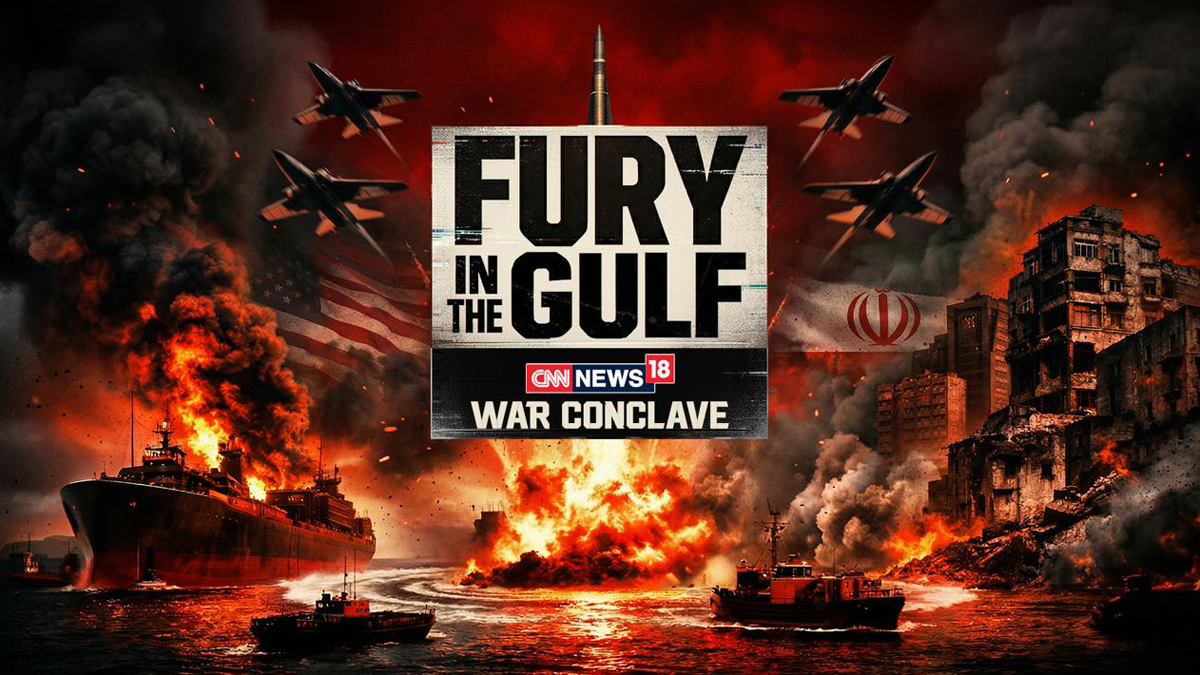
MUMBAI: CNN-News18 is set to host a special three-hour broadcast, Fury in the Gulf – War Conclave, on April 7, aiming to decode the escalating West Asia crisis and its far-reaching implications for India.
Scheduled from 4:00 PM to 7:00 PM, the conclave comes at a time when tensions between Iran and the United States are reshaping global geopolitics and triggering economic uncertainty. With India’s deep energy ties, trade links and large diaspora in the Gulf, the developments carry significant domestic relevance.
Built around the theme ‘Conflict, Consequences, and The Future,’ the programme will feature six curated sessions combining one-on-one interviews and panel discussions. The focus is to cut through the clutter and offer viewers a clearer understanding of the fast-evolving situation.
Key sessions include ‘Diplomacy in Times of War’ featuring Shashi Tharoor, and ‘World After the Iran Conflict’ with voices such as Ram Madhav, Reuven Azar, representatives from the European Union and the Iranian Deputy Envoy. Another session titled ‘Another Dunkirk?’ will bring together K. J. S. Dhillon and Jitin Prasada among others.
CNN-News18 editorial affairs director Rahul Shivshankar said, “In times of war, clarity becomes the most powerful tool. Fury in the Gulf – War Conclave brings together credible voices to address the questions and confusion that arise amid an overwhelming influx of information.”
He added that the initiative is aimed at delivering “facts, perspective, and insight” at a time when misinformation can easily cloud public understanding.
Echoing the sentiment, CNN-News18 CEO– English and business news Smriti Mehra said the conflict marks a defining global moment, with consequences that extend well beyond the region. She noted that the conclave seeks to present the crisis with “depth, nuance and responsibility” so audiences can better grasp its real-world impact.
As geopolitical tensions continue to dominate headlines, the conclave positions itself as an attempt to bring order to the noise, offering viewers a structured, insight-led look at a complex and rapidly shifting global situation.






