News Headline
Broadcast India 2018 survey: South contributes 40% to total TV viewership

MUMBAI: The number of TV owning individuals in the five south states of India, Tamil Nadu, Andhra Pradesh, Telangana, Karnataka and Kerala, is 259 million, up 8 per cent from 2016. This insight came out from the Broadcast India (BI) survey released by Broadcast Audience Research Council (BARC).
This also means that 31 per cent of total TV owning individuals are present in these five states. The TV owning individuals in the north is 209 million, west is 221 million and east is 146 million.
BARC India CEO Partho Dasgupta said, “The survey has thrown some interesting facts about South India’s TV viewing habits. While total TV penetration in India currently stands at 66 per cent, TV penetration in South India is as high as 95 per cent. This can also be attributed to the fact that electrification in South is around 99.9 per cent and one of the first durables which people buy having electricity is TV.”

BARC India’s BI 2018 Survey was conducted covering 300,000 households, approximately 4300 towns/villages and 68 per cent of the urban market.
With eight out 10 people sampling TV daily and a high time spent of 4 hours 10 minutes, the southern market has been witnessing a year on year growth in average time spent on TV. The region also generates viewership of around 12 billion impressions at a weekly level. The fact that 31 per cent of the TV individuals in South contribute to 40 per cent of total TV viewership, proves that people in the region love TV.
The factors that affect TV viewing range from family size, migration, electrification and affluence among others. BI 2018 survey highlights that growing affluence in South India has played an important role in the family structure and durable ownership.
As per BI 2018 Survey, at an all India level, the average family size for TV homes is 4.25 individuals. In South, this is much lower at 3.8 individuals per household. This shows that families in the South are much more nuclear in nature.
The socio-economic profiles of homes in South India have also improved as compared to 2016. While the affluent (NCCS A) have seen a growth of nine per cent, the upper middle class (NCCS B) TV homes have grown by 15 per cent. TV homes falling under low socio-economic profiles (NCCS D/E) have dropped by seven per cent. Nuclear families, increasing middle class and rising disposable incomes are helping households move across the affluence chain.
The survey also highlights the fact that close to 30 per cent homes in the south have their female members working either full time or part time. The ratio further improves in rural where 35 per cent of homes have its women working.
Entertainment in South is of prime importance across the value chain. While 85 per cent of NCCS D/E homes have a TV, only 66 per cent of these homes have a gas stove. This proves the need for these families to sit together and watch their entertainment.







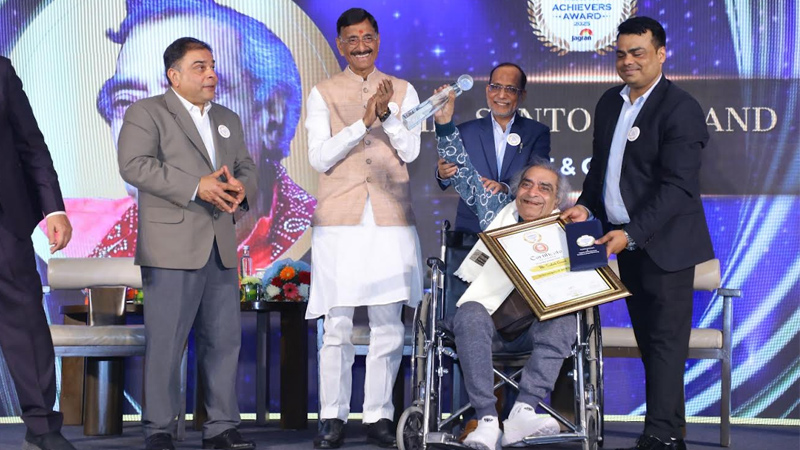
NEW DELHI: Hamdard Laboratories gathered a cross-section of India’s achievers in New Delhi on Friday, handing out the Hakeem Abdul Hameed Excellence Awards to figures who have left their mark across healthcare, education, sport, public service and the arts.
The ceremony, attended by minister of state for defence Sanjay Seth and senior officials from the ministry of Ayush, celebrated individuals whose work blends professional success with a sense of public purpose. It was as much a roll call of achievement as it was a reminder that influence is not measured only in profits or podiums, but in people reached and lives improved.
Among the headline awardees was Alakh Pandey, founder and chief executive of PhysicsWallah, recognised for turning affordable digital learning into a mass movement. On the sporting front, Arjuna Awardee and kabaddi player Sakshi Puniya was honoured for her contribution to the game and for pushing women’s participation onto bigger stages.
The cultural spotlight fell on veteran lyricist and poet Santosh Anand, whose songs have echoed across generations of Hindi cinema. At 97, Anand accepted the honour with characteristic humility, reflecting on a life shaped by perseverance and hope.
Healthcare honours spanned both modern and traditional systems. Manoj N. Nesari was recognised for strengthening Ayurveda’s place in national and global health frameworks. Padma shri Mohammed Abdul Waheed was honoured for his research-backed work in Unani medicine, while padma shri Mohsin Wali received recognition for his long-standing contribution to patient-centred care.
Education and social development also featured prominently. Padma shri Zahir Ishaq Kazi was honoured for decades of work in education, while former Meghalaya superintendent of Police T. C. Chacko was recognised for public service. Goonj founder Anshu Gupta received an award for his dignity-centred rural development initiatives, and the Hunar Shakti Foundation was honoured for empowering women and young girls through skill development.
The Lifetime Achievement Award went to former IAS officer Shailaja Chandra for her long career in public healthcare and governance, particularly in the traditional systems under Ayush.
Speaking at the event, Hamdard chairman Abdul Majeed said the awards were a tribute to those who combine excellence with empathy. “These awardees reflect Hakeem Sahib’s belief that healthcare, education and public service must ultimately serve humanity,” he said.
Minister Seth struck a forward-looking note, saying India’s young population gives the country a unique opportunity to become a global destination for learning, health and wellness by 2047.
The ceremony also featured the trailer launch of Unani Ki Kahaani, an upcoming documentary starring actor Jim Sarbh, set to premiere on Discovery on 11 February.
Instituted in memory of Unani scholar and educationist Hakeem Abdul Hameed, the awards have grown into a national platform that celebrates those building a more inclusive and resilient India. For one evening at least, the spotlight was not just on success, but on service with substance.







