Connect with us

e-commerce

Brave new ads win hearts while playing it safe fades into the feed

Published

on

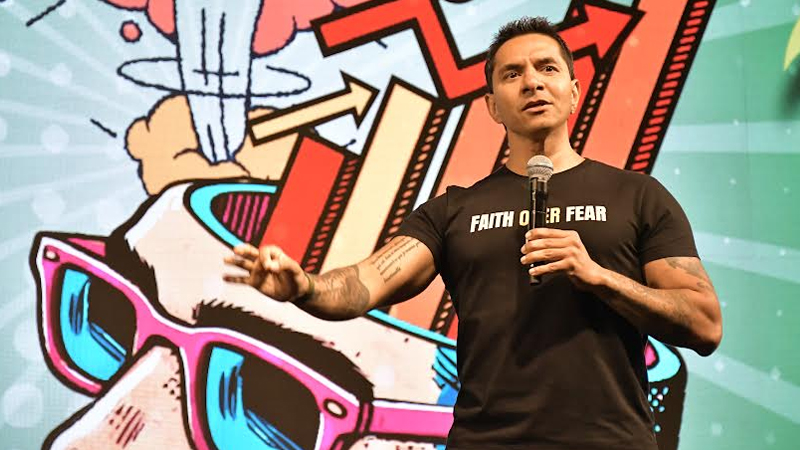
MUMBAI: If your campaign doesn’t make you squirm a little, you’re probably doing it wrong. That was the bold takeaway from Paris-based creative powerhouse Marcel CCO & CEO Youri Guerassimov who took the Goa Fest 2025 stage with a keynote titled Creativity That Dares to Disrupt.

In an age where consumers are bombarded with over 6,000 ads a day, Guerassimov made a case for courage over comfort. “Visibility is not enough,” he said. “To stand out, you have to stand for something.”

And the numbers agree. According to Edelman, 86 per cent of consumers expect brands to take a stand on social or environmental issues. Two-thirds (66 per cent) are even willing to switch loyalties if a brand stays silent on values that matter. In short: if you’re not bold, you’re forgettable.

Advertisement

Guerassimov pointed to iconic examples of brand bravery from Nike’s controversial Colin Kaepernick campaign to Volvo’s decision to open-source their safety innovations. Whether it’s risking backlash or sharing competitive advantage, these brands chose purpose over polish and won loyalty in the process.

But bravery, he clarified, isn’t just activism. “It can be design-led, strategic, or operational.” Take McDonald’s minimal outdoor ad that simply showed its fries arches pointing to the nearest outlet. Or Marcel’s own work with Intermarché, turning ugly produce into a national movement with the “Inglorious Fruits and Vegetables” campaign.

Some acts of courage are barely visible like adding a few meaningful words to a supplier contract. But when done with conviction, even the smallest gestures echo the brand’s beliefs. “True bravery can show up in backrooms and boardrooms,” he said.

Advertisement

He also highlighted Patagonia’s radical profit pledge, where the brand’s CEO donated all company profits to fight climate change, as the ultimate example of purpose-driven marketing that became part of global culture.

According to Guerassimov, bravery is not about budget or bravado, it’s about belief. It’s a tool to cut through the noise, create culture, and connect with consumers on a level that spreadsheets can’t quantify.

As he put it with disarming simplicity, “Fear is temporary. Regret is forever.”

Advertisement

So the next time a campaign idea gives you a nervous twitch, take it as a sign you might be on the right track.

Click to comment

Leave a Reply

Your email address will not be published. Required fields are marked *

e-commerce

American Express to acquire AI startup Hyper to boost automation

Deal targets expense management as AI reshapes corporate spending tools.

Published

on

MUMBAI: From receipts to robots, the expense sheet is getting a brain upgrade as American Express moves to bring artificial intelligence into the heart of corporate spending. The company has announced plans to acquire Hyper, a relatively young but fast-rising startup founded in 2022 that builds AI-powered agents capable of organising expenses, generating reports, verifying compliance with budgets and policies, and nudging users with timely reminders. The deal, expected to close in the second quarter of 2026, underscores a growing shift among financial institutions to automate traditionally manual, time-heavy workflows.

Hyper counts Sam Altman among its backers, adding a layer of Silicon Valley credibility to the acquisition. While financial details remain undisclosed, the strategic intent is clear: deepen automation capabilities and sharpen American Express’s position in the competitive corporate spending ecosystem.

The two companies are not strangers. They previously collaborated in 2024 on a co-branded credit card product, suggesting that the acquisition is less a cold buy and more an extension of an existing relationship. With this move, American Express is effectively bringing that capability in-house, aiming to embed AI directly into its commercial services stack.

Advertisement

Chief executive Stephen Squeri had already signalled the direction of travel in a recent shareholder letter, describing AI as a “structural shift” in how businesses operate. The Hyper acquisition appears to be a direct response to that shift, particularly in expense management, where processes such as approvals, compliance checks and reporting remain ripe for automation.

Alongside the acquisition, the company is also expanding its product suite. A recently launched business credit card offers cashback and benefits at an annual fee of $295, with another card expected later this year moves that complement its broader push into commercial services.

Taken together, the strategy points to a future where managing expenses may require fewer spreadsheets and more algorithms. For American Express, the bet is simple, if businesses are rethinking how work gets done, the tools that power that work need to evolve just as quickly.

Advertisement
Continue Reading

Advertisement News18
Advertisement
Advertisement
Advertisement
Advertisement Whtasapp
Advertisement Year Enders

Indian Television Dot Com Pvt Ltd

Signup for news and special offers!

Copyright © 2026 Indian Television Dot Com PVT LTD