High Court
Bombay high court orders committee to oversee government ad funds

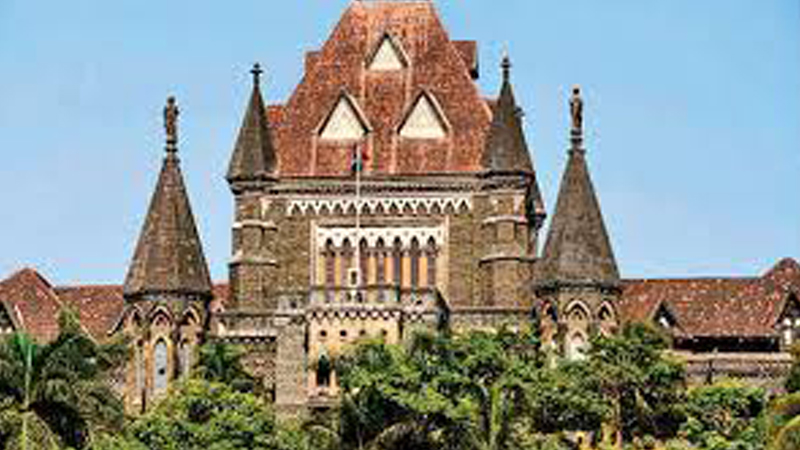
Mumbai: The Bombay high court directed the Maharashtra government to form a three-member committee to monitor the use of public funds in government advertisements, ensuring that funds are not used for unrelated purposes. This directive stems from the state’s delay in adhering to a supreme court mandate focused on enforcing accountability in public advertising. The court ordered that the committee must be set up by 14 December.
This order, issued by a bench comprising justice MS Sonak and Justice Jitendra Jain, highlighted concerns over the lack of active oversight within Maharashtra, deeming this absence of monitoring “unjustifiable.” The court referred to the Supreme Court’s judgment in the “Common Cause vs. Union of India case”, which deemed political promotion through government advertising as contrary to the principles of fairness and constitutional rights outlined in articles 14 and 21.
The ruling came in response to a petition by the Editors’ Forum, which raised issues regarding compliance with various government guidelines related to advertising practices by entities such as the Bombay Municipal Corporation (BMC), City and Industrial Development Corporation (CIDCO), and Maharashtra Industrial Development Corporation (MIDC). The petition highlighted concerns around ad placements and the use of unapproved agencies.

Representatives of the Maharashtra government argued their adherence to current guidelines; however, the court found the State’s explanations insufficient. The judges underscored that, had a committee as mandated by the Supreme Court been established, it could have actively reviewed the alleged issues.
The chief secretary of Maharashtra has been specifically instructed to oversee the formation of this committee, ensuring stringent accountability in the use of public funds. The petitioners were represented by advocates SB Talekar, Madhavi Ayyappan, Chagan Thakare and Neha Lalsare, with additional government pleader Abhay Patki representing the state.





High Court
Bombay High Court questions AI celebrity deepfakes in Shilpa Shetty case
Justice questions legality of unconsented AI personas, platforms directed to respond.

MUMBAI: The Bombay High Court just put AI on the witness stand because when a chatbot starts chatting as Shilpa Shetty without asking, even the bench wants to know who gave permission. The Bombay High Court on Wednesday expressed serious concerns over the legality of artificial intelligence tools that simulate celebrity personalities without consent, during a personality rights suit filed by actor Shilpa Shetty.
Justice Sharmila Deshmukh, hearing the matter, questioned platforms that allow users to interact with AI-generated versions of actors without authorisation. The court noted that one accused AI chatbot website continued using Shetty’s personality without permission, prompting the judge to ask about the legal basis for such operations.
When the lawyer for the AI company argued that the system relied on algorithms and did not require celebrity consent, Justice Deshmukh challenged the platform’s right to recreate and make public a person’s identity in this manner. She observed that while users uploading photographs raised one set of issues, AI systems generating content based on recognised personalities posed distinct legal and ethical questions especially when the platform itself acknowledged the content was not real.
The court directed the platform to file a detailed response explaining its position.
The case involves Shetty seeking restrictions on more than 30 platforms including e-commerce websites and AI services accused of hosting or enabling misuse of her image and circulation of deepfake content.
The Bench also raised concerns about Youtube commentary videos discussing the ongoing proceedings involving Shetty and her husband, questioning whether unverified discussions could malign parties without journalistic checks.
Counsel for Google, Tenor and the AI entity informed the court that flagged infringing URLs had been removed. Shetty’s team disputed this, leading the court to allow her to file an application alleging non-compliance if links remained active.
Tenor objected to the broad injunction sought, arguing it functions as an intermediary GIF platform without capacity for proactive monitoring. The court directed Tenor to file an affidavit opposing the order.
E-commerce platforms including Amazon stated they had removed unauthorised listings using Shetty’s name and image, and would continue to act on specific notifications.
The court reiterated that directions for intermediaries would operate on a “take-down on notice” basis, requiring removal of infringing content once flagged.
As deepfakes blur the line between real and rendered, the Bombay High Court isn’t just hearing a case, it’s asking the bigger question: in the age of AI avatars, who really owns your face?