News Broadcasting
Bloomberg UTV announces The Assignment 2

MUMBAI: Bloomberg UTV, the English business news channel, has announced the second season of its business reality show, The Assignment.
The show, which is to be launched in early July, will see model Nethra Raghuraman as the anchor.
Season 2 of show will see 13 professionals, taking on untried and untested assignments outside their comfort zones. The show is being presented by okia.

Continuing its core philosophy of bridging the gap between the two significantly distinct sectors of the Indian landscape, this season of The Assignment will see participants from a diverse range of professions stepping into unchartered markets, catering to unlikely audiences.
The weekly show will not only put to task the participant’s presence of mind and decision making abilities, but will also capture the individual’s ability to pull off the task most effectively, the channel said.
Bloomberg UTV business head Deepak Lamba stated, “Inspired by an overwhelming response from our viewers and advertisers, we are back with the second season of The Assignment. Our objective is to delight our viewers with an exciting format which combines the best of education with entertainment. In keeping with our promise of being the blunt and sharp business news channel, our efforts like The Assignment will continue to strive towards strengthening our innovative programming, while fulfilling the business news needs of our viewers.”
Also, IIM Ahmedabad will bring alive the core fundamental behind the experience of The Assignment to students, the company said.
Lamba added that the channel will have more such shows in the fiscal as he is looking to expand the base of the channel and eyeing a 70 per cent topline growth in the fiscal.




News Broadcasting
CNN-News18 to host Fury in the Gulf conclave on West Asia crisis
Three-hour summit to unpack geopolitical fallout and impact on India
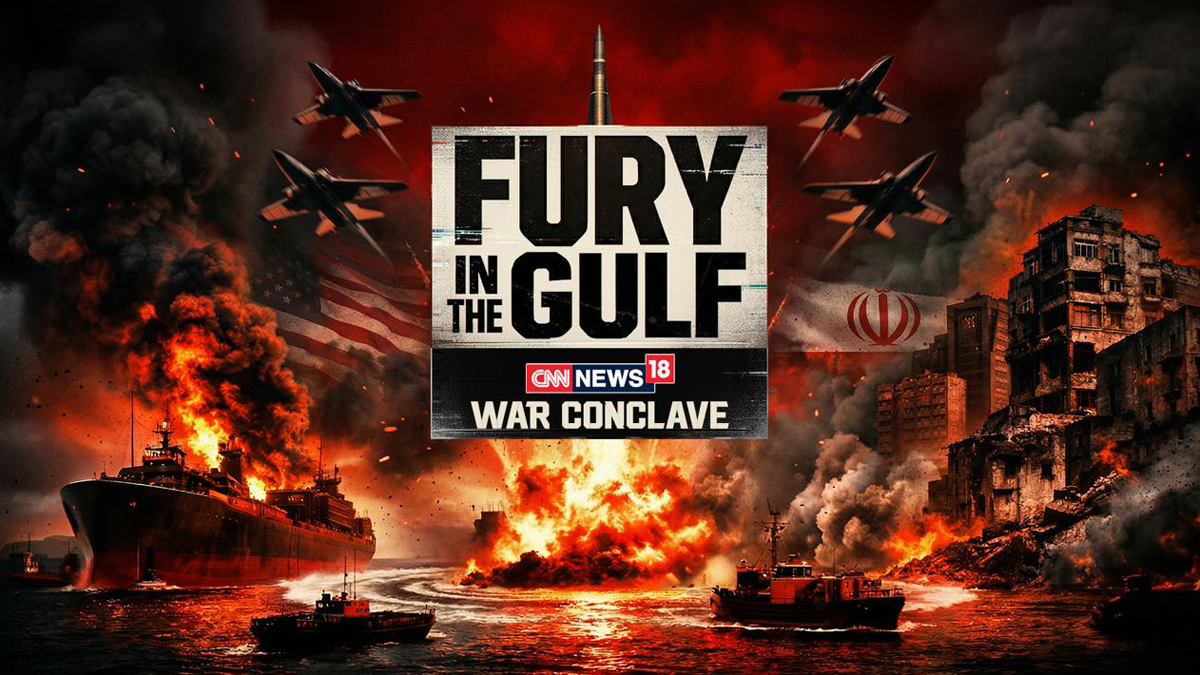
MUMBAI: CNN-News18 is set to host a special three-hour broadcast, Fury in the Gulf – War Conclave, on April 7, aiming to decode the escalating West Asia crisis and its far-reaching implications for India.
Scheduled from 4:00 PM to 7:00 PM, the conclave comes at a time when tensions between Iran and the United States are reshaping global geopolitics and triggering economic uncertainty. With India’s deep energy ties, trade links and large diaspora in the Gulf, the developments carry significant domestic relevance.
Built around the theme ‘Conflict, Consequences, and The Future,’ the programme will feature six curated sessions combining one-on-one interviews and panel discussions. The focus is to cut through the clutter and offer viewers a clearer understanding of the fast-evolving situation.
Key sessions include ‘Diplomacy in Times of War’ featuring Shashi Tharoor, and ‘World After the Iran Conflict’ with voices such as Ram Madhav, Reuven Azar, representatives from the European Union and the Iranian Deputy Envoy. Another session titled ‘Another Dunkirk?’ will bring together K. J. S. Dhillon and Jitin Prasada among others.
CNN-News18 editorial affairs director Rahul Shivshankar said, “In times of war, clarity becomes the most powerful tool. Fury in the Gulf – War Conclave brings together credible voices to address the questions and confusion that arise amid an overwhelming influx of information.”
He added that the initiative is aimed at delivering “facts, perspective, and insight” at a time when misinformation can easily cloud public understanding.
Echoing the sentiment, CNN-News18 CEO– English and business news Smriti Mehra said the conflict marks a defining global moment, with consequences that extend well beyond the region. She noted that the conclave seeks to present the crisis with “depth, nuance and responsibility” so audiences can better grasp its real-world impact.
As geopolitical tensions continue to dominate headlines, the conclave positions itself as an attempt to bring order to the noise, offering viewers a structured, insight-led look at a complex and rapidly shifting global situation.






