iWorld
Bitcentral’s ViewNexa powers audience growth for VIZIO

Mumbai: Bitcentral, the provider of award-winning efficient media workflows for broadcast and digital video, today announces that SalemNOW, a leading streaming service covering family, faith, news, and culture is now available on leading Smart TV manufacturer, VIZIO (NYSE: VZIO) Smart TVs. The opportunity was provided due to Bitcentral being named a VIZIO Preferred Developer, enabling its customers to utilize ViewNexa to reach wider audiences and unlock new monetization opportunities.
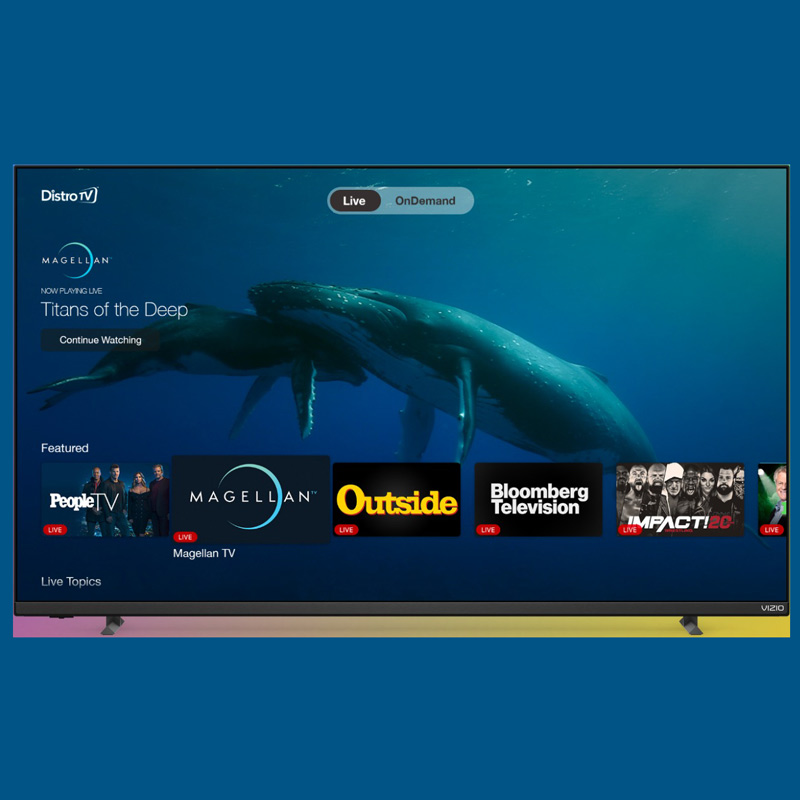
Bitcentral’s ViewNexa allows partners to quickly and efficiently launch applications on VIZIO. VIZIO is recognised as a leading platform, delivering immersive entertainment to connected TV households across the US.
The VIZIO platform provides millions of users with home screen access to must-have streaming apps, with a select group of companies chosen for its Preferred Developer Program. The Program was created to optimize and accelerate the onboarding process for new content partners by providing a list of preferred developers specializing in building solutions for the VIZIO platform.

ViewNexa provides a unified workflow that simplifies video management, the consumer application experience, and distribution for content owners. By providing a full end-to-end solution, from content ingestion to the app experience, ViewNexa lowers the barriers to entry for customers, empowering content owners to deliver and monetize broadcast-grade experiences in new ways. ViewNexa offers flexible monetization, providing users a new standard in OTT video app experiences, powering unique visual storytelling and relationship building.
SalemNOW general manager Robert Ellis said: “Being a Bitcentral customer has brought about many exciting possibilities for SalemNOW to extend the reach of our content to new audiences. For Bitcentral to leverage its preferred developer status to get our platform on VIZIO will open avenues we would not have had access to beforehand.”
ViewNexa GM Greg Morrow said: “We are delighted to be part of VIZIO’s Preferred Developer Program, and its audience reach offers our customers like SalemNOW, a massive scale. Our continuing commitment to providing industry-leading streaming solutions means that our customers are always one step ahead of the curve.

iWorld
Veto onboards B4U Network channels to boost its entertainment offering
Partnership adds films, music and regional fare as platform sharpens its large-screen pitch

NEW DELHI: Veto is stacking its content deck. The family-first CTV-focused OTT platform has onboarded B4U Network, plugging in a slate of Bollywood, music and regional programming to widen its appeal in India’s living rooms.
The tie-up brings B4U Movies, B4U Music, B4U Kadak and Bhojpuri+ onto Veto, offering a broader mix of films, songs and vernacular content aimed at diverse audience cohorts. The move is designed to deepen engagement and nudge growth as competition in connected TV heats up.
Ritu Dhawan, managing director, Veto, framed the partnership as a scale play. “At Veto, our vision is to redefine large-screen entertainment for Indian households by creating a trusted, free, and unified viewing experience. Partnering with B4U Network strengthens our ability to offer deeply engaging and regionally relevant content, helping us connect more with audiences across India,” Dhawan said. “As we grow, our focus remains on delivering relevant, high-quality entertainment that families can enjoy together.”
The integration is expected to expand Veto’s audience base while improving content discovery and depth. The platform positions itself as a no-login, large-screen-first service, bundling live TV, news, sports, movies, music, podcasts and on-demand programming into a single interface tailored for connected TVs.
As streaming fragments and screens multiply, Veto is betting on aggregation and simplicity. More content, fewer clicks, broader reach—the pitch is clear, and the living room is the battleground.








