International
Big rush for Oldenburg fest
NEW DELHI: Happy New Year by K Lorrel Manning with Michael Cuomo as lead actor received the German Independence Award – Audience Award – presented by Peter Göttelmann, CEO Marketing of EWE AG – at the Oldenburg International Film Festival which concluded over the weekend.
Both the director and lead actor were present.
Director Markus Engel received the award for the best short film for his work The Last Guest with a special recommendation going to 15 Summers Later by Pedro Collantes.
The five-day festival was filled with 8 world premieres, 9 international premieres, 3 European premieres, 17 German premieres and a total of 55 films.
The festival opening gala was highlighted by the comedy No Sex Is No Option by Torsten Wacker in front of 1300 people at Oldenburg‘s EWE Arena with stars Stephan Luca, Anna Thalbach, Armin Rohde and Janin Reinhardt in attendance.
The Festival ended with the award ceremony and the premiere of Anduni – Where is Home with guest Florian Lukas.
Dr. Ketel by Linus de Paoli won the jury award of German Independence Award – Best German Film.
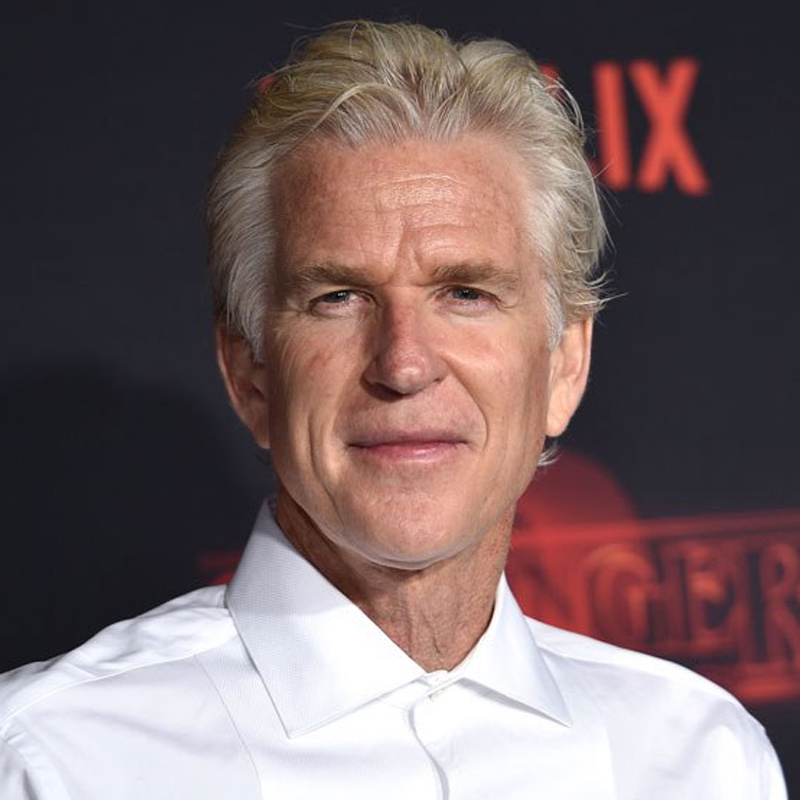
The international jury of Matthew Modine, Radley Metzger, Ildi Toth Davy, Soopum Sohn, and Matteo Lovadina said, “The film adventurously explores the techniques of film making. Pushing the boundaries of storytelling to an area that is unique in contemporary cinema.”
Another highlight of the festival was the German premiere of US-Spanish co-production The Way by Emilio Estevez in attendance of Deborah Kara Unger and Yorick van Wageningen at the packed St. Lamberti Church, where the festival showed a film for the first time.
Among the many programming highlights were Brawler an energising tale about two brothers who fight for the same woman in a series of illegal bouts.
Among the guests of this year‘s festival were: Matthew Modine, Deborah Kara Unger, Inger Nilsson, Ted Kotcheff, Roger Fritz, Mark Polish, Arthur Brauss, Radley Metzger, Bela B. Felsenheimer, Stephan Luca, Anna Thalbach, Armin Rohde, Janin Reinhardt, Kostja Ullmann, Ken Duken, Florian Lukas, Marc Senter, Nathan Grubbs, Chris Sivertson, Noémie Merlant, and Burak Yigit.

International
Utopai Studios unveils 4K three-minute video generation for PAI platform
New Story Agent and editing tools aim to streamline AI-led filmmaking workflows
MUMBAI: Utopai Studios has announced a major upgrade to its PAI storytelling AI platform, introducing what it claims is an industry-first capability to generate three-minute videos in 4K resolution, alongside enhancements to its Story Agent feature.
The update, rolling out from April 15, expands the platform’s capabilities across the filmmaking process, from early concept development to post-production. The company said the new features are designed to help filmmakers maintain continuity across characters, scenes and visual styles, a key challenge in AI-driven storytelling.
At the heart of the release is a next-generation model that enables more structured narrative development, allowing creators to move more seamlessly from idea to execution. With tools such as multi-shot sequencing and multi-turn editing, the platform aims to give both studios and independent creators greater control over complex storytelling workflows.
Commenting on the launch, Utopai Studios co-founder and CTO Jie Yang said, “The next phase of AI in media will not be defined by isolated tools, but by systems that can carry story, continuity and collaboration across the full creative process.” He added that the update is a step towards enabling more practical, end-to-end narrative development at a professional level.
Echoing this, Utopai Studios co-founder and chief scientific officer Zijian He said, “Generative video is opening the door to a new production model, where creative ambition is less constrained by traditional cost and complexity.” He noted that the platform combines multimodal models with iterative editing to give creators more speed, control and consistency.
The company said PAI is already being used in professional film and television productions, particularly in Hollywood, for tasks such as pre-visualisation, scene design and post-production refinements. The latest update adds features including improved voice options, character consistency, unlimited editing and more flexible asset management.
Utopai also emphasised that its models are not trained on copyrighted material, positioning the platform as a cleaner alternative for creators and rights holders navigating the evolving AI landscape.
As AI continues to reshape content creation, Utopai’s latest push signals a shift from standalone tools to integrated systems, aiming to make high-quality filmmaking faster, more flexible and increasingly accessible.