News Broadcasting
Beat that ESS tells Sony, announces OCSI rights acquisition

NEW DELHI: It’s war out there in the cricket broadcasting arena. Sony Entertainment Television may have ICC cricket, including the next two World Cups, but for sheer breadth of coverage, it is ESPN Star Sports (ESS) that has it.
ESS, a joint venture between ESPN Asia and Star Group, today announced the acquisition of telecast rights of all international cricket from Australia, South Africa, New Zealand, Zimbabwe and England (the OCSI territories) for a period of five years from 2003 to 2008. Estimated cost of acquisition: around to $ 140 million.
With the acquisition of 805 days of additional days of cricket telecast of 110 tests and one-day internationals in which India will feature in 17 tests and one-day series. The broadcast will go out to millions of fans across India and other countries that are covered by the footprint of the Asiasat 3 satellite. The total number of days of cricket with ESS now amount to 1,108 days of cricket till 2007, compared to about 153 days of cricket telecast rights that has been bagged by Sony Entertainment TV India till 2007 which includes the two cricket World Cups.

ESS is also set to announce within two weeks new programming and marketing initiatives to exploit the total number of cricket telecast days it has at its disposal.
“With this acquisition we hope to maintain the our leadership position (where telecasting of sports events are concerned) in India,” Manu Sawhney, managing director of ESPN Software India told indiantelevision.com after a press conference in Delhi.
Though Sawhney put forward a defensive bat of “no comment” to a query on the acquisition cost of the additional cricket telecast rights, broadcasting industry sources indicated that it was around $ 140 million. The deal, signed on Saturday, has had numbers thrown up that put the cost even as high as $ 200 million. Compare that to the $ 24 million ESS paid out in September 1999 for the telecast rights for the four cricket boards Australia, New Zealand, South Africa and Zimbabwe (England was not included as part of the OCSI bid then) from 2000 to 2004 and that gives some idea as to just how competitive this business is. Also, $ 24 million was seen as an astronomical figure to pay for cricket rights then. But then there were more competing bids what with ESS, the Zee Network, Vatsa Television Network and a number of air-time buyers like Stracon India and 21st Century Media all in the race. This time round only three players were seen as bidders for the rights – ESS, Sony Entertainment Television and Ten Sports.
“ESS has held an unparalleled leadership in sports broadcasting across Asia and India over the past six years. The acquisition of this multi-cricket broad deal demonstrates the continued long-term commitment of the shareholders of ESS (to the Indian and Asian market at large),” an ESS statement quoting Rik Dovey, managing director of ESS, said.
The cricket rights include 203 days of cricket from Australia covering tours by India, Sri Lanka, South Africa, West Indies, England, Zimbabwe and New Zealand; 145 days of cricket from South Africa, 207 days of cricket from England, including tours by India, Australia, SA and Pakistan; 120 days of cricket from New Zealand and 130 days of cricket from Zimbabwe.






News Broadcasting
Kamlesh Singh receives Haldi Ghati Award from MMCF
India Today Group editor honoured for three decades of journalism at Udaipur ceremony.
MUMBAI- Kamlesh Singh just turned a lifetime of sharp words into a shiny shield because when journalism wakes up a society, even the Maharana of Mewar wants to pin a medal on it.
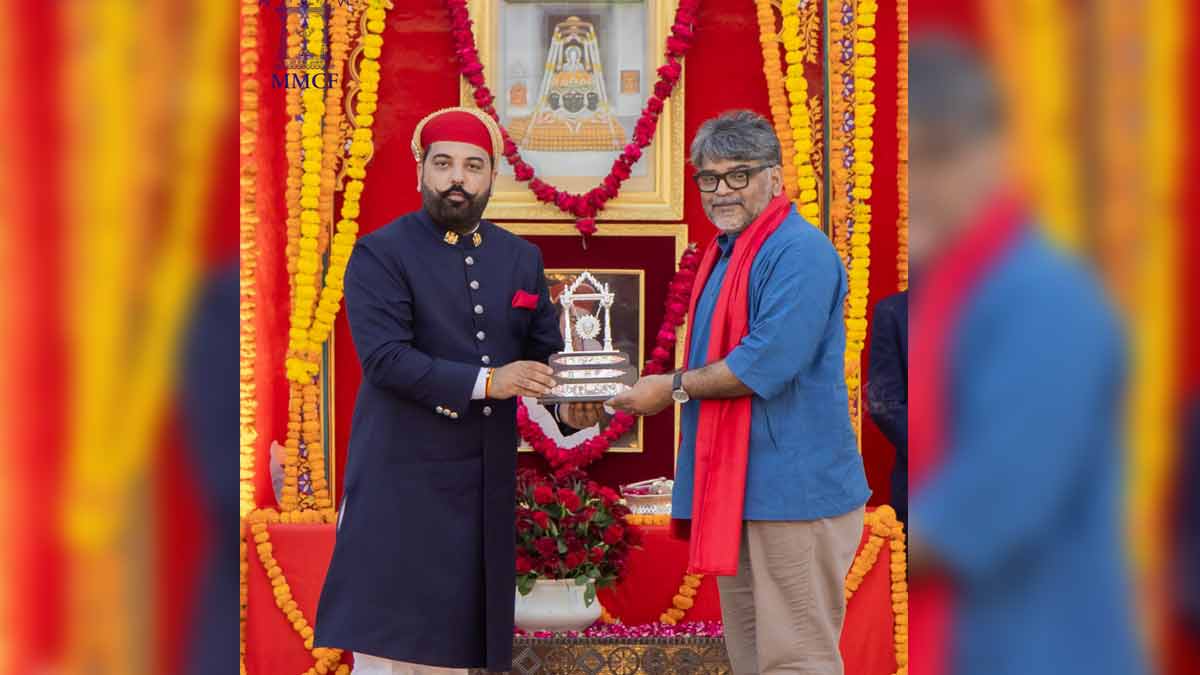
The Maharana of Mewar Charitable Foundation (MMCF) conferred its prestigious Haldi Ghati Award on Kamlesh Singh, a senior editor at the India Today Group, during a ceremony in Udaipur on 15 March 2026. The national award, instituted in 1981-82, recognises “work of permanent value that initiates an awakening in society through the medium of journalism.”
Singh, who leads several editorial initiatives including Aaj Tak Radio, the Teen Taal community and The Lallantop, was presented the honour by Lakshyaraj Singh Mewar, Managing Trustee of MMCF. The citation highlighted his three decades of contributions to Indian media, innovations in digital journalism, mentoring young reporters, and his popular podcast persona “Tau” on Teen Taal, which fosters thoughtful public discourse.
The Haldi Ghati Award, named after the historic Battle of Haldighati symbolising valour and resilience, is one of four national awards given annually by MMCF. Past recipients include Tavleen Singh, Piyush Pandey and Raj Chengappa.
Other honourees this year included Padma Vibhushan Pt Hari Prasad Chaurasia, Vedamurti Devvrat Rekhe, Treeman of India Marimuthu Yoganathan, Vir Chakra Capt Rizwan Malik, and US-based researcher Molly Emma Aitken, who received the Colonel James Tod Award for contributions to understanding Mewar’s spirit and values.
In an era where headlines often shout louder than substance, the MMCF quietly reminded everyone that real journalism isn’t about noise, it’s about the quiet, persistent work that stirs society awake, one thoughtful story at a time.







