iWorld
Avia concludes OTT Summit, gives hope for growth in Asia


Mumbai: Asia Video Industry Association’s (Avia) latest OTT summit has come to an end with much optimism for growth in Asia and a strong focus on content and the consumer.
To make this event a success, Avia hosted over 850 delegates and featured over 80 industry leaders at the OTT summit this year. The panelists were involved in conversations around the subject of growth, from subscriber and revenue growth to increased local content investment and an intense focus on the customer. The adage ‘Content is King’ was very much heard throughout the summit.
Media Partners Asia co-founder and executive director Vivek Couto indicated that there’s a lot of room for growth in the OTT space. “With most markets having an SVOD household penetration of less than 50 per cent, there was certainly an upside for Southeast Asia and some parts of North Asia as well,” he highlighted.
He added, “While the region remained bullish on growth, the average revenue per user remained low, particularly in the Philippines, Thailand, Indonesia, and India. As such, some tiers and price increases would be introduced along the way, especially when the premium sport started to be added to the platforms,”
In MPA’s review of share of first-title consumption, premium local content was a key driver for customer acquisition, particularly in Indonesia and Thailand, with local content that showed some travelability, and as expected, Korean content traveling very well, and some Japanese content as well.
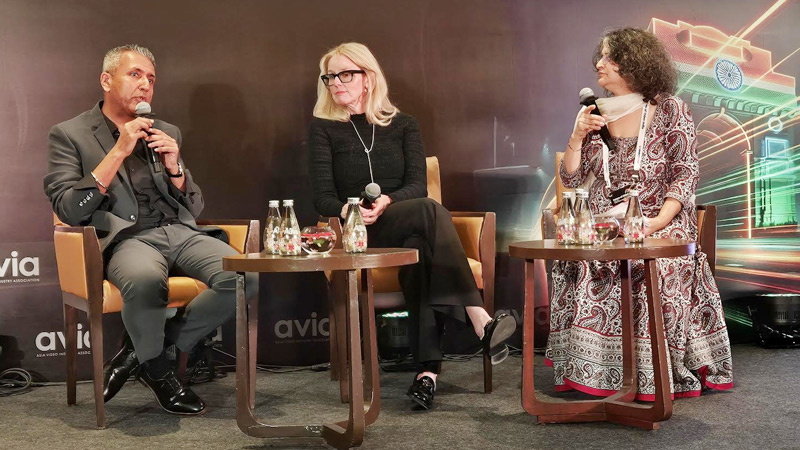
This focus on content continued through to the fireside chat with Paramount Global SVP, head of office and streaming for Asia Catherine Park. She reiterated that their “mission is to unleash the power of the content with the belief that content is king.”
“With different go-to-market strategies to unlock maximum value, Paramount Plus planned to launch first in Korea with CJ ENM, then Japan as the next market followed by Southeast Asia in 2023. Park also shared Paramount’s ‘glocal’ strategy – to have global vision but with local execution,” she noted.
The importance of being local was also echoed by many panelists, as Asia could not be seen as one homogenous market. Discover Inc business development associate director Sagar Pandit feels that “when you gun for growth, especially in Asia, it’s about tailoring your approach for every region but keeping your consumer at the front and centre of whatever you are doing. And with increasing fragmentation in Asia, customer obsession became a key part of the strategy, as more platforms leveraged technology to deliver personalised experiences.”
Taking the conversation ahead, Mediacorp chief commercial and digital officer Parminder Singh explained the three things a customer looked at. He said, “Customers look for highly personalised and relevant content, and new virtual interactive experiences, all built into one single experience, with the use of technology that would allow you to bring all of this to the customer.”
“If you are only delivering a straightforward service, you are going to be left behind,” asserted Disney+Hostar head of technology, Akash Saxena.
However, the challenge to integrate it all into an operator’s platform for a seamless experience very much remained, calling for perhaps greater aggregation and bundling for the OTT industry, as we started to see some fatigue from consumers working with multiple services to meet their content needs.
Closing off the summit with bold predictions for the future of streaming Viacom 18 digital ventures COO Gourav Rakshit remained very optimistic, sharing that a large bet that platforms had not fully capitalised on was the area of media becoming social, with the opportunity to build communities. “We’ve really made rapid strides in the last five years, the next five will be focusing a lot more on delivering consumer delight,” Rakshit remarked.
The summit was supported by Gold Sponsors Brightcove, Lumen Technologies, Synamedia, TV5MONDE, Xandr and Silver Sponsors Akamai, Amagi, Broadpeak, BytePlus, Discovery, Encoding.com, Endeavor Streaming, Irdeto, Magnite, Mediacorp, Mirada, NAGRA, Nielsen, PubMatic and Vindicia.