International
Australian filmmaker barred from talking to govt. funding body
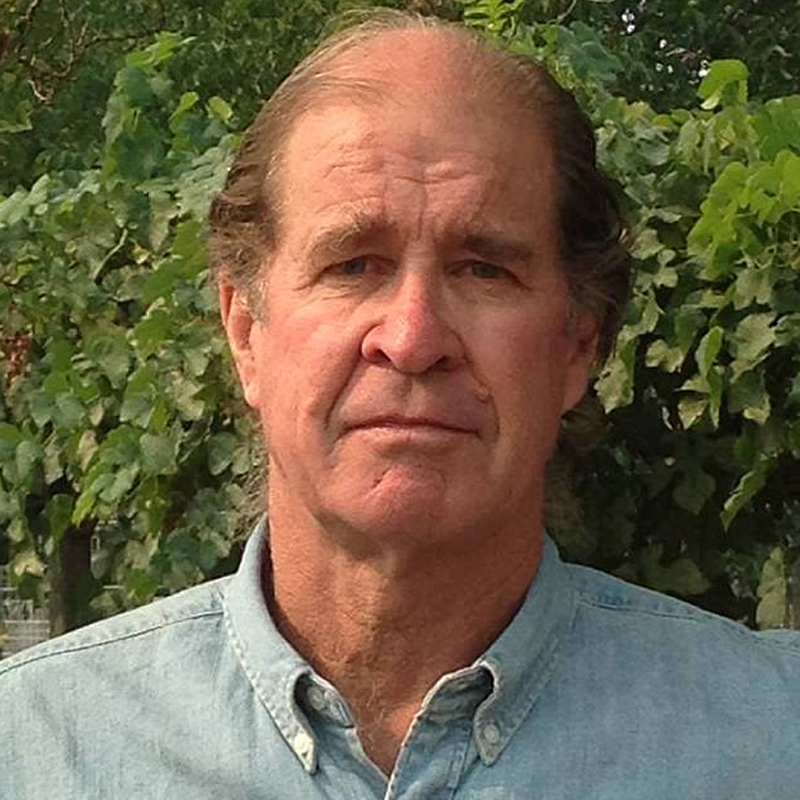
MUMBAI: An Australian filmmaker James Ricketson who has been conducting a one-man crusade against the management of government funding body Screen Australia has been banned from talking to it.
Ricketson has been conducting a lengthy campaign complaining that the organisation has unfairly declined to fund his documentary project Chanti‘s World that Screen Australia had rejected.
Ricketson has published a letter from Screen Australia CEO Ruth Harley telling him that the organisation will no longer deal with him because of "harassment and intimidation" of staff on his blog.
The letter read:"After giving the matter serious and careful consideration, Screen Australia has taken the decision that it will not accept further funding applications from you, or engage in correspondence with you about funding applications. I appreciate that this is an unusual step and one which we do not take lightly. However, we believe that your conduct towards Screen Australia is unreasonable, and that your correspondence places our staff at risk.
We are under a legal obligation to protect our staff from harassment and intimidation. Staff who have dealt with your correspondence have found it stressful and their well-being has been affected. Your public statements in relation to our staff have also caused distress, and appear to be calculated to damage the reputation of individuals and this organization. We reserve our rights in relation to those statements, and we sincerely ask you to reflect on, and refrain from, such conduct going forward."
Screen Australia declined to comment on the issue but confirmed it is the first time in the agency‘s history a film-maker has been banned from applying for funding. The agency said that in the future it may review the decision to ban Ricketson for applying for funding if staff felt at risk.
Last year when Ricketson applied for script funding through Screen NSW under a pseudonym, he was unsuccessful.
In 1993 Ricketson won an AFI for best adapted screenplay for his film Blackfellas and was also nominated for best direction for the same film.

International
Utopai Studios unveils 4K three-minute video generation for PAI platform
New Story Agent and editing tools aim to streamline AI-led filmmaking workflows
MUMBAI: Utopai Studios has announced a major upgrade to its PAI storytelling AI platform, introducing what it claims is an industry-first capability to generate three-minute videos in 4K resolution, alongside enhancements to its Story Agent feature.
The update, rolling out from April 15, expands the platform’s capabilities across the filmmaking process, from early concept development to post-production. The company said the new features are designed to help filmmakers maintain continuity across characters, scenes and visual styles, a key challenge in AI-driven storytelling.
At the heart of the release is a next-generation model that enables more structured narrative development, allowing creators to move more seamlessly from idea to execution. With tools such as multi-shot sequencing and multi-turn editing, the platform aims to give both studios and independent creators greater control over complex storytelling workflows.
Commenting on the launch, Utopai Studios co-founder and CTO Jie Yang said, “The next phase of AI in media will not be defined by isolated tools, but by systems that can carry story, continuity and collaboration across the full creative process.” He added that the update is a step towards enabling more practical, end-to-end narrative development at a professional level.
Echoing this, Utopai Studios co-founder and chief scientific officer Zijian He said, “Generative video is opening the door to a new production model, where creative ambition is less constrained by traditional cost and complexity.” He noted that the platform combines multimodal models with iterative editing to give creators more speed, control and consistency.
The company said PAI is already being used in professional film and television productions, particularly in Hollywood, for tasks such as pre-visualisation, scene design and post-production refinements. The latest update adds features including improved voice options, character consistency, unlimited editing and more flexible asset management.
Utopai also emphasised that its models are not trained on copyrighted material, positioning the platform as a cleaner alternative for creators and rights holders navigating the evolving AI landscape.
As AI continues to reshape content creation, Utopai’s latest push signals a shift from standalone tools to integrated systems, aiming to make high-quality filmmaking faster, more flexible and increasingly accessible.