Movies
Artist One’s, Tata Comms’ & AMC’s mega plan to disrupt live entertainment globally

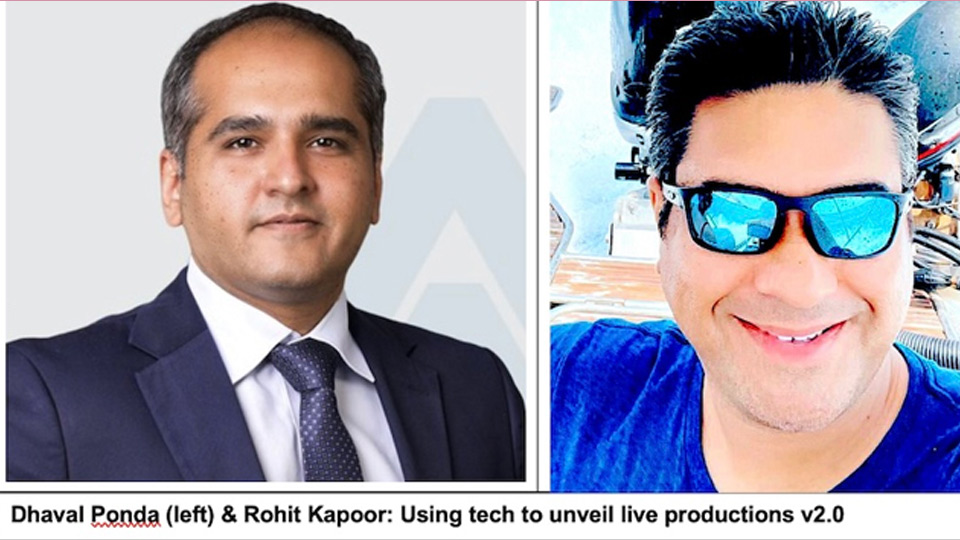
MUMBAI: It’s an initiative that’s being talked about as being a game changer for live entertainment. No longer will artistes have to jet across time zones, wake up groggy and yet have to perform in front of tens of thousands of fans who have paid top dollar for tickets. The innovation that’s being discussed gives them another way to connect with audiences – live across the globe from one venue.
Well, Pennsylvania registered next gen company Artist One Entertainment group which is looking to build v2.0 of the entertainment industry, has brought together a clutch of partners including Tata Communications, ticketing firm Atom Tickets, and a deep bench of live production companies to “revolutionise live entertainment – unveiling the first globally connected arena.”
Exclusively launching throughout AMC Theatres’ robust footprint, Arena One is a collective of interconnected immersive venues, where fans, artistes, and creators around the world will be able to see, hear, and interact with each other in real-time. Made possible by next gen tech, global audiences will share in bespoke live shows – all together, all at once.
“Imagine the world’s most incredible live concerts, locally accessible, more sustainably produced, and affordable for hundreds of thousands of fans who are together in-real-life in one shared experience,” says Artist One Entertainment group founder & chief creative officer, Rohit Kapoor. “Every single person, no matter where they are on the planet, is up close and intimately connected to the artist and performance. With boundless visual potential, high-fidelity surround sound, and no such thing as a ‘nosebleed seat,’ Arena One heralds an entirely new future-forward category in live entertainment.”
Arena One’s unprecedented real-time interaction is powered by Tata Communications’ next generation media platform, which leverages proprietary low latency technologies and the cloud capabilities of its live production and delivery service, The Switch. Tata Communications carries roughly 30 per cent of internet routes globally, and its media entertainment services (MES) division supports live event coverage for the biggest sports and entertainment organisations in the world.
“This launch marks a transformative shift in how music fans and artistes engage with each other, utilising cutting-edge technologies to create an unparalleled, interactive real-time experience,” says Tata Communications vice-president & global head of media and entertainment c. “We are excited to bring a new immersive experience through this partnership, drawing on our live event expertise and global reach to introduce an entertainment concept that gives audiences unmatched access to their favorite artistes.”

Arena One simultaneously disrupts the theatrical and live entertainment industries – reimagining and revitalising existing theatres and screens through a new lens. Performers will have the power to shatter the limits of traditional filmed events – as if there’s no screen there at all – engaging live with their global fanbases just as though they are in one arena together. With additional production enhancements that physically extend the performance into the theatres, all audience members are in the center of the action.
“AMC Theatres welcomes the opportunity to offer music fans across the United States and Europe unique and engaging experiences with their favorite artistes,” says AMC Theatres executive vice-president, worldwide programming & chief content officer Elizabeth Frank, “Arena One will enable exciting artist performances, ranging from fresh takes on fan favorites to launches of brand new music, from tech-infused dance parties to intimate acoustic sets, from tributes and sing-alongs to holiday collaborations, and much more. All of these live performances will be presented through high quality broadcast technology and delivered with the convenience, comfort and affordability of a neighborhood venue.”
Live performances will originate at purpose-built Arena One studios, and link to theatres everywhere within milliseconds, facilitating universal and multi-dimensional live interactivity between connected studios and venues. These innovative performance facilities give artistes powerful studio-level precision and complete control over the quality and content of their creative vision, while boasting multi-stadium reach and revenue generation from a single live performance.

“Audiences are thirsty for memorable experiences that are unique and deeply special. What we?re building allows every fan to gain access to the most coveted blue chip events – and sit in the best seat in the house,” says Arena One managing partner Megan Colligan. “Exhibitors all over the world are looking for more content – this is exactly the kind of innovation our business needs.”
The inaugural Arena One east coast studio is located on the acclaimed Rock Lititz campus – an epicenter of entertainment industry creativity and innovation. The campus, which is 65 per cent solar and geothermal-powered, is headquarters to several of the world’s preeminent leaders in live production, many of whom have participated and invested in the design and development of Arena One.
Future performance hubs are planned in Los Angeles, Nashville, Atlanta, Miami, Toronto, London, Singapore, Mumbai, Melbourne, Accra, Brazzaville, Johannesburg, and São Paolo – bringing artistes from around the world directly to their fans, no matter where they are.
Live Arena One performances will be uniquely presented from a single stationary camera, capturing the most realistic, ideal and best seat audience point of view – with high production-value elements taking place on the technically advanced stages, capable of an elaborate physical and digitally augmented visual spectacle. The studios will also be equipped with multiple robotic and 3D stereoscopic cameras, and adjacent Dolby Atmos mixing studios; in addition to putting on a once-in-a-lifetime live performance, artistes are able to capture, edit, and release subsequent concert films, downstream releases featuring behind-the-scenes content, and albums of their unique live performance mixed in spatial audio.
“Providing artistes the power to pull up to one comfortable state-of-the-art studio with unrivaled creative tools at their disposal, get that irreplaceable rush of performing live to a packed arena of fans, and simultaneously generate a treasure-trove of content for future applications in one consolidated pipeline – the Arena One model radically shifts the artiste experience, the fan experience, and entertainment industry economics across the board,” says Kapoor.
The launch of Arena One firmly locks in Artist One Entertainment Group and Tata Communications shared vision to originate the world’s largest, most advanced live entertainment ecosystem, capable of seamlessly scaling and expanding into limitless territories and formats.
“This is just the beginning. Music, comedy, sports, e-sports, Broadway and beyond will all find a home here,” says Arena One managing partner Mo Rhim. “Not only are we opening new windows of marketing, distribution and monetisation, but the underlying data and technology will also provide creators deep insights that empower them to connect with their fans in places and ways never imagined. Arena One is a universal stage that connects communities and brings separate entertainment verticals together to create something completely new.”
With the inclusion of hundreds of traditionally untapped markets, Arena One provides consumers hyper-local, equitable accessibility to premium live shows at ground-breaking price-points and scale. The ability to instantly contract and expand its connected seating footprint from one-hundred to hundreds-of-thousands of available seats, as well as the flexibility to host multiple shows concurrently across different markets, makes Arena One the venue of the future for all artistes and fans.
“We are all about empowering artistes with more equity, transparency, control, and scale. Arena One gives a new platform for artists – setting the stage for live special release events, one-night-only live global performances, mini-residencies, and sustainable tours,” says , music industry pioneer, programming Arena One’s inaugural slate of artistes Marcie Allen.
Rounding out Arena One’s seamless end-to-end offering is a collaboration with Atom Tickets – the social movie ticketing platform for the modern generation. A full-service online and mobile ticketing site will offer concertgoers instant access to Arena One shows, including pre-order options for merch and concessions.
“With our collaboration, we ensure that planning your concert experience is effortless,” says Atom Tickets CEO Bryan Bowles. “For Arena One customers, we’ve added special enhancements during the ticketing process, bringing audiences closer to the artist and delivering unique surprises along the way.?”
Tickets for the up-close-and-personal live Arena One shows, inclusive of all fees, will be an astonishing fraction of the cost of a typical concert-going experience, and vary by artiste and connected venue location. Arena One will open doors with 230,000 available seats across 1,600 connected domestic auditoriums this coming spring, with planned expansion to 400,000 seats worldwide by the end of 2025.