Components
APAC may lead US$ 6-bn b’cast equipment market growth by ’23

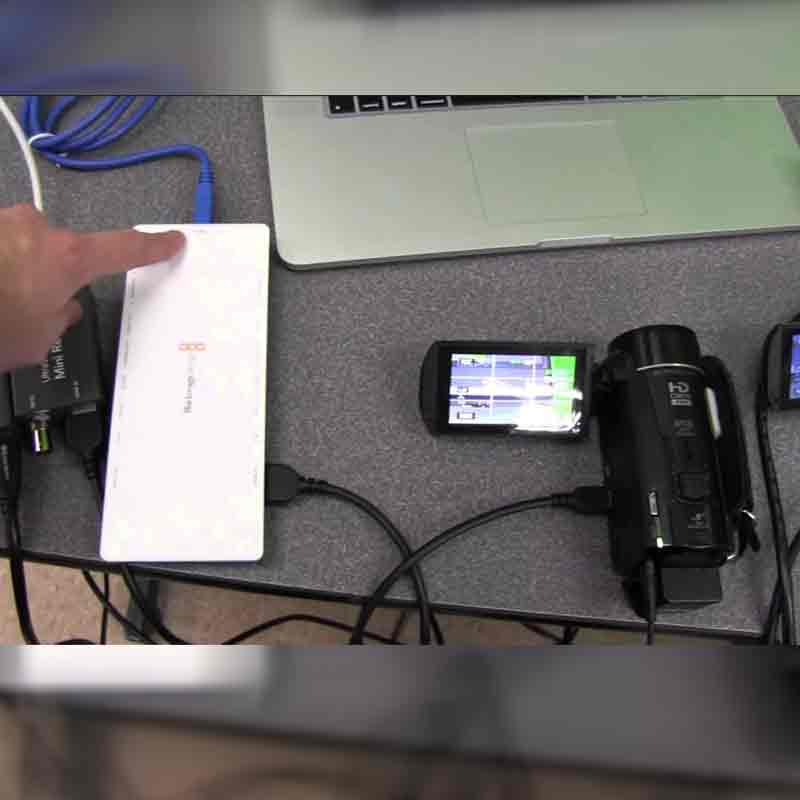
MUMBAI: The global broadcast equipment market is expected to expand from USD 4.38 billion in 2017 to USD 5.82 billion by 2023, at a CAGR of 4.87 per cent between 2017 and 2023.
Although North America is expected to hold the largest market share, the broadcast equipment market in APAC is likely to witness the highest growth rate between 2017 and 2023. The major players in the broadcast equipment market include Cisco Systems, Inc. (US), Ericsson AB (Sweden), Harmonic Inc. (US), Evertz Microsystems, Ltd. (Canada), and Grass Valley (Canada).
The CAGR projection has been done by MarketsandMarkets, which provides quantified B2B research on 30,000 high-growth niche opportunities/threats with the help of 850 fulltime analysts and SMEs, in recently published report titled: “Broadcast Equipment Market — by application, technology, products and geography – to 2023.”

The rising demand for ultra high definition (UHD) content production and transmission, radical shift of products from hardware oriented to software and open architecture based, and increasing D2C offerings through OTT services and multi-channel networks in developed economies are some of the factors driving the growth of the broadcast equipment market.
Increasing use of video servers to store and play out multiple video streams to drive the growth of broadcast equipment market
The broadcast equipment market, on the basis of product, has been segmented into dish antennas, amplifiers, switchers, encoders, video servers, transmitters and repeaters, modulators, and others.
The market for video servers is likely to grow at the highest rate between 2017 and 2023. The increasing number of broadcasters offering direct-to-consumer (D2C) propositions through OTT services, along with traditional distribution routes, is fueling the growth of the market for video servers. In broadcasting, servers act as hosts and are used to deliver various contents or videos. These servers are used to store and play out multiple video streams without degrading the video signals.
Broadcast video servers often store hundreds of hours of compressed audio and video (in different codecs), play out multiple and synchronized simultaneous streams of videos, and also ensure quality interfaces such as SDI for digital video and XLR for balanced analogue audio, and AES/EBU digital audio.
Market for digital broadcasting expected to grow at a high rate between 2017 and 2023
The market for digital broadcasting is expected to grow at a high rate between 2017 and 2023. Digital broadcasting offers several advantages over analogue broadcasting, including choice of programming and services such as additional channels, HD offerings, radio data services, and pay programs. It also allows consumers to avail better quality content with considerably lesser signal interference, without compromising on picture quality.
North America held the largest share of the broadcast equipment market in 2016. The increasing number of cable and satellite television channels and the rising penetration of the Internet have provided broadcasters with many choices for their own creative and political expression. The growing cultural diversity throughout North America has also led to the increase in the number of broadcast channels, which, in turn, has boosted the demand for broadcast equipment in this region. Europe is also one of the potential markets for broadcast equipment. The broadcast equipment market in APAC is expected to grow at the highest rate between 2017 and 2023.
MarketsandMarkets research claims to impact 70-80 per cent of worldwide companies’ revenues. It is currently servicing 5000 customers including 80 per cent of global Fortune 1000 companies.
Also Read:
What’s driving the APAC broadcasting equipment market’s growth
DD modernisation cost over 3 years was Rs 383 crore







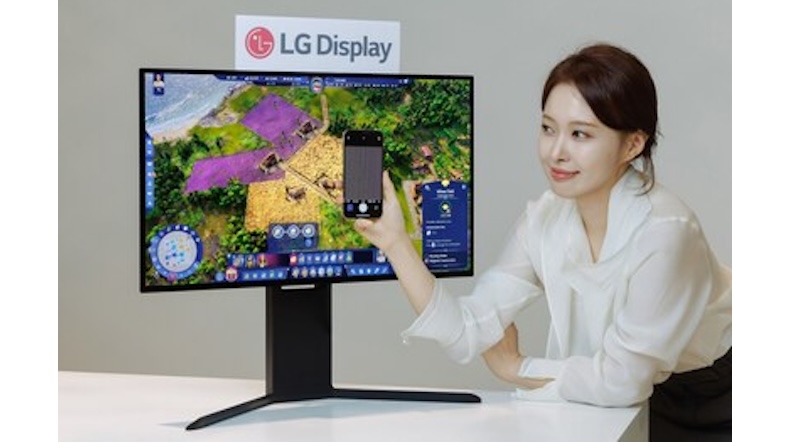
SEOUL: In the eternal battle between gamers demanding lightning-fast refresh rates and professionals craving pixel-perfect clarity, LG Display reckons it has found détente. The South Korean display titan is unveiling the world’s first 27-inch 4K OLED monitor panel that marries an RGB stripe structure with a blistering 240Hz refresh rate—a combination previously thought incompatible, like oil and water or fashion and function.
The breakthrough lies in how the pixels are arranged. RGB stripe structure lines up red, green and blue subpixels in neat rows, banishing the colour bleeding and fringing that plague lesser screens when you park your nose close to the display. It is the difference between reading crisp text and squinting at a rainbow-tinged mess. OLED panels using this method existed before, but they topped out at a sluggish 60Hz—fine for spreadsheets, useless for fragging opponents in first-person shooters.
LG Display’s engineering wizardry changes the game. By cranking the refresh rate to 240Hz whilst maintaining that pristine RGB stripe layout, the company has produced a panel that works equally well for colour-critical design work and twitchy gaming sessions. Better still, the panel incorporates Dynamic Frequency & Resolution technology, letting users toggle between ultra-high-definition at 240Hz and full-HD at a frankly ludicrous 480Hz. That is fast enough to make your eyeballs sweat.
The specs are suitably impressive: 160 pixels per inch for exceptional detail, optimised performance for Windows and font-rendering engines, and colour accuracy that should please the Photoshop brigade. LG Display achieved this by boosting the aperture ratio—the percentage of each pixel that actually emits light—and applying what it coyly describes as “various new technologies.” Translation: years of R&D and probably some sleepless nights.
Existing high-end gaming OLED monitors have relied on RGWB structures (which add a white subpixel) or triangular RGB arrangements. Both work, but neither delivers the sharpness that professionals demand. LG Display’s new stripe pattern is tailored specifically for monitor use, a recognition that staring at a screen from two feet away demands different engineering than watching telly from across the room.
The company is betting big on this technology, targeting the high-end monitor market where it already commands roughly 30 per cent of global OLED panel production. Among gaming OLED panels in mass production, LG Display claims world-leading specs across refresh rate, response time and resolution—a trifecta that sounds like marketing bluster until you check the numbers.
“Technology is the foundation of leadership in the rapidly growing OLED monitor market,” says LG Display head of the large display business unit Lee Hyun-woo. He promises to keep pushing “differentiated technologies compared to competitors”—corporate-speak for staying ahead of Chinese rivals snapping at LG’s heels.
The new panel will debut at CES 2026 in Las Vegas, where LG Display plans to woo customers and expand its lineup. Initial rollout targets high-end gaming and professional monitors, the sweet spot where people actually pay premiums for superior screens rather than settling for whatever came with their laptop.
Whether this technology reshapes the monitor market or remains a niche luxury depends on two things: pricing and production scale. But for now, LG Display has pulled off something rare—a genuine technical leap that solves a real problem. Gamers get their speed, designers get their clarity, and LG gets bragging rights. In the cutthroat world of display tech, that counts as a win.







