iWorld
Anime Icons Natsuki Hanae and Yuma Takahashi Enthrall Demon Slayer fans in Mumbai

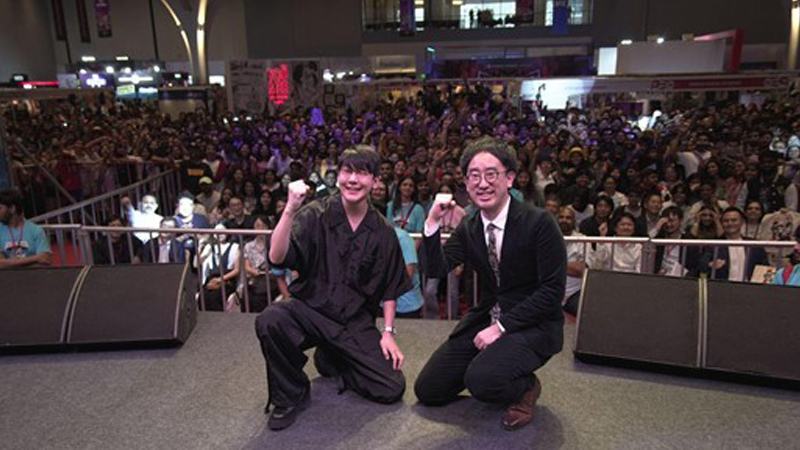
Mumbai: Indian anime fans witnessed an exhilarating day in the exciting world of Demon Slayer. Natsuki Hanae, the voice of Tanjiro, and Yuma Takahashi, the producer of Demon Slayer from Aniplex, came from Japan to meet and greet eager fans in India for the first time.
The highlight of the festivities was undoubtedly the panel discussion organised by Crunchyroll at Mumbai Comic Con, where fans gained invaluable insights into the inner workings of their beloved anime series Demon Slayer. There was also a surprise video participation from Takahiro Sakurai, who plays Giyu Tomioka from Yokohama in Tokyo, adding to the fans’ excitement.
But the fun didn’t stop there, Crunchyroll organised a super special fan meet and greet with Natsuki Hanae and Yuma Takahashi attended by 150 Demon Slayer fans. The meet and greet was followed by the screening of the movie Demon Slayer: Kimetsu no Yaiba -To the Hashira Training, which was released recently.

Natsuki Hanae and Yuma Takahashi were genuinely delighted by the overwhelming fan love for Demon Slayer and anime in India. Witnessing the admiration for their work only deepened the connection between Indian fans and the creators behind their favourite anime, making the experience all the more memorable and special for all.
The new season of the series, Demon Slayer: Kimetsu no Yaiba Hashira Training Arc, will be premiering on Crunchyroll in India starting May 12, 2024. The new season will also be produced and dubbed in Hindi, Tamil, and Telugu in the near future.






iWorld
Parineeti Chopra hosts new parenting series Mom Talks on Zee5 and Bullet
Celebrity parents share honest stories in 9-episode show launching 4 April 2026.

MUMBAI: Parineeti Chopra is stepping into a brand-new role not on the big screen, but as the warm, relatable host helping parents navigate the beautiful chaos of raising children. Bullet microdrama and Zee5 have announced the launch of Mom Talks, a fresh content-led IP hosted by the popular actress. The 9-episode series brings together celebrity parents including Imran Khan, Neha Dhupia, Vikrant Massey & Sheetal, and Gauahar Khan & Zaid Darbar to share candid, real-life perspectives on everyday parenting.
Positioned as a high-engagement format, Mom Talks taps into the growing demand for authentic and credible parenting content. It also offers seamless, contextual integration opportunities for brands. The series is backed by a strong lineup of partners including Johnson’s Baby, GSK, Aveeno Baby, Mini Klub, Titan Eye+ and Cordelia Cruises.
Bullet microdrama app, co-founder & chief business officer Azim Lalani said the show exemplifies how content is evolving towards more rooted, sustained engagement. “It’s about bringing content that people come back to, while creating a natural space for brands to be part of the narrative,” he noted.
Mom Talks creator Bullet head of AVOD & partnerships Munaf Merchant explained the core idea, “We wanted to build a safe, honest, one-stop destination for parents seeking real answers to everyday questions.”
The first episodes will stream for free on ee5 AVOD starting 4 April 2026, with new episodes dropping every Friday and Saturday. The series will also be available on the Bullet microdrama app.
Speaking about their association, Peeyush Unikkat from Johnson’s Baby highlighted the brand’s focus on supporting modern parenting journeys, while Aakash Mehta from GSK emphasised the show’s role in making important health conversations more relatable for new parents.
In a digital space often filled with filtered perfection, Mom Talks promises something refreshingly real honest conversations, celebrity insights, and practical wisdom, all wrapped in Parineeti Chopra’s engaging presence. For Indian parents, this could be the parenting series they’ve been waiting to binge.






